
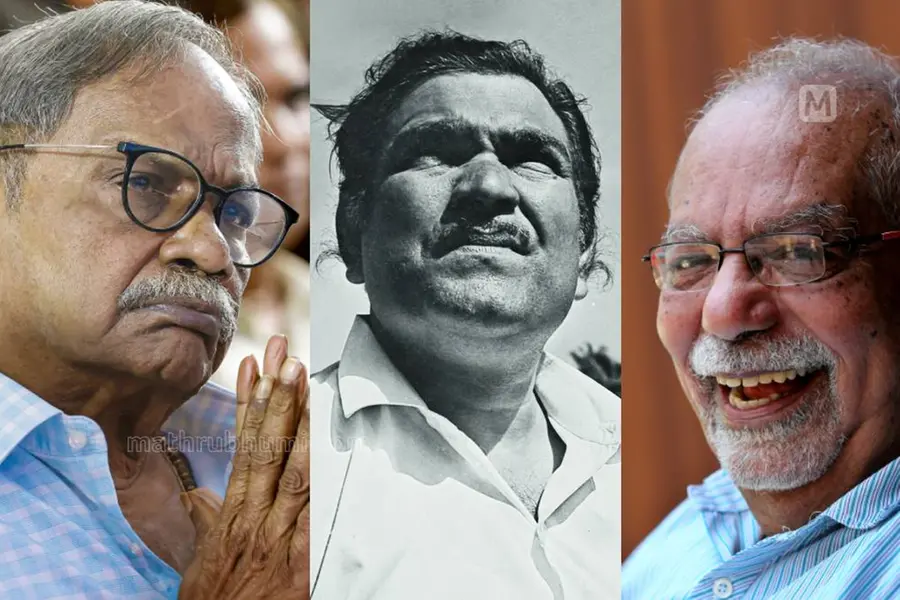
The recent death of filmmaker KG George has brought back recollections of the 1970s Malayalam films to the Kerala public discourse, with the realisation that the changes effected in filmmaking and audience response were indeed fundamental for the film sector as a whole. George made his first independent film 'Swapnadanam' in 1976, and he remains one of the key figures in the renaissance of Malayalam films.

The 70s film renaissance, apart from the drastic changes in content and filmmaking style and process, also saw Malayalam films shifting their production base from studios in Madras, now Chennai, to Thiruvananthapuram and then Kochi over the years. The new movement also put Malayalam films firmly on the map of Indian and international films too, receiving honours at national and international festivals. Half a dozen Malayalam films have become a regular feature in the Indian panorama section of the annual International Film Festival of India (IFFI) over the years.
Indeed, Malayalam movies had a different start way back in 1928, with the first movie, 'Lost Child', (Vigathakumaran), during the silent period being a social drama and not a story from epics, like 'Raja Harishchandra' in Hindi in 1913 or 'Keechaka Vadham' in Tamil in 1918. The second film was based on a famous novel, 'Marthandavarma', about a glorious Travancore king who went by the same name. And even the first talkie 'Balan' too was a social drama, giving the entire new medium a different take.
The first Malayalam film to get noticed nationally was also a social drama, influenced by the cultural movements of the Left parties. P Bhaskaran, a poet turned filmmaker and a Left activist made the film 'Neelakuyil' along with Ramu Kariat in 1954 and was adjudged as the 2nd best film of the year at the national film awards. The film 'Chemmeen', directed by Ramu Kariat in 1965, became a box office hit as well and bagged the best national film award of the year, making the nation notice that there was a symbiosis between literature and films happening in Kerala. 'Chemmeen' was a novel by Thakazhi Shivashankara Pillai and was already popular in Kerala. Chemmen's success led to a trend which saw the adoption of Malayalam stories on celluloid. Many directors followed the path shown by P Bhaskaran and Ramu Kariat, in making popular novels and theatre productions into films. These include KS Sethumadhavan, Vincent, Thoppil Bhasi and PN Menon. Most of the popular literary works, be it novels, short stories or dramas, were made into films, but they were seen as an extension of these works in the new medium, with an emphasis on the story. 'Novelists were told to write screen plays with more dialogues in their chapters to make it to a film and the director's job was to shoot it on celluloid with song, dance and humour to attract audiences in cinema houses', critic Vijayakrishnan recalled the phase in Malayalam films.
But it took the Pune Film Institute to train filmmakers and technicians in the 1970s to put Malayalam films firmly on the national and international map of films, with a cinematic language of the classics of the world. The story of Chitralekha film society and film cooperative is thus historical as it pushed Malayalam films into what now is called the renaissance of films in Malayalam. After 7 years of film society screenings and documentaries, Adoor Goapalkrishnan, the 1965 Film Institute graduate in film direction, literally changed the fate of Malayalam films with his first film 'Swayamvaram', as it is now seen as the first film to be made in the grammar of the new medium, with all its technical compliments leading Malayalis to a new visual culture of films, away from celluloid dramas and novels. 'Swayamvaram' made in 1972 bagged four national awards, heralding a new film culture in Kerala, as audiences who were confused when it was first released in November of the year, but flocked to see it and appreciate it with a new realisation about the medium, after it bagged national awards. That gave the Chitralekha film co-operative and Adoor the filmmaker, enough confidence to initiate steps to transplant Malayalam film production to Kerala from Chennai with a film unit and studio in Thiruvananthapuram. The Chitralekha studio complex, saw in its 15 years of existence before becoming the Southern Air Command centre of the country, around 20 films made in its complex spread over 16 acres complete with all facilities for filmmaking. Some of these films included 'Uttarayanam' by G Aravindan and Ekakini by GS Panicker, all of which added to the new wave renaissance of Malayalam films of the 1970s.
National awards continue to excite and remind Malayalis that a new film culture has arrived, with not just 'Swayamvaram', but with Nirmalyam (Offering) by writer, director MT Vasudevan Nair in 1973 and 'Uttarayanam' by G Aravindan in 1974 and Swapnadanam by KG George in 1975. In 1976, PA Backer, producer of 'Olavum theeravum', made his debut film as director and in 1977, John Abraham, another FTII graduate made his first Tamil film to bag the year's best Tamil film award. Aravindan's 'Kachana Sita' got the best director award and Backer's 'Mani Muzhakkam' won the best Malayalam film honours at national festivals, firmly heralding a Renaissance era and reaffirming a new film culture in Kerala.
Almost all these films had film institute trained technicians who imparted a new visual language they acquired from their alma mater which took Malayalam films away from the conventional storytelling style through celluloid. Not just visuals, a sound track which is full of natural sounds, acting which was less dramatic and more natural, sometimes with no songs or minimal background music and above all a mise-en-scene which is connected and leads to the flow of the narrative. The excitement of national honours and the spread of film society movements in the 1970s led to a big surprise of the second film of Adoor and Chitralekha film cooperative when 'Kodiyettam' broke all box office records of this genre of films with an uninterrupted run of 145 days in a Kottayam town theatre. The film incidentally had no background score and the hero was a balding middle-aged man, enacted by Gopi, who went on to bag the best actor award of the year nationally. The film was first released in just two theatres. By Sunday, every print of the film (14 in number) was running in cinemas all over Kerala to full houses. It was a big success story, unprecedented again. The film made with a bare minimum budget ultimately proved to be one of the best scorers. In Kottayam where the film was released in a small theatre, it ran for 145 days though the film had no big star cast and the usual additives', Adoor recalled the golden days of Chitralekha.
By the late 1970s writer Padmarjan and artist Bharthan made their debut film, further taking the new film culture to the popular theatres. In 1975, with film 'Prayanam' Bharathan made his entry into the middle cinema and Padmarajan, his favourite writer, took the middle cinema to its best heights with his debut film ' Peruvazhiyambalam' in 1979. They were joined by the not so celebrated Pavithran, who made his debut film with 'Aro Oral' and KR Mohanan with his film 'Ashwathama' in 1978. In 1979 John Abraham made his second Malayalam film 'Cheriyachante Kroorakrithyangal', taking the 70s Renaissance movement as a firm trend in Malayalam films. TV Chandran, the hero and producer of the first film by PA Backer, joined the group with his debut film ' Krishnan Kutty' in 1981. It is interesting that most of the technicians of these films were Pune Film Institute products, like Shaji N Karun, a cinematographer with Aravindan who made his film debut with 'Piravi' in 1988, which was honoured at Cannes Film Festival. Shaji's juniors from FTII, Venu and Sunny Joseph, the cinematographer-turned-filmmakers to name a few, along with another colleague P Sukumaran continued this trend in films.
The 1980s saw the fall of Chitralekha film co-operative from its high pedestal, but the rise of Adoor Gopalakrishnan and G Aravindan as national and international icons in films from Kerala. Comparisons of Satyajit Ray with Adoor films started right earnestly in 1980, by none other than Ray's best friend and critic Chidananda Das Gupta. 'In the gentle, slow rhythm of films and their often wordless lyricism, Gopalakrishan reminds one of Ray', Dasgupta wrote in the fall edition of the prestigious FILM Quarterly of the USA in 1980. 'Aravindan's films constitute India's cinema of inner life', wrote another film scholar Satti Khanna in the same magazine. Adoor found global recognition when the British Film Institute honoured him with the Southerland trophy instituted in their founder's name, for his film 'Elippathayam' in 1981. Foreign and Indian film critics began to follow each of the films of Adoor and Aravindan, while others were intensely followed in Kerala when they made their films, thus making the 1970s Renaissance of Malayalam films a milestone in history. 'Looking back, the impact of the new film movement is bigger than what we have so far thought', critic and film historian Vijayakrishnan, noted while commenting on the public discourse following the death of KG George, one of the products of the 1970s Renaissance and a strong pillar of middle cinema in Kerala.
All art and aesthetic changes are noted in history for its lasting changes made after the period it originated and hence the 1970s Renaissance of Malayalam films can definitely be categorised as a watershed period where films of Kerala assumed a new visual, aesthetic and technical language and continue to be noted nationally for this change even today in the digital age.
VK Cherian is an author of film books, India's Film Society Movement: its Journey and Impact (Sage, 2017) and Chalachitra Vicaram (VC Books, 2021).
+1
Published: 26 Oct 2023, 06:46 pm IST
ABOUT THE AUTHOR
Disclaimer: Kindly avoid objectionable, derogatory, unlawful and lewd comments, while responding to reports. Such comments are punishable under cyber laws. Please keep away from personal attacks. The opinions expressed here are the personal opinions of readers and not that of Mathrubhumi.