
Outcome of Israel-Iran confrontation will shape not just West Asia, but the global nuclear order for decades to come
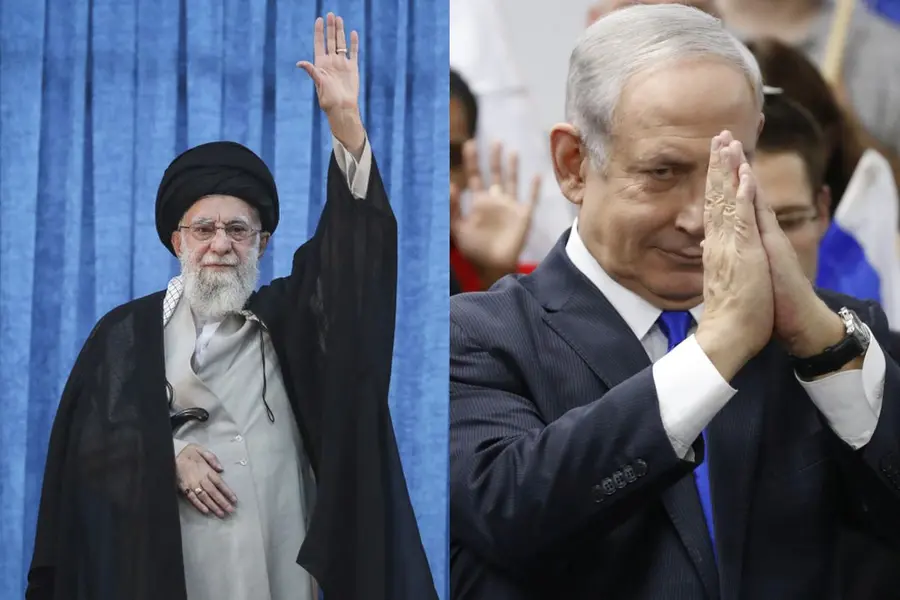
As missiles streak across the Jerusalem sky and smoke billows from Tehran, West Asia stands at a dangerous crossroads.
The sirens that wailed across Israel on Friday night marked more than just another exchange of fire in the world's most volatile region. Israel's massive 'Operation Rising Lion' against Iran's nuclear facilities, followed by Iran's retaliatory 'Operation Severe Punishment', represents a fundamental shift in West Asia geopolitics that India must watch closely.
For the first time since the Iran-Iraq War of the 1980s, Israel deployed over 200 fighter jets in a coordinated assault targeting Iran's nuclear heart. This wasn't just military action -- it was Benjamin Netanyahu's calculated bet that now is the moment to permanently cripple Iran's nuclear ambitions, consequences be damned.
Why Netanyahu chose this moment
Netanyahu has repeatedly pushed for a military option to stop Iran's nuclear program, but several factors converged to make this the 'perfect storm' for action. First, Iran's uranium stockpile has reached alarming levels. Iran currently has around 408 kilograms of uranium enriched to 60% and is producing 33.5 kilograms monthly --dangerously close to weapons-grade material.
But the real trigger was political. Donald Trump's return to power brought renewed nuclear negotiations with Iran, hosted by Oman. For Netanyahu, any deal -- even a "better" one than Obama's 2015 agreement -- represents an existential threat to Israeli freedom of action.
Netanyahu said Israel attacked because "if not stopped, Iran could produce a nuclear weapon in a very short time".
The Israeli Prime Minister essentially torpedoed American diplomacy, calculating that US President Donald Trump, despite urging restraint, would ultimately back Israel's right to self-defense.
The strikes targeted Iran's main nuclear enrichment facility at Natanz, where black smoke rose from the complex. Using 4,000-5,000 pound "bunker buster" bombs, Israel demonstrated its ability to penetrate Iran's most protected sites.
More than 330 munitions were used across five waves of strikes.
But this wasn't just about facilities. At least 78 people were killed, including Iran's top military commanders and nuclear scientists. Among the dead were three of Iran's most senior generals: Mohammad Bagheri, who oversaw the entire armed forces; Hossein Salami, who led the Revolutionary Guard; and Amir Ali Hajizadeh, head of the ballistic missile program.
Perhaps most remarkably, Israeli spy agency Mossad had secretly smuggled missiles and explosive drones deep inside Iran months earlier, laying the groundwork for this devastating surprise attack.
Iran's defiant response
Iran's response was swift and substantial. Dubbing their retaliation ‘Operation Severe Punishment’, Iran launched hundreds of ballistic missiles toward Israel. Explosions rocked Tel Aviv and Jerusalem as Israeli air defenses worked overtime to intercept the incoming barrage.
At least one woman was killed when a weapon fragment struck Ramat Gan, near Tel Aviv, marking the first reported fatality from the Iranian counter-attack. The US quietly assisted Israel's defense, with Patriot and THAAD missile systems helping intercept Iranian projectiles.
The dangerous new reality
This escalation fundamentally alters West Asian dynamics in ways that should concern New Delhi.
Iran's network of proxies -- Hamas, Hezbollah, and the Houthis -- has been systematically degraded over the past year. With the downfall of ally Bashar al-Assad in Syria and the decimation of its proxy forces, Iran's ability to retaliate through regional allies has been sharply reduced.
This leaves Iran with fewer options but potentially more dangerous ones. A senior Iranian official warned that "any country that attempts to defend the regime against Iran's operations will, in turn, see its regional bases and positions become new targets" -- a clear threat to American facilities in the Gulf.
Lessons for India
India should draw several lessons from this crisis. First, the importance of strategic autonomy becomes clear when regional powers pursue maximalist objectives regardless of superpower preferences.
Netanyahu moved ahead despite Trump's apparent reluctance, showing how even close allies can diverge when core interests are at stake.
Second, the vulnerability of nuclear facilities to precision strikes -- even heavily fortified ones -- should inform India's own nuclear security calculations, particularly given our complex neighbourhood.
Third, the role of intelligence and long-term preparation in modern warfare is striking. Israel spent months positioning assets inside Iran, demonstrating how 21st-century conflicts blend cyber warfare, human intelligence, and kinetic action.
The road ahead
Netanyahu declared the operation would continue "for as many days as it takes to remove this threat", suggesting this is far from over. Iran faces a stark choice: accept the degradation of its nuclear program or risk further escalation that could draw in the United States.
For the Biden administration's successor, this crisis presents both opportunity and peril. Trump now has leverage to negotiate with a weakened Iran, but also faces the risk of being dragged into a regional war if Iranian retaliation targets American assets.
West Asia has entered uncharted territory. Netanyahu's gamble may succeed in setting back Iran's nuclear program by years, or it may trigger the very regional conflagration that successive American administrations have sought to avoid. Either way, the rules of the game have fundamentally changed.
India, with its own complex relationships across the region -- from energy partnerships with Iran to growing ties with Israel and the Gulf states -- must navigate this new reality with characteristic strategic patience. The outcome of this confrontation will shape not just the West Asia, but the global nuclear order for decades to come.
As smoke clears from Natanz and missile fragments are swept from Tel Aviv's streets, one thing is certain: the Middle East will never be quite the same again.
The author is a defence and geopolitical analyst based in Bengaluru
Published: 14 Jun 2025, 03:26 pm IST
Related Topics
Disclaimer: Kindly avoid objectionable, derogatory, unlawful and lewd comments, while responding to reports. Such comments are punishable under cyber laws. Please keep away from personal attacks. The opinions expressed here are the personal opinions of readers and not that of Mathrubhumi.
