
Forgotten religious and cultural songs from Kerala’s past are being documented and performed by Pattukochi, a new band led by researcher-musicians Bony Thomas and Sona
“Manna e aalo, ae aarim rug le,
mebar se shaalo, mebini aayire….”
The remaining Jewish community in the city sang during prayers. These are Jews from the Ernakulam Kadavumbhagam area. They arrived on the Kerala coast centuries ago. The song they sing is in the Aramaic language spoken by Jesus Christ.
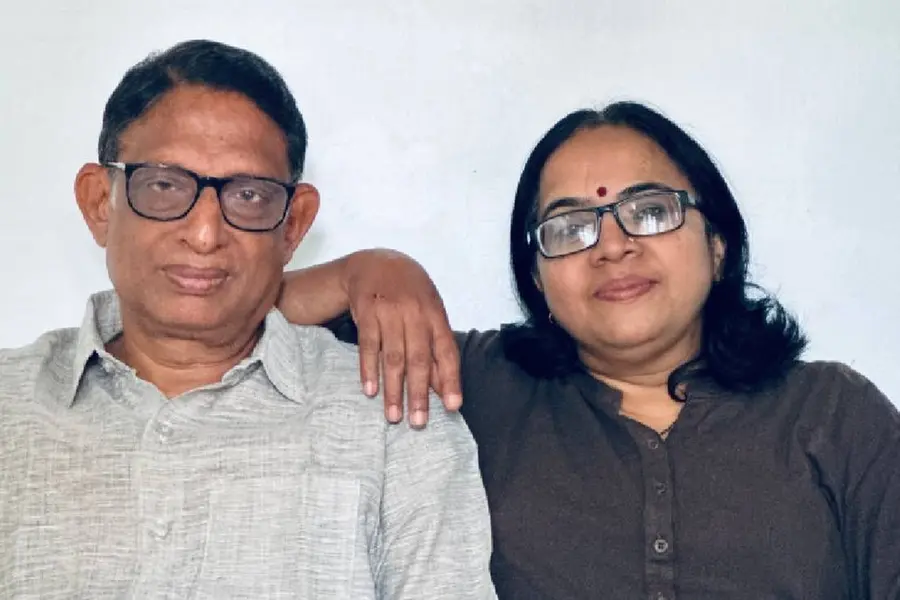
“If you ask what the song means, many people don’t necessarily know. It has been handed down for generations. These are moments where history comes alive,” said writer Bony Thomas while listening to the Jewish song. Bony is preparing to introduce a band by combining such heritage music. The band is called ‘Pattukochi’, and this time, his wife Sona is also on the historical research journey. While Bony leads the research, ‘Pattukochi’ will begin performing in Sona’s voice.
The organist who accompanied Gama
"The first European settlement in Asia was Kochi. Therefore, it is likely that this is where Western musical instruments first landed in Asia," said Bony. When Vasco da Gama arrived in Kochi, he had two missionaries with him, Fr Massey, who was the organist, and Fr Petro Neto, who was the singer. Many of the songs they began singing that day can still be heard in many Latin Catholic families and churches in Kochi.
“Laudate dominum
omnas gents laudate evum.
Omnas populi”
Bony and his wife Sona sang two lines of a Portuguese-style song performed by the choir at St Mary’s Church in Vypin.
In the meantime, Bony received two messages on his phone:
" Njangade manavatti neeradan pokumbol, ayyo mazhaye nee anneram peyyalle,
Njangade manavaalan neeradan pokumbol, ayyo mazhaye nee anneram peyyalle.."( When our bride goes to bathe, oh rain, don't you rain then,
When our groom goes to bathe, oh rain, don't you rain then...)
Bony shared the lyrics from the message. This is a song that was traditionally sung at Jewish weddings. It was sent by some Jewish friends who had emigrated to Israel from Kochi, Bony said. Most of the songs have come to him through word of mouth. The correct pronunciation of these songs is not necessarily what is heard today.
The legend of Kurudan Pareekutty, the Urdu musical tradition of Mehboob, P J Antony's revolutionary songs, and the compositions from a temple built by Konkani Brahmin Ambu Balika 100 years ago in Mattancherry, welcoming people of all castes and religions, are all part of Bony’s exploration.
Don't abandon
"Where is the fort?" tourists asked upon reaching Fort Kochi. There were not one but two forts. Today, they are extinct, said Bony. If we don’t preserve, heritage music too will fall into the same pit of oblivion, he warned.
In addition to Malayalam, 16 languages are spoken here. There is a treasure in every house and every place of worship, heritage music treasures. These are being explored, said Bony.
‘Pattukochi’ took shape during the filming of the historical micro-documentary series Words with Bony, which has gained popularity on social media. He has already collected about 50 songs in Aramaic, Hebrew, Portuguese, Latin, Konkani, Gujarati, Tamil, etc. Now, he wants to make these accessible to the public. For this, he is seeking the help of his wife Sona, who has been studying classical music since school, Bony said.
'The medium will not be books but reels. There will be a small orchestration as well,' said Sona. Walk with Bony has reached its 41st episode. In the 50th episode, the band 'Pattukochi' will start singing.
Published: 30 Jul 2025, 03:13 pm IST
Related Topics
Disclaimer: Kindly avoid objectionable, derogatory, unlawful and lewd comments, while responding to reports. Such comments are punishable under cyber laws. Please keep away from personal attacks. The opinions expressed here are the personal opinions of readers and not that of Mathrubhumi.
