
Iran’s “Mosaic Defence” strategy allows its military to keep operating even after heavy strikes and leadership losses, using decentralised units that prevent a single point of failure and ensure continued retaliation.
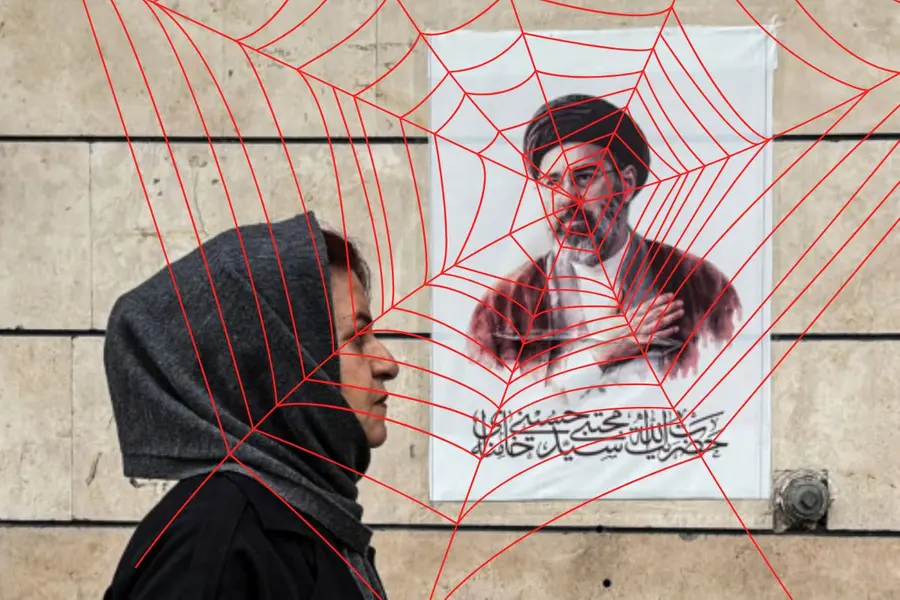
Imagine you are trying to crush a spider's web. You hit the centre hard — but the web does not fall. Because every single thread of that web is connected to the wall separately. Remove one thread, ten more still hold. This is exactly the strategy Iran has been using to survive one of the most powerful military attacks in modern history. It is called the Mosaic Defence and it is giving America and Israel a serious headache.
Let us understand this from the beginning, simply and honestly.
Also Read

On February 28, America and Israel launched a massive joint attack on Iran, targeting its military systems, political leadership, ports, ships, missiles, drones, and navy. In just six weeks, over 13,000 strikes were carried out on Iranian targets. At least 11 of Iran's senior military commanders were killed. The U.S. military Admiral Brad Cooper proudly declared that America had destroyed nearly 40 years of Iran's defence buildup.
So by normal logic, Iran should have collapsed. Surrendered. Gone silent.
But it did not.
Just hours after a ceasefire began on April 8, Iran launched 17 ballistic missiles and 35 drones at the UAE. Kuwait was also attacked using unmanned explosive vehicles. American jets were still being threatened, and one American F-15 fighter jet was even shot down, though both pilots were rescued safely. Iran was still fighting. Still striking. Still standing.
How is this possible? The answer lies in a military idea developed 20 years ago by a senior Revolutionary Guard general named Mohammad Jafari.
In 2005, after carefully studying how America fought in Afghanistan and Iraq, General Jafari created what he called the Mosaic Defense Strategy. The idea was simple but brilliant — do not build one big army with one central commander. Instead, break your defense into 31 separate units — one for Tehran and one for each of Iran's 30 provinces. Each unit operates independently. Each local commander can make his own decisions without waiting for orders from the top.
Think of it like this. A normal army is like one large tree — cut the trunk, the whole tree falls. Iran's mosaic army is like a forest of 31 separate trees. You cut one, the other 30 keep standing and keep fighting.
Iran's own Foreign Minister Seyed Abbas Araghchi said on March 1, just one day after the attacks began, that Iran had spent over two decades studying American military failures and had learned its lessons well. He used the exact words — "decentralised mosaic defense." And he was right.
Michael Connell, an American researcher and former intelligence officer who is considered one of the top experts on Iran's military, explained clearly that this strategy was designed to make small units powerful and independent. He wrote back in 2010 that Iran knows it cannot win a face-to-face war against America. So instead, it follows a slow, grinding strategy — increasing costs, risks, and pressure on the enemy until the enemy loses the mental will to continue fighting.
This is not about winning battles quickly. This is about making the war so exhausting, so expensive, so painful for the other side that they eventually want to walk away.
And the results speak for themselves. Even after losing top leaders — including the National Security Council head, the Defense Minister, the Revolutionary Guard chief, the intelligence minister, and several others — Iran still kept firing. Around the middle of last month, Iranian officials themselves admitted to journalists that some attacks on Oman, Kuwait, and Saudi Arabia were not even officially ordered by central leadership. Local commanders acted on their own based on earlier general instructions. That is the mosaic working exactly as designed.
Araghchi explained it clearly in an interview, saying that military units are now working independently, somewhat cut off from the centre, acting on pre-given instructions. In other words — you can kill the general, but the soldiers already know what to do.
America's three-part challenge against Iran is clear — Iran fights through unconventional warfare using drones and fast navy boats, it has a strong missile capability with nearly 2,000 weapons fired in this conflict alone, and it has regional allies like Yemen's Houthis and Iraqi militias who create constant psychological pressure even without huge military action.
War strategists from the Soufan Center confirm that all three parts of this mosaic strategy are working together as one layered system.
Iran has not won this war. It has suffered serious damage. But it has also not been broken.
And that, in itself, is the whole point of the mosaic.
The author is a defence, aerospace & geopolitical analyst.
Published: 15 Apr 2026, 04:15 pm IST
Disclaimer: Kindly avoid objectionable, derogatory, unlawful and lewd comments, while responding to reports. Such comments are punishable under cyber laws. Please keep away from personal attacks. The opinions expressed here are the personal opinions of readers and not that of Mathrubhumi.