
Shukla, who is 39 years old, will stay in space for twice as long as Sharma. He will carry out new experiments that will help us better understand how life can survive and thrive in space
The countdown has begun. India is now just days away from a historic moment.
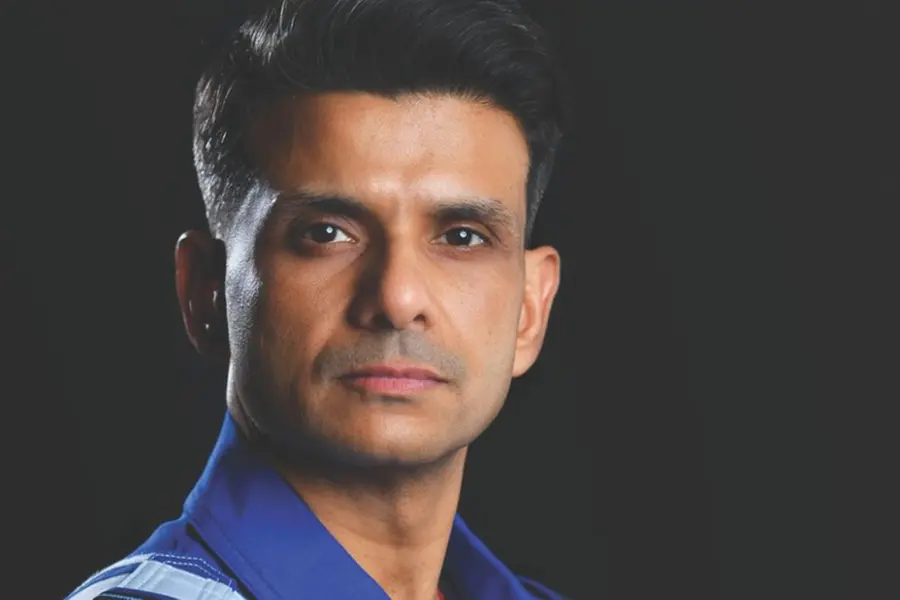
In three days, Indian Air Force Group Captain Shubhanshu Shukla will board a spacecraft and head to the International Space Station (ISS) as part of the Axiom-4 mission.
Back in Bengaluru, watching with pride, is Wing Commander (Retd.) Rakesh Sharma—the man who first made this journey 41 years ago.
The Pioneer's Perspective
On April 2, 1984, Rakesh Sharma became the first Indian to travel to space. He launched aboard the Soviet Soyuz T-11 spacecraft from Baikonur, a remote site that is now in Kazakhstan.
For 41 years, he remained the only Indian to have gone to space. That will change on June 10, when Shukla follows in his footsteps.
Sharma has always stayed humble about this achievement. He once said, “I’m actually the 128th person to go to space,” showing that he saw himself as part of a larger global effort.
Still, what he achieved meant far more than just a number.
While orbiting Earth from the Soviet space station Salyut-7, he looked down at India with deep emotion.
When asked how India looked from space, he famously replied, “Saare jahan se accha,” meaning “Better than the entire world.”
Wearing the Indian Tricolour on his sleeve, those words reflected the pride of an entire nation.
The Road to Space
The path to space was not easy. Rakesh Sharma was chosen from over 150 candidates for the India-Soviet Intercosmos Programme. At 35, he was a test pilot with the Indian Air Force. He then went through over two years of intense training. This included facing strong gravitational pressure (G-forces), tests that reduced his senses, and physical stress tests that many could not handle.
Breaking Barriers in Microgravity
Sharma spent 7 days, 21 hours, and 40 minutes in space. Shubhanshu Shukla is expected to break this record with a planned 14-day mission. But Sharma was not just a visitor in space—he did important scientific work. He studied how living without gravity (microgravity) affects the human body. He also became the first person to do yoga in space. This gave scientists new information on how the body responds to movement and exercise in zero gravity.
Salyut-7: A Marvel in the Sky
The space station Sharma stayed in—Salyut-7—was a great example of Soviet space technology. It was the last in the Salyut series and had two docking ports. One was used for cargo ships like the Progress spacecraft, and the other was for larger modules carrying astronauts. The Salyut space programme, which ran from 1971 to 1986, helped develop key technologies that were later used in building bigger space stations.
The End of Salyut-7
Even space stations have a limited life. In 1985, Salyut-7 lost power and stopped working. But later that year, two brave cosmonauts flew up and repaired it in space—a risky and heroic act. The station remained in orbit for six more years. Finally, on February 7, 1991, it re-entered Earth’s atmosphere and burned up over South America due to increased solar activity and atmospheric drag.
Passing the Torch
Now, as Shukla prepares for his space journey, this moment carries great meaning. While Sharma went alone as India’s first space traveler, Shukla represents a confident and capable space power. In the past decades, India has sent missions to the Moon and Mars and has built a strong and growing space industry.
The Indian Space Research Organisation (ISRO), which once worked with Soviet help, is now respected worldwide.
Shukla, who is 39 years old, will stay in space for twice as long as Sharma. He will carry out new experiments that will help us better understand how life can survive and thrive in space. Like Sharma, Shukla also carries the hopes and dreams of 1.4 billion Indians as he steps into space.
A Full Circle Moment
From the early days of the Salyut missions to today's commercial space journeys, India’s space progress has been remarkable. Sharma opened a door that seemed impossible to many. Now, Shukla is walking through that door as part of India’s growing presence in space.
When Shukla looks down at Earth from the International Space Station, he will see India shining like a jewel. Whether he repeats Sharma’s famous words or finds his own, he continues a journey that began 41 years ago—one that proved the sky was never the limit. It was just the beginning.
The countdown continues, but India’s journey from "Saare jahan se accha" to Axiom-4 is only getting stronger.
(The author is an award-winning science communicator and a Defence, Aerospace & Geopolitical Analyst. He is the Managing Director of ADD Engineering Components India Pvt. Ltd, a subsidiary of ADD Engineering GmbH, Germany. He can be contacted at girishlinganna@gmail.com )
Published: 09 Jun 2025, 02:52 pm IST
Disclaimer: Kindly avoid objectionable, derogatory, unlawful and lewd comments, while responding to reports. Such comments are punishable under cyber laws. Please keep away from personal attacks. The opinions expressed here are the personal opinions of readers and not that of Mathrubhumi.
