
In an era where supply chains are weapons and dependencies are vulnerabilities, DRDO’s Military Combat Parachute System represents something invaluable: strategic freedom.
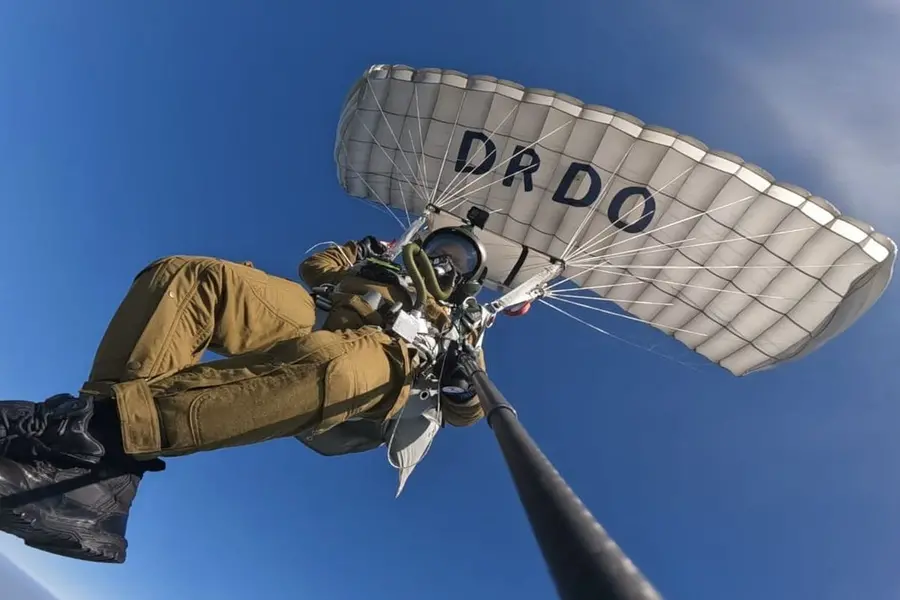
On a crisp October morning, somewhere high above Indian soil, a paratrooper stepped out into the void at 32,000 feet -- higher than most commercial flights cruise. This wasn't just another training exercise. It was a statement.
The successful testing of India's Military Combat Parachute System (MCPS) might sound like just another defence story buried in the inside pages. But look closer, and you'll see something more significant unfolding -- a quiet revolution in how India thinks about its security, its technology, and its place in an increasingly uncertain world.
Real Story Isn't Just About Parachutes
Yes, the MCPS is impressive on paper. Slower descent speeds, better steering, precision landing -- all the technical boxes are ticked. But the real story lies in what this system represents.
For decades, our armed forces have been at the mercy of import timelines, foreign maintenance schedules, and the goodwill of supplier nations. When tensions rise and you need equipment ready, "the spare parts are stuck in customs" is not an answer any nation wants to hear. The MCPS changes this equation fundamentally.
This parachute system, developed entirely by DRDO labs in Agra and Bengaluru, doesn't just work -- it works on our terms. It requires less maintenance time than imported systems, meaning our forces spend more time ready and less time waiting. In military planning, readiness isn't everything; it's the only thing.
NavIC Edge: Strategic Independence at 32,000 Feet
Here's where it gets really interesting. The MCPS integrates with NavIC, India's own navigation satellite system. This isn't just patriotic window dressing -- it's strategic genius.
In modern warfare, GPS signals can be jammed, spoofed, or simply switched off for non-allied forces. During critical operations near hostile borders, depending on foreign satellite navigation is like giving your opponent a switch to your equipment.
NavIC integration means Indian paratroopers can navigate reliably even when adversaries try to blind them electronically.
Think about it: a paratrooper dropping into enemy territory, immune to GPS jamming, landing exactly where intended. That's not just technology -- that's a tactical advantage that keeps soldiers alive and missions successful.
The Atmanirbhar Bharat Test
Defence Minister Rajnath Singh called this a "major achievement for India's self-reliant defence capability." He's not exaggerating.
Self-reliance in defence isn't about making everything at home for the sake of pride. It's about not being held hostage during a crisis. It's about not finding out that your critical equipment supplier has suddenly become "neutral" when you need them most. It's about building an industrial ecosystem that can innovate, manufacture, and support complex military systems without looking over its shoulder.
The MCPS proves that Indian labs can match -- and in some aspects exceed -- international standards. The fact that it's the only parachute system in the Indian armed forces capable of safe deployment above 25,000 feet isn't just a technical achievement; it's a capability gap we've filled ourselves.
What This Means for Tomorrow
This successful test opens doors. Special forces operations at extreme altitudes become more viable. High-altitude warfare capabilities -- crucial for borders like Ladakh -- get a boost. The confidence to develop more indigenous aerial delivery systems grows.
But perhaps most importantly, it sends a message to both our armed forces and our adversaries: India is building the tools it needs, on its own terms, to its own specifications.
Every nation that matters militarily makes its own critical equipment. Not because imports are bad, but because dependence is dangerous. The MCPS is one more step in that direction -- unglamorous, highly technical, but absolutely vital.
The Bottom Line
When that paratrooper jumped at 32,000 feet on October 15th, he wasn't just testing a parachute. He was proving that India can engineer, manufacture, and deploy world-class military technology. He was demonstrating that our defence ecosystem is maturing from buyer to builder.
In an era where supply chains are weapons and dependencies are vulnerabilities, the MCPS represents something invaluable: strategic freedom.
And that, not the technical specifications or the altitude records, is why this test matters. It's not just about falling safely -- it's about rising independently. True national security begins with the ability to equip and maintain your forces on your own terms.
The author is a defence, aerospace & geopolitical analyst.
Published: 16 Oct 2025, 05:26 pm IST
Related Topics
Disclaimer: Kindly avoid objectionable, derogatory, unlawful and lewd comments, while responding to reports. Such comments are punishable under cyber laws. Please keep away from personal attacks. The opinions expressed here are the personal opinions of readers and not that of Mathrubhumi.
