
Discover Russia`s powerful S-500 air defence system. Is it India`s next crucial defence upgrade? Analyze the benefits, risks, and strategic implications. Click to learn more!
When you think about air defence, imagine a giant invisible shield protecting your country from deadly missiles and bombs flying through the sky. India already has such shields, and now Russia is offering something even more powerful—the S-500 air-defence system. But why does India need it, and should we actually buy it? Let's break this down.
India recently finished deploying three squadrons of the S-400 system from Russia. Think of the S-400 as a super-advanced slingshot that can knock down enemy planes and missiles from 400 kilometres away. It's incredibly effective, but the world of warfare keeps evolving. Now there are hypersonic missiles—weapons that travel at speeds beyond imagination, over 7 kilometres per second. There are also ballistic missiles that can strike from space. Traditional defence systems struggle against these threats, and that's where the S-500 comes in.
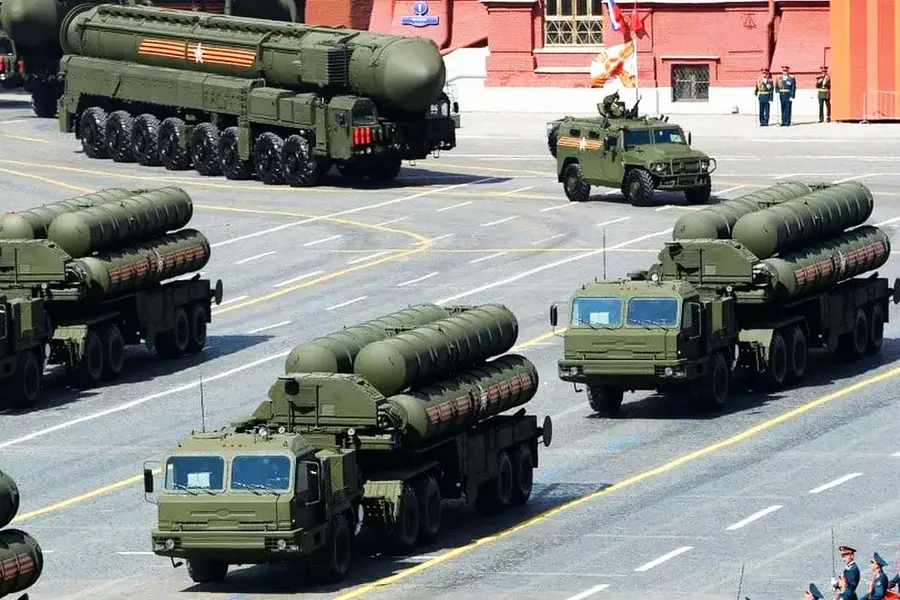
The S-500 is basically the S-400's bigger, stronger, and smarter brother. Russia began using it in 2021 and made it partly ready by 2024. While the S-400 can shoot down normal aircraft up to 400 kilometres away and ballistic missiles up to 185 kilometres, the S-500 reaches out to 600 kilometres. More importantly, it can hit targets at an altitude of 200 kilometres—almost at the edge of space. To put this in perspective, commercial planes fly at just 10 to 12 kilometres high. The S-500 operates in a zone where satellites orbit, making it capable of protecting India not just from missiles but also from space-based threats and even low-orbit satellites. It can track and destroy ten ballistic missiles simultaneously, even if they're screaming through the atmosphere at unimaginable speeds.
What makes the S-500 truly special are its missiles and radars. It uses two types of missiles—the upgraded 40N6M, which can intercept targets above the atmosphere in what's called exo-atmospheric interception, meaning it destroys threats 100 kilometres above sea level where space officially begins at the Karman Line. The second set, the 77N6-N and 77N6-N1, are special anti-ballistic missiles that destroy incoming threats by smashing directly into them head-on rather than exploding nearby. Its radars are built with Gallium Nitride technology, which sounds technical but simply means they can see farther, track better, and resist enemy jamming more effectively than the S-400's older Gallium Arsenide radars. The system uses two advanced radars—the 91N6E(M) battle-management radar that detects, tracks and controls the overall battle, and the 76T6 multi-mode engagement radar that locks onto targets and guides missiles. One S-500 unit includes twelve missile launchers, command centres, and three different radars working together like a well-coordinated cricket team, watching everything from incoming missiles in their final stage to objects far out in space.
According to reports from idrw.org, Russia's Deputy Prime Minister Denis Manturov recently hinted at the Dubai Airshow 2025 that Moscow is ready to discuss selling the S-500 to strategic partners who already use the S-400—clearly pointing at India. Rostec CEO Sergey Chemezov even mentioned to Indian journalists that Russia would offer complete technology transfer and local manufacturing, similar to how India produces BrahMos missiles and AK-203 rifles jointly with Russia, but only if global political conditions stay favourable.
The timing is intentional, meaning Russia made this offer on purpose at this moment. India had just received all its S-400 systems in early 2025, despite strong Western pressure and CAATSA sanctions threats. This successful delivery increased trust between Russia and India, making it the right moment for Moscow to discuss the S-500. Sources reveal that a DRDO-IAF team even visited Moscow in October 2025 for a technical briefing on how the S-500 system performed during recent military exercises over the Barents Sea, a cold northern sea near Russia and Norway.
But here's the real question—does India actually need the S-500? The answer is both yes and no. Yes, because our neighbourhood isn't exactly peaceful. Pakistan and China both possess advanced missile systems, and China is rapidly developing hypersonic weapons. Having a defence shield that can stop these threats gives India strategic security and confidence. The S-500 would integrate well with our existing S-400 systems, making deployment and training easier. India is already widening its air-defence network by adding the Israeli MR-SAM, a medium-range surface-to-air missile system, and the Akash-NG, the next-generation Akash missile with faster reaction and longer range. India is also studying American, European, and Israeli high-altitude systems for its three-service Ballistic Missile Defence shield.
However, there are strong reasons to be cautious. First, buying the S-500 will almost certainly anger the United States. When India bought the S-400, America threatened sanctions under a law called CAATSA, designed to punish countries buying Russian weapons. Although the Biden government and later administrations never actually punished India, a second Russian purchase might not be forgiven so easily, especially when India-U.S. relations are growing stronger in defence and technology. Russian officials argue that the S-500 is only a defensive anti-missile system, which they believe can give legal and political reasons for the U.S. to allow an exemption, but that's uncertain.
Second, India is already developing its own advanced missile defence system called Project Kusha, designed to intercept threats beyond 500 kilometres. Spending billions more on Russian equipment might slow down our homegrown defence industry, which is finally gaining momentum. Russia wants India to stay within its air-defence ecosystem before New Delhi spends big money on other systems like the American THAAD, the Israeli Arrow-3, or completes Project Kusha.
Third, there's the dependency factor. Relying heavily on Russian systems means we need their spare parts, upgrades, and technical support for decades. What if geopolitical situations change and supply lines get disrupted?
So what should India do? Pragmatically, we should keep the S-500 option open for negotiations while accelerating our indigenous programmes. Learn from Russia's technology through limited technology transfer, but don't become dependent. Use this offer as leverage to get better deals or to fast-track our own missile defence capabilities. Although the Indian Ministry of Defence has not officially asked for proposals yet, the ongoing technical evaluations suggest serious interest.
The S-500 is undoubtedly a formidable system, but India's strength lies in strategic autonomy—making our own weapons, our own decisions, and our own future. Sometimes the best defence isn't just about buying the biggest weapon; it's about building the wisdom to know when and what to buy.
The author is a Defence, Aerospace & Geopolitical Analyst
Published: 02 Dec 2025, 11:08 am IST
Related Topics
Disclaimer: Kindly avoid objectionable, derogatory, unlawful and lewd comments, while responding to reports. Such comments are punishable under cyber laws. Please keep away from personal attacks. The opinions expressed here are the personal opinions of readers and not that of Mathrubhumi.
