
Discover India`s indigenously developed `Gaurav` Long Range Glide Bomb (LRGB). Achieve 100km accuracy with silent, stealthy strikes. Learn more about this game-changer for IAF!
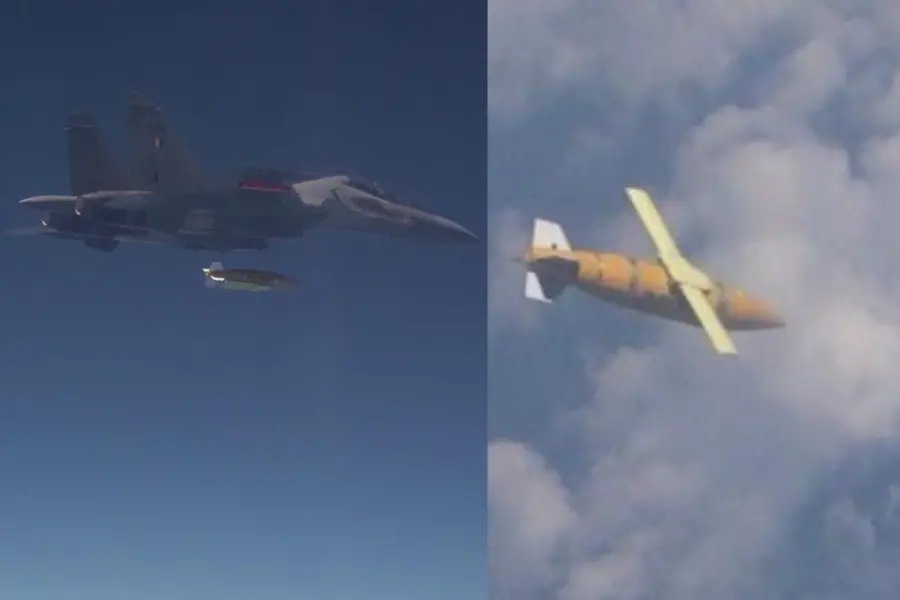
Imagine a massive 1,000-kilogram weapon falling from a fighter jet 12 kilometres high in the sky, gliding silently like an eagle toward its target nearly 100 kilometres away, hitting it with pinpoint accuracy without making a sound or leaving a smoke trail. This isn't science fiction—this is Gaurav, India's newest homegrown Long Range Glide Bomb (LRGB) that has just completed successful trials off the coast of Odisha between April 8-10, 2025.
What makes this achievement truly special is that every single component, every line of code, and every piece of technology in this weapon was designed and built right here in India by our own scientists at DRDO's Research Centre Imarat in Hyderabad. In a world where most countries still depend on importing weapons from America, Russia, or Europe, India has quietly joined an elite club of nations that can design and produce such advanced military technology entirely on their own.
Before we dive deeper, let's understand what a glide bomb actually is, and more importantly, what makes it "long range." Unlike regular bombs that simply fall straight down or missiles that have engines and fuel, a glide bomb is something in between. Think of it like a paper airplane—once released from an aircraft, it unfolds its wings and uses the air currents and aerodynamics to glide toward the target. It has no engine, no fuel, making it much cheaper than missiles, yet it can travel far longer distances than regular bombs. The "long range" part comes from its specially designed wings and aerodynamic shape that allow it to glide between 30 to 150 kilometres, depending on the altitude from which it's released. More importantly, because there's no engine roar or exhaust smoke, enemy radar systems find it extremely difficult to detect and shoot down. It's this silent, stealthy approach that makes long-range glide bombs so deadly in modern warfare.
The journey of Gaurav began with a simple yet powerful idea: why should our Air Force pilots risk their lives by flying deep into enemy territory when we can hit targets from safe distances? Modern warfare has changed dramatically. Countries like China and Pakistan have installed sophisticated air defence systems—batteries of missiles that can shoot down aircraft from dozens of kilometres away.
These systems make it incredibly dangerous for fighter jets to enter enemy airspace. Gaurav solves this problem brilliantly. An Indian Air Force Sukhoi-30 MKI fighter can release this Long Range Glide Bomb from 100 kilometres away, safely outside the range of most enemy air defences, and the bomb will glide all the way to destroy command centres, terrorist hideouts, or weapons facilities with devastating precision. The pilot never enters the danger zone.
What impresses me most about Gaurav is the technology packed inside that 1,000-kilogram frame. It uses a hybrid navigation system, meaning it combines two different technologies working together, which merges an Inertial Navigation System with GPS. Let me explain this simply—an Inertial Navigation System, or INS, uses sensors called accelerometers and gyroscopes that constantly measure the bomb's movement, speed, and direction changes, calculating its exact position without needing any external signals. It's like having an internal compass and speedometer that work even when you're completely isolated from the outside world. GPS, as most of us know, uses satellite signals to pinpoint location. By combining both through this hybrid approach, Gaurav gets the best of both worlds.
Even if enemies try jamming the GPS signals, a common electronic warfare tactic, the INS backup ensures the bomb still reaches its target accurately. During the April trials, Gaurav was dropped from various altitudes between 1 kilometre to 12.6 kilometres and at speeds ranging from Mach 0.6 to 0.95, that's roughly 735 km/hr to 1,165 km/hr, yet it consistently hit targets with errors less than 10 meters. That's like throwing a cricket ball from Connaught Place in Delhi and landing it exactly on a specific window in India Gate—remarkable precision.
DRDO has actually developed two glide bombs working in tandem—Gaurav and its sibling Gautham. While the winged version Gaurav weighs around 1,000 kilograms with its extended glide capability, the non-winged Gautham is lighter at 550 kilograms, designed for shorter-range missions. Both bombs measure four meters in length with a diameter of 0.6 meters, but Gaurav's wings span an impressive 3.4 meters, giving it the lift needed for those extended long-range glides.
This clever design allows our Air Force to choose the right weapon for each mission—Gaurav for distant, high-value targets beyond 100 kilometres and Gautham for closer engagements where extreme range isn't necessary. Both can carry different types of warheads—pre-fragmented ones that explode into thousands of deadly fragments for area targets, or penetration-blast warheads designed to punch through concrete bunkers before exploding inside. This versatility makes them suitable for everything from taking out terrorist training camps to destroying heavily fortified military installations.
Defence Minister Rajnath Singh rightfully called this a "significant boost" to our armed forces, and frankly, he's understating it. This success represents years of collaboration between DRDO scientists, Air Force pilots who tested it repeatedly, and Indian industries like Tata Advanced Systems that will manufacture it at scale. What fills me with pride is how this achievement reflects India's growing technological confidence. We're no longer content being merely consumers of foreign technology.
From the BrahMos supersonic cruise missile to the Akash air defence system, and now the Gaurav Long Range Glide Bomb and Gautham, India is steadily building weapons that rival anything produced by established military powers. More importantly, these weapons cost a fraction of imported equivalents, saving precious foreign exchange while creating high-skilled jobs for thousands of engineers and technicians across the country.
Of course, challenges remain. Ramping up production to equip multiple fighter squadrons will test our manufacturing capabilities. Integrating Gaurav with future platforms like the indigenous Tejas Mark 2 fighter requires additional work. Perhaps future versions could incorporate artificial intelligence for even smarter targeting or achieve hypersonic speeds to defeat next-generation air defences. But these are exciting challenges for our scientists to tackle, not insurmountable obstacles.
Standing at the threshold of induction into the Indian Air Force by late 2025, Gaurav represents something deeper than just military hardware. It symbolises a nation that has transformed from being a technology importer to a proud innovator. It sends a clear message to potential adversaries: India can defend its sovereignty with weapons designed by Indian minds and built by Indian hands. For anyone who cares about national security and technological self-reliance, Gaurav is proof that when determination meets innovation, even the sky isn't the limit—it's just the beginning.
The author is a Defence, Aerospace & Geopolitical Analyst
Published: 25 Nov 2025, 02:18 pm IST
Related Topics
Disclaimer: Kindly avoid objectionable, derogatory, unlawful and lewd comments, while responding to reports. Such comments are punishable under cyber laws. Please keep away from personal attacks. The opinions expressed here are the personal opinions of readers and not that of Mathrubhumi.
