
Heightened tensions between Israel and Iran threaten the Strait of Hormuz, a vital oil transit point.
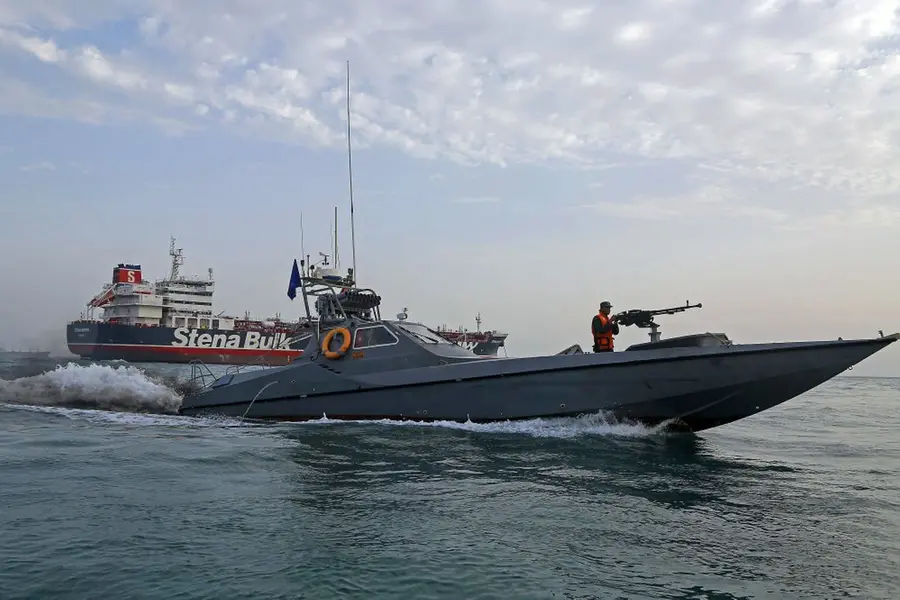
Heightened tensions between Israel and Iran, following a series of direct military strikes, have sent ripples of concern through global oil markets. The primary worry centres on the Strait of Hormuz, a vital chokepoint through which a significant portion of the world's oil supply transits, and which Tehran has historically threatened to close in response to Western pressure.
In the aftermath of the latest escalation, which began early June 13, 2025 when Israel launched widespread strikes against Tehran, the latter has vowed a "powerful and decisive" retaliation. The Israeli attacks reportedly targeted Iran's nuclear infrastructure, ballistic missile capabilities, and military commanders.
Despite the severity of the Israeli strikes, the National Iranian Oil Refining and Distribution Company stated that its oil refining and storage facilities remained undamaged and fully operational. However, the potential for disruption to oil flows remains a significant concern given past threats by Iran to block the Strait of Hormuz.
Strategic importance of Strait of Hormuz
The Strait of Hormuz is a narrow yet strategically critical waterway located between Iran and Oman. It connects the Persian Gulf, north of it, with the Gulf of Oman to the south, and extends onward to the Arabian Sea. At its narrowest point, the strait is 33 kilometers (approximately 20.5 miles) wide, with the shipping lane itself limited to just three kilometers in either direction.
Energy analysts widely recognize the Strait of Hormuz as a crucial oil transit chokepoint, linking major crude producers in the Middle East with key markets worldwide. According to the US Energy Information Administration (EIA), the oil flow through the Strait of Hormuz averaged 21 million barrels per day in 2022, representing roughly 21% of the global crude trade.
Any inability for oil to traverse this major chokepoint, even temporarily, could significantly drive up global energy prices, inflate shipping costs, and cause substantial supply delays.
For many energy experts, a blockade or significant disruption to flows via the Strait of Hormuz is considered a "worst-case scenario" that could push oil prices "far above $100 a barrel," as reported by Reuters. Experts suggest any such closure would drastically restrict trade and impact worldwide oil prices.
Data from Vortexa indicates that between 17.8 million and 20.8 million barrels of crude, condensate, and fuels flowed through the strait daily throughout 2022. Major OPEC members -- Saudi Arabia, Iran, the United Arab Emirates, Kuwait, and Iraq -- export the majority of their crude through this waterway, with Asia being the primary destination.
Recognizing this vulnerability, Saudi Arabia and the UAE have explored alternative pipeline routes to bypass the strait. The US Energy Information Administration noted last June that approximately 2.6 million barrels per day of unused capacity from UAE and Saudi Arabian pipelines could be available to circumvent Hormuz.
Additionally, Qatar, one of the world's largest liquefied natural gas (LNG) exporters, sends nearly all its LNG shipments through the Strait of Hormuz.
Historical context and naval presence
Iran has threatened to block the Strait of Hormuz on several occasions over the years, including in January 2012 in retaliation for US and European sanctions, but has never fully executed such a move. Commercial shipping in the area is notably protected by the Bahrain-based US Fifth Fleet.
Historically, the region has seen significant oil-related geopolitical maneuvers. In 1973, Saudi Arabia-led Arab producers imposed an oil embargo on Israel's Western supporters during the latter's war with Egypt. At that time, Western countries were the primary buyers of crude from Arab nations.
In contrast, Asia is now the main recipient of OPEC-produced crude. Meanwhile, the US has more than doubled its oil liquids production over the past two decades, emerging as one of the world's largest oil exporters.
The region has also been a flashpoint for naval conflicts, notably the "Tanker War" during the 1980-1988 Iran-Iraq war, when both sides sought to disrupt each other's oil exports.
A tragic incident in July 1988 saw a US warship shoot down an Iranian airliner, killing all 290 passengers onboard. Washington maintained it was an accident, while Tehran asserted it was a deliberate attack, Reuters reported. More recently, in May 2019, four vessels, including two Saudi oil tankers, were attacked off the UAE coast, just outside the Strait of Hormuz.
Published: 14 Jun 2025, 02:22 pm IST
Disclaimer: Kindly avoid objectionable, derogatory, unlawful and lewd comments, while responding to reports. Such comments are punishable under cyber laws. Please keep away from personal attacks. The opinions expressed here are the personal opinions of readers and not that of Mathrubhumi.
