
Will damaged nuclear facilities spur a weapons program or peaceful cooperation?
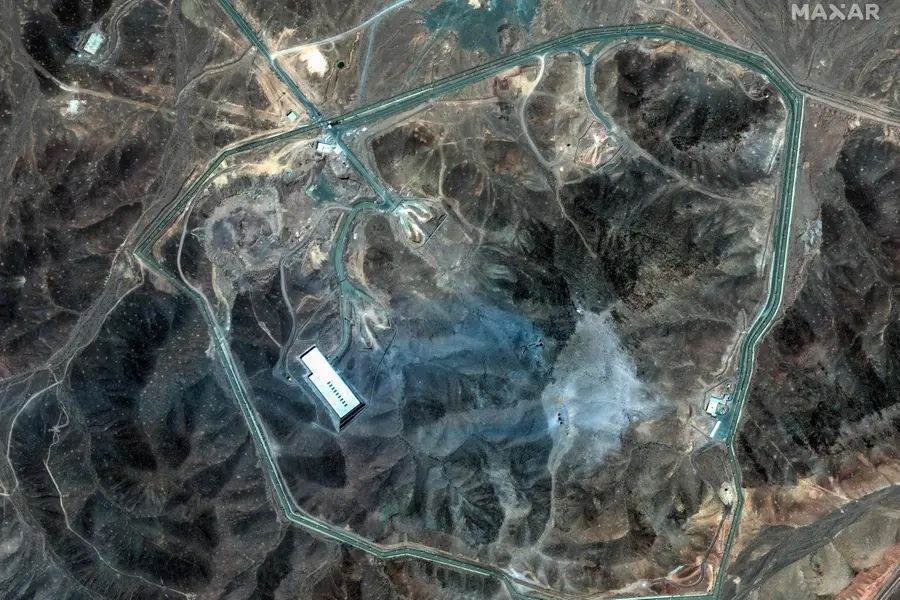
After 12 days of war, United States President Donald Trump announced on Tuesday, June 24, that Iran would never be able to restart its nuclear program. However, if the current ceasefire continues and leads to talks about Iran's nuclear plans, Tehran is unlikely to give up its claim to enrich uranium. Still, it might agree to certain restrictions -- like keeping track of its remaining nuclear materials, allowing more inspections, and limiting its so-called peaceful nuclear activities.
But the US and Israeli attacks on Iran's nuclear sites might push Iran to leave the Nuclear Non-Proliferation Treaty (NPT) and quickly try to develop nuclear weapons. For a country that has just faced major surprise attacks and feels threatened by stronger enemies, building a nuclear weapon may seem like a way to protect itself.
If Iran's government survives this conflict, it will have to make some tough choices about whether to restart its long-standing efforts to build a nuclear bomb -- and how to go about it.
Iran had been slowly building the ability to make weapons-grade nuclear material by claiming it was for peaceful purposes, while holding off on actually making a bomb. But this approach has clearly failed -- it didn't stop military attacks, it encouraged them. If Iran now chooses to go after nuclear weapons openly, it will face many technical challenges and serious security risks. At this point, it's uncertain which direction the country will take.
Despite the recent strikes and loss of some top scientists, Iran's core ability to build nuclear weapons still exists. The knowledge and skills of its many nuclear experts, engineers, and workers can't be erased overnight. Iran still has the scientific and industrial base needed to restart its nuclear program, if its leaders decide to pursue it in the long run.
Iran's nuclear facilities have been badly damaged, but the country still holds a large amount of enriched uranium. According to the International Atomic Energy Agency (IAEA), Iran has around 5,000 kilograms of low-enriched uranium and 400 kilograms of uranium enriched up to 60%. If the 60% uranium is enriched further to 90% -- the level needed for weapons -- it could be enough to make about 10 nuclear bombs.
Reports suggest that much of this uranium, along with some important equipment, was likely moved to secret locations before the US. bombed the Fordow nuclear site.
According to reports by the Financial Times, Iran's key nuclear enrichment sites at Natanz, Fordow, and Isfahan appear to be heavily damaged and are no longer in working condition. Iran is unlikely to rebuild these facilities openly, as they would come under international scrutiny and face the risk of more attacks. Instead, Financial Times suggests that Iran may secretly construct a new enrichment facility using parts it has hidden and spare centrifuges not tracked by the International Atomic Energy Agency (IAEA).
However, producing new advanced centrifuges will be a major challenge. Israel has already destroyed the known manufacturing sites, which contained highly specialized equipment. Despite bold statements from Dmitry Medvedev, deputy chairman of Russia's Security Council, the Financial Times also notes that it is highly unlikely Russia -- or any other country -- would supply nuclear warheads to Iran.
Under the Nuclear Non-Proliferation Treaty (NPT), Iran is allowed to officially leave the agreement if it gives a three-month notice to all member countries and the UN Security Council. So far, only North Korea has done this before. If Iran chooses to withdraw, it would no longer have to allow international inspections. This would make it easier for Iran to secretly work on building nuclear weapons and reduce the risk of being stopped or attacked.
However, in reality, Iran is already heavily watched by foreign intelligence agencies. So even without inspections by the International Atomic Energy Agency (IAEA), Iran may still struggle to keep its nuclear activities hidden, as it is likely to be exposed anyway.
Leaving the Nuclear Non-Proliferation Treaty (NPT) could create more problems for Iran. It would likely be seen by the world as a clear signal that Iran wants to build nuclear weapons. Even countries like Russia and China, which have criticized the US and Israeli attacks on Iran, might not support such a move.
Once outside the NPT, Iran would face tougher global sanctions and restrictions. These would make it harder to get the parts and technology needed to restart or expand its nuclear program. Also, by quitting the treaty, Iran would give the US and Israel more reason to take military action in the future, claiming it's for global security.
Considering all these risks, Iran may find it safer to stay in the Nuclear Non-Proliferation Treaty (NPT) and focus only on using nuclear energy for peaceful purposes, with international inspections to prove its intentions. However, as the recent war has shown, even nuclear sites claimed to be for peaceful use can still be targeted in military attacks. So, staying within the treaty does not fully protect Iran from future strikes.
The author is a defence, aerospace & geopolitical analyst.
Published: 26 Jun 2025, 05:03 pm IST
Related Topics
Disclaimer: Kindly avoid objectionable, derogatory, unlawful and lewd comments, while responding to reports. Such comments are punishable under cyber laws. Please keep away from personal attacks. The opinions expressed here are the personal opinions of readers and not that of Mathrubhumi.
