

After being diagnosed with Meningitis at the age of four, Reedy attended speech therapy sessions for several years where he learnt to associate the shape of lip patterns to words.
Helen Keller, the prolific American author, disability rights advocate, and political activist, had said: The best and most beautiful things in the world cannot be seen or even touched - they must be felt with the heart. Almost 57 years later, life has changed for people with disabilities, with emerging careers and possibilities for brighter futures.
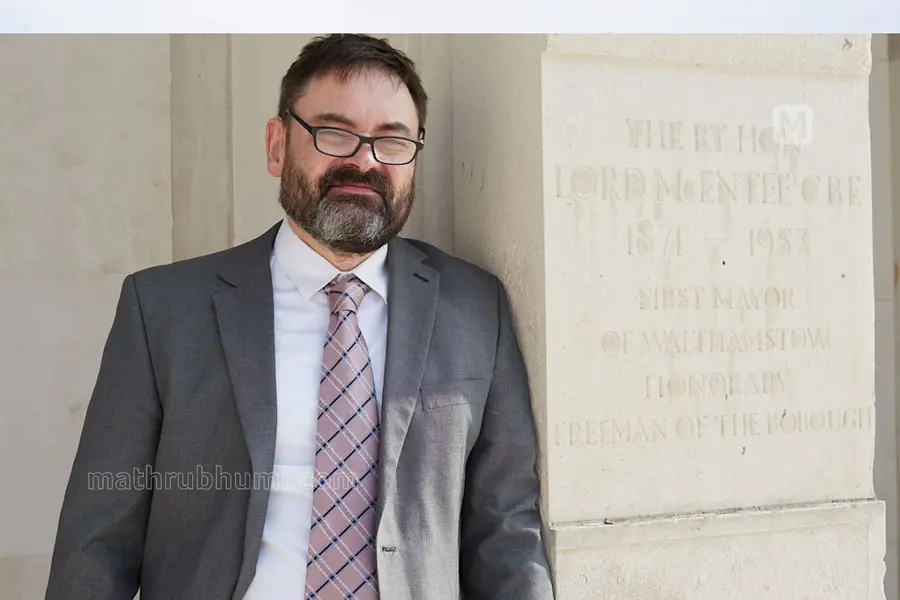
Ever heard of a forensic lipreader and what the profession entails? Mathrubhumi spoke to Tim Reedy, a self-taught expert forensic lipreader based in London. Reedy, being hearing impaired, has worked in the health sector, providing face-to-face lipreading support for healthcare professionals and families of tracheostomy patients. He is also the first forensic lipreader in Australian legal history to have a transcript accepted as credible evidence by a judge.
Excerpts:
1. In layman's terms, who is an expert forensic lipreader?
In layman’s terms, an expert forensic lipreader is a person with the skills and ability to create a transcript of CCTV or video footage without sound. This means that providing the camera footage is good enough to lipread in the first place. However, it must be pointed out that lipreading is a skill and cannot be regarded as 100 per cent accurate.
2. How did you decide this to be your full-time career path?
Over 20 years ago, I was working as a Civil Servant, but did not see it as a long-term career path. A couple of newspapers approached me to lipread some celebrity videos to a tight deadline. I received positive feedback, and with many more assignments to follow over the years, it is fair to say that I was satisfied on the professional front. However, I got my calling in April 2024 and launched my company, Elite Lipreader, by investing in resources to ensure successful assessment and delivery of all assignments. I worked face-to-face with tracheostomy patients (who wear a tube to support breathing via the tracheal opening) in hospitals. This procedure affects speech or swallowing, but they can move their lips to communicate. I lipread their comments and relay their silent words/thoughts to family and medical professionals.
3. You have been doing this for over 25 years now. Tell us your most unique experience:
My most unique experience was the Bruce Lehrmann defamation trial in December 2023, in Sydney, Australia. I am the first-ever forensic lipreader in Australian legal history to have a court-admissible transcript accepted as credible evidence by a judge. I was cross-examined in court, with communication support from a professional lipspeaker, who is trained to listen to spoken comments, which are then relayed to me without sound for me to lipread and answer all questions (serving a similar purpose as a sign language interpreter). For the lawyers as well as the judge and everyone in the courtroom, this was an opportunity for me to showcase my lipreading skills at the highest level.
4. What are the devices that you use for forensic lipreading?
I use an Apple iMac with its touch-sensitive Apple Magic Mouse to allow me to play footage without sound back and forth at a speed of my choosing. I also have an Apple iPad, so I can view footage from different angles. Pixelation is a key issue in forensic lipreading. If pixelation is poor, the task gets all the more difficult.
5. Tell us something about your childhood and personal life:
After being diagnosed with Meningitis at the age of four, I attended speech therapy sessions for several years where I learnt to associate the shape of lip patterns to words and practised in front of the mirror at home for hours. I also attended mainstream primary school with other hearing children, which I enjoyed to the core. During secondary school, I attended a boarding school for deaf children. Later, I went on to pursue a Master’s degree in Art History. I met my partner Kate 13 years ago, and since then, we have been dating happily. We are getting married in June this year.
7. Is there any difference between people who can hear and those who can't?
Trust me, there is no difference between people who can hear and those who cannot. There are hearing professionals with degrees and jobs, and there are hearing-impaired professionals with degrees and jobs as well. I can function in both communities/embrace each tribe and their cultures.
8. What is your message to all hearing-impaired people around the globe?
I would give the same message to hearing-impaired people and hearing people around the globe: you have one life to access education, so make the most of it. Invest in yourself professionally and learn life skills. Get support from mentors and challenge yourself to the best of your ability. Time is precious, and last but not least, always remember to be kind to people.
Published: 30 May 2025, 07:30 am IST
ABOUT THE AUTHOR
Disclaimer: Kindly avoid objectionable, derogatory, unlawful and lewd comments, while responding to reports. Such comments are punishable under cyber laws. Please keep away from personal attacks. The opinions expressed here are the personal opinions of readers and not that of Mathrubhumi.