
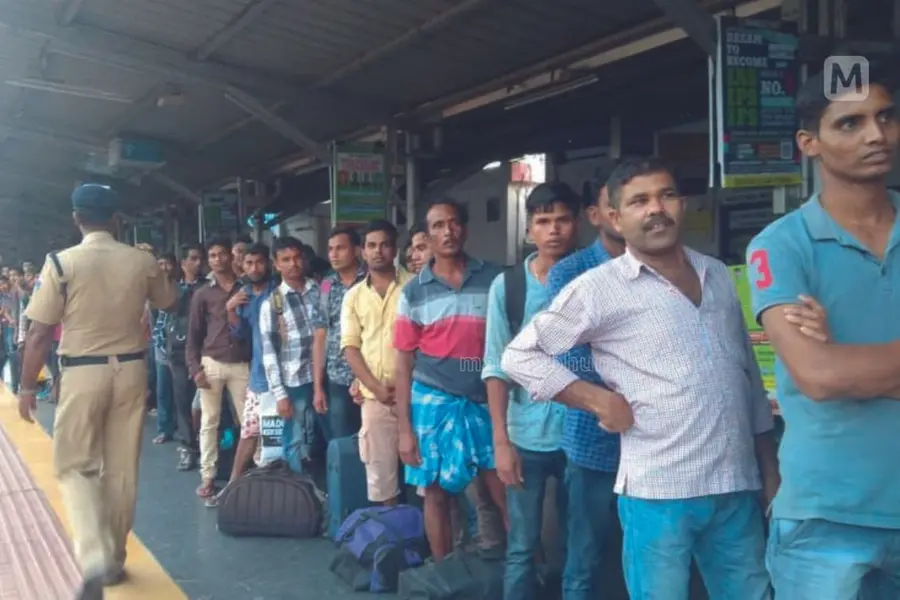
As the Lok Sabha elections approach, Kerala might see a potential migrant labour drain due to the implementation of the Citizenship Amendment Act (CAA). Many Muslim migrant workers are expected to leave the state in the coming weeks to vote in the upcoming Lok sabha elections. They view voting as their primary way to counter potential persecution or legal issues arising from their undocumented status or religious background.
Normally, migrant movements in Kerala coincide with festivals and local elections in their home states. However, according to some NGOs and labour rights forums, the CAA has become a key factor, prompting numerous minority community migrant workers to prioritise participating in the Lok Sabha polls.
Dr. Benoy Peter, Executive Director of the Centre for Migration and Inclusive Development, highlighted the serious nature of the situation. "Migrant laborers in Kerala hail mainly from states like Assam and West Bengal, with a significant portion belonging to the Muslim community. Given that the CAA excludes Muslims, they are likely to see the upcoming election crucial. With the looming specter of the CAA coupled with rising temperatures and the concurrent occurrence of Holi and Eid, we could witness a tenfold surge in outward migration in the coming weeks," he said.
Peter noted that through their grassroots interactions, they've discovered that many have already packed their bags, while others struggle to secure train tickets due to heavy rush.
It's worth mentioning that these workers are engaged across various sectors, such as construction, agriculture, hospitality, and domestic services. The potential outward migration poses concerns regarding labor shortages in critical industries in the state.

George Mathew, Coordinator of the Progressive Workers Organization (PWO), echoed similar sentiments. "Since the CAA gained prominence, minorities in West Bengal and Assam have been gripped by fear, which is also observable among workers here. Some believe that voting in the election is a means to establish their citizenship. Hence, I believe many view the Lok Sabha elections as an opportunity to assert their identity."
Mathew also criticized the government's lack of support in facilitating migrant laborers' voting. "While the Railways announce special trains for festivals and pilgrimages, the government, despite terming the Lok Sabha polls as the biggest festival of democracy, fails to proactively assist in transporting migrants for voting. For a daily wage earner, travelling to their home state and back is financially burdensome. Many abstain from voting due to the absence of institutional support," he said.
Migrant voting issue
The issue of migrant voting remains a significant concern in India. According to the 2011 census, a staggering 45.36 crore Indians, comprising 37 percent of the population, are domestic migrants, residing away from their places of origin within the country.
As per the Kerala Planning Board Report 2021, the state witnessed an influx of approximately 31.4 lakh migrants from other states during 2017-18. Projections suggest a significant rise in this migrant population, estimated to reach between 45.7 lakh and 47.9 lakh by 2025 and between 55.9 lakh and 59.7 lakh by 2030 at the current immigration rate.
Despite the increasing numbers, migrant voting poses challenges to voter participation. The Election Commission of India (ECI) aimed to tackle this by allowing migrant voters to cast their ballots from their current residences. Proposed solutions included modified electronic voting machines (EVMs) and remote voting technologies such as blockchain. Despite efforts, several political parties opposed these initiatives. The ECI conducted a pilot test of a Multi-Constituency Remote EVM and sought feedback from parties. However, doubts lingered, with concerns about the political system's maturity and the reliability of technology.
During the media conference announcing the Lok Sabha polls 2024, the ECI acknowledged its readiness but also recognized the need for further development and acceptance of these innovations. Although remote voting technology is available, its widespread adoption may necessitate more time and acceptance within the political landscape.
Published: 24 Mar 2024, 11:10 am IST
ABOUT THE AUTHOR
Related Topics
Disclaimer: Kindly avoid objectionable, derogatory, unlawful and lewd comments, while responding to reports. Such comments are punishable under cyber laws. Please keep away from personal attacks. The opinions expressed here are the personal opinions of readers and not that of Mathrubhumi.