
Bangladesh's proposed J-10CE purchase over the Rafale is facing scrutiny after Dhaka cited disputed claims about Chinese fighters shooting down Indian Rafales during the 2025 India-Pakistan conflict.
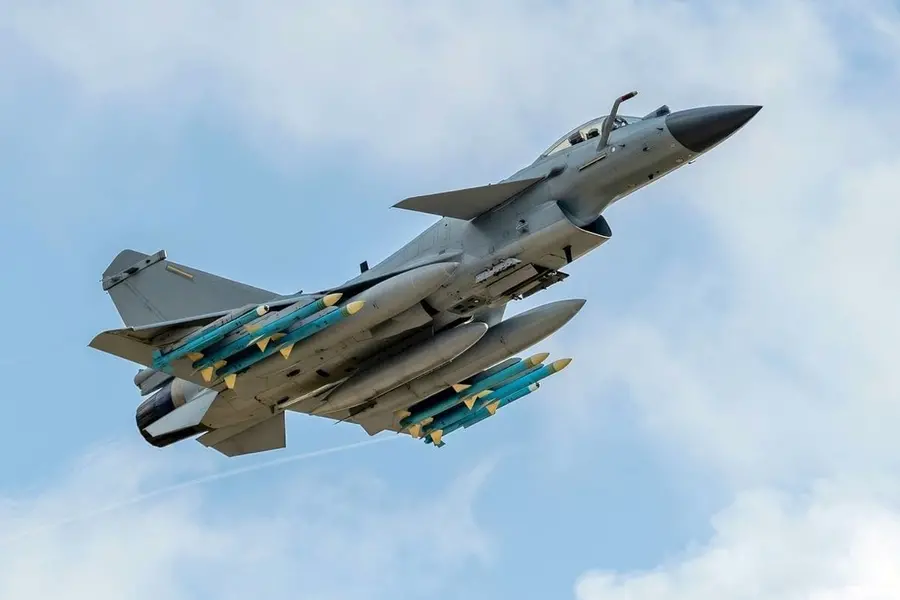
Bangladesh's decision to move towards acquiring China's J-10CE fighter aircraft, reportedly instead of considering the French Rafale, has raised questions about whether Dhaka is allowing an unverified combat narrative to influence one of its most important defence procurements.
A senior adviser to Bangladesh's interim government has confirmed that a draft agreement covering the possible purchase of 20 J-10CE fighters has been prepared and sent for approval. The proposed package is estimated at around $2.2 billion to $2.3 billion and may also include attack helicopters, VIP transport helicopters and unmanned aerial systems.
The adviser, Zahed Ur Rahman, cited the J-10's alleged performance against Indian Rafale aircraft during the 2025 India-Pakistan conflict. He said the episode demonstrated the Chinese fighter's ability to defeat one of the world's most advanced 4.5-generation aircraft.
But that conclusion rests on claims that remain disputed. Pakistan said its Chinese-made fighters shot down several Indian aircraft, including Rafales. India has firmly rejected Pakistan’s account. Dassault Aviation's chief executive also disputed Islamabad’s claim that three Rafales had been destroyed.
The concern, therefore, is not simply that Bangladesh is purchasing a Chinese aircraft. It is that the decision appears to be publicly justified through a contested combat narrative rather than a transparent comparison of lifecycle costs, operational requirements, supply-chain reliability, pilot training, weapons access and long-term strategic dependence.
Decision driven by disputed battlefield story
Bangladesh's adviser described the Rafale shoot-down claim as established and said the reported combat performance of the J-10 had influenced Dhaka's decision.
That assertion goes beyond what the available public evidence can establish. Air combat outcomes are shaped by far more than the aircraft itself. They depend on airborne early-warning support, ground radar, electronic warfare, pilot training, missile employment, command-and-control systems, tactics and the circumstances of the engagement.
A reported aircraft loss cannot automatically prove that one fighter is technologically superior to another. Nor can a single contested episode establish that the J-10CE is a better platform for Bangladesh’s air-defence needs.
The public record does not provide independently verified evidence that a J-10CE definitively shot down a Rafale in a one-on-one engagement. Reuters reported that Pakistan claimed the destruction of several Indian aircraft, while India rejected the account.
That uncertainty makes the rhetoric surrounding the Bangladesh purchase especially problematic. A major defence contract should be based on verified performance data and a long-term capability assessment, not on claims made by one side in a politically charged conflict.
J-10CE versus Rafale
The J-10CE and Rafale are both classified broadly as 4.5-generation multirole fighters, but the two aircraft differ substantially in size, configuration, propulsion, operational maturity and mission profile.
The J-10CE is a single-engine, single-seat canard-delta fighter developed by China and exported to Pakistan. It is equipped with modern digital avionics, an active electronically scanned array radar and compatibility with long-range Chinese air-to-air missiles, including the export PL-15 family.
The Rafale is a larger twin-engine multirole aircraft developed by France. It was designed from the beginning to conduct air superiority, ground attack, reconnaissance, nuclear deterrence and long-range power-projection missions.
The J-10CE’s strongest selling point is likely its cost. Bangladesh’s adviser said Chinese aircraft were considerably cheaper than Western alternatives such as the Rafale and Eurofighter Typhoon. Lower acquisition costs may make the J-10CE more attractive to a country seeking a modern air-defence fleet within a restricted budget.
But the purchase price is only one part of a fighter programme. Bangladesh would also need to fund weapons, simulators, training, spares, maintenance, infrastructure, software support, upgrades and the eventual replacement of major components.
A cheaper aircraft can become expensive if its support chain is uncertain, its availability is low, or its weapons and software remain dependent on a single supplier.
Rafale offers broader combat package
The Rafale’s advantage is not limited to its air-to-air performance. Its design combines air combat, long-range strike, electronic warfare, reconnaissance and maritime operations in one platform. Thales describes the aircraft as capable of air superiority, ground attack, nuclear deterrence, reconnaissance and long-range power projection.
The Rafale’s SPECTRA system is designed to detect, identify and respond to radar and other electromagnetic threats. Its RBE2 AESA radar provides advanced detection and tracking capabilities, while its integration with Meteor and MICA missiles gives it a sophisticated air-to-air weapons package.
The Rafale can also carry precision strike weapons and operate as part of a larger network involving other aircraft, ground units and naval platforms. Its twin-engine configuration provides an additional layer of redundancy in operations over the sea or at long range.
These characteristics are relevant to Bangladesh, which has a long coastline, maritime security responsibilities and a growing interest in protecting its airspace and exclusive economic zone. A fighter selected only for air combat may not provide the same flexibility as a platform designed for air, land and maritime missions.
J-10CE's appeal and its risks
The J-10CE is not an outdated or incapable aircraft. It offers modern radar, digital systems, long-range missiles and a lower entry price. It would be a significant improvement over Bangladesh’s ageing F-7 fleet and could provide the Bangladesh Air Force with a credible beyond-visual-range capability.
The problem is that Bangladesh may be treating affordability and a disputed combat claim as substitutes for a complete strategic evaluation.
The J-10CE would place Bangladesh more deeply inside China’s military ecosystem. Its weapons, software, maintenance, training and future upgrades would be tied primarily to Beijing. That could give China long-term influence over Bangladesh’s air-force operations and procurement decisions.
The aircraft’s operational effectiveness would also depend on the wider Chinese support package. Bangladesh would need access to reliable spare parts, timely upgrades, pilot training and secure data links. Any future dispute, export restriction or diplomatic disagreement could affect availability.
There are also questions about the transparency of Chinese performance claims. Public information about radar ranges, missile effectiveness, electronic warfare capability and combat outcomes is limited and often based on official statements or claims by interested parties.
Bangladesh's financial argument
Dhaka’s financial concerns are understandable. The Rafale is an expensive system, and a full fleet would require substantial long-term expenditure.
The reported J-10CE proposal involving 20 aircraft and a package worth approximately $2.3 billion may offer Bangladesh a way to modernise more quickly at a lower upfront cost.
However, the affordability argument requires careful scrutiny. The real cost of a fighter fleet includes:
* Training pilots, instructors and maintenance personnel.
* Building hangars, weapons storage and maintenance facilities.
* Purchasing spare engines, radar components and electronic systems.
* Acquiring missiles and precision-guided weapons.
* Maintaining simulators, data links and mission-planning systems.
* Funding mid-life upgrades and software support.
* Keeping aircraft operational for 30 to 40 years.
If those costs are underestimated, an apparently affordable aircraft can become a financially heavy commitment.
Regional and strategic consequences
The proposed J-10CE acquisition would deepen China’s defence presence in Bangladesh. Beijing already supplies Dhaka with combat aircraft, naval platforms, tanks and missile systems.
A modern Chinese fighter fleet would expand that relationship into the most sensitive area of military capability: combat aviation and air-defence doctrine.
For India, the decision would be significant even if Bangladesh does not adopt an openly hostile posture. A fleet of AESA-equipped aircraft carrying long-range missiles would require Indian planners to monitor developments along the eastern border and in the Bay of Bengal more closely.
The acquisition could also complicate India-Bangladesh defence ties. New Delhi and Dhaka have extensive economic, geographical and security links, but a large Chinese fighter purchase could create greater dependence on Beijing in Bangladesh’s military planning.
The aircraft might be intended purely for air defence. Yet its introduction would still affect regional calculations because it would bring Chinese radar, missile, communications and maintenance systems closer to India’s eastern airspace.
The Rafale edge Bangladesh ignored
Choosing the Rafale would not have been without complications. The aircraft is more expensive and would require Bangladesh to build a new Western logistics and training ecosystem.
But a French fighter could have offered Dhaka greater diversification in defence partnerships. Bangladesh would not be as dependent on one supplier for combat-aircraft technology, weapons and upgrades.
A Rafale purchase could also have created opportunities for broader cooperation with France and other European partners in aerospace training, maintenance, maritime surveillance and advanced defence technology.
The decision to select the J-10CE may therefore provide short-term savings but carry long-term strategic costs. Bangladesh is not merely buying aircraft; it is choosing an ecosystem, a supplier relationship and a future defence orientation.
An unfinished deal
The J-10CE acquisition is not yet a completed contract. Reports indicate that a draft agreement has been prepared, but the proposal still requires approval, financing arrangements and negotiations over the number of aircraft, weapons, delivery schedule and support package.
The final terms will determine whether Bangladesh receives a genuinely sustainable combat capability or simply a fleet that looks affordable at the time of purchase.
Dhaka should therefore publish the evaluation criteria, explain how the Rafale and other alternatives were assessed and clarify how it verified the claims about the 2025 air battle. A procurement of this scale requires more than political assurances and battlefield anecdotes.
A high-stakes gamble for Dhaka
Bangladesh’s move towards the Chinese J-10CE is understandable as a response to ageing aircraft, budget pressure and the need to modernise its air force. But the decision becomes questionable when the government presents a disputed Rafale-kill claim as established fact.
The J-10CE may be a capable and cost-effective fighter. It may provide Bangladesh with a meaningful improvement over its existing fleet. But its selection over the Rafale cannot be justified solely by an unverified account of a single conflict.
The Rafale offers a broader multirole capability, mature operational experience, twin-engine redundancy, advanced electronic warfare and an established international support ecosystem. The J-10CE offers lower cost, modern Chinese sensors and missiles, and a politically attractive narrative shaped by Pakistan’s claims.
For Bangladesh, the danger is that the cheaper option may come with hidden strategic costs. Dhaka risks replacing an equipment deficit with supplier dependence, and a long-term security decision with a short-term political message.
The J-10CE deal, if finalised, will not simply modernise Bangladesh’s Air Force. It will mark a deeper shift towards China -- one that could reshape Dhaka’s defence posture and complicate India’s security calculations for decades.
Published: 29 Aug 2026, 03:09 pm IST
ABOUT THE AUTHOR

Related Topics
Disclaimer: Kindly avoid objectionable, derogatory, unlawful and lewd comments, while responding to reports. Such comments are punishable under cyber laws. Please keep away from personal attacks. The opinions expressed here are the personal opinions of readers and not that of Mathrubhumi.