
The United States has been experimenting with AI surveillance in several state prisons, using it to detect fights, track inmate movements, and identify weapons.
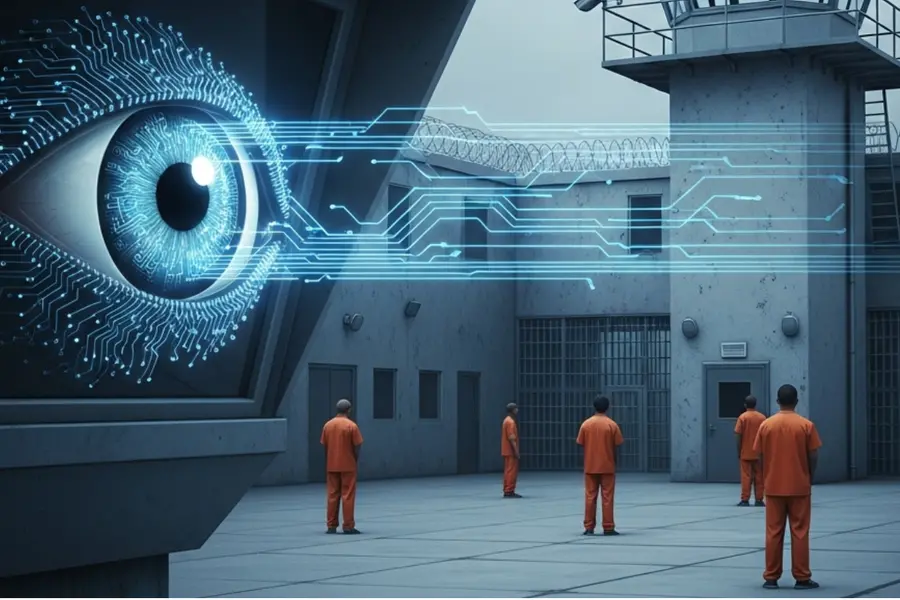
Alok Kumar, the newly appointed Director General of Prisons for Karnataka, recently made an announcement that sounds straight out of a science fiction movie. The prison department is contemplating an AI-based intrusion detection system, with trials already underway. For those wondering what this means in simple terms, imagine intelligent cameras that do not just record but actually think, analyse, and alert authorities the moment something suspicious happens inside prison premises. The question we must ask ourselves is whether this technological leap will truly bring control to prison management or create new complications we have not yet considered.
Let me explain what an intrusion detection system actually does. Traditional CCTV cameras simply record everything happening in their view. A human operator must sit and watch multiple screens, trying to spot problems among hundreds of inmates moving around. This is exhausting, prone to human error, and frankly impossible to do effectively around the clock. An AI-based system, however, uses artificial intelligence to continuously monitor live footage, recognise unusual patterns, detect unauthorised movements, identify prohibited items, and immediately alert prison staff without any human having to watch every second of the recording. Think of it as having thousands of tireless, alert guards who never blink, never get distracted, and never miss a detail.
This technology is not entirely new globally. The United States has been experimenting with AI surveillance in several state prisons, using it to detect fights, track inmate movements, and identify weapons. The United Kingdom has deployed similar systems in high-security facilities to monitor vulnerable prisoners and prevent suicides by detecting distress signals in behaviour patterns. Singapore, known for its technological advancement, uses AI cameras in its prisons to analyse crowd formations and predict potential riots before they escalate. Even closer to home, China has extensively implemented facial recognition and behaviour analysis systems across its correctional facilities, though their approach raises significant privacy concerns that many democracies would find unacceptable.
The potential benefits for prison management appear impressive on paper. Escape attempts could be detected the moment an inmate approaches restricted areas or behaves suspiciously near walls and boundaries. Violence between inmates, which often erupts suddenly, could be identified in its earliest stages, allowing guards to intervene before serious harm occurs. Smuggling of prohibited items like mobile phones, weapons, or drugs through various creative methods could be caught immediately when AI recognises objects that should not exist in certain zones. The system could even monitor if inmates are gathering in unusual numbers, which sometimes indicates planning for riots or other coordinated activities. For prison administrators struggling with limited staff and vast responsibilities, this technology promises an extra layer of security that never sleeps.
However, as someone who believes in balancing security with human dignity, I must raise concerns that deserve honest discussion. Prisons house human beings, many of whom are there for minor offences or are still undertrials awaiting justice. Constant AI surveillance creates an environment of total monitoring where every movement, every conversation, every gesture gets recorded and analysed by algorithms. Does this level of scrutiny help rehabilitation, which should be the ultimate goal of imprisonment, or does it simply dehumanise people further? We must remember that many inmates will eventually return to society, and treating them like laboratory specimens under perpetual observation might not prepare them for that transition.
There are also practical questions about implementation in our Indian context. AI systems require massive amounts of data to learn what is normal versus suspicious behaviour. In the controlled environment of a prison, what happens when the system flags cultural practices, religious gatherings, or innocent interactions as threats? Will a group of inmates praying together trigger an alert about unauthorised assembly? The cost factor cannot be ignored either. Our prisons already face issues of overcrowding, inadequate medical facilities, poor sanitation, and insufficient staff training. Installing, maintaining, and operating AI-based surveillance systems requires significant financial investment. The question becomes whether this money might serve inmates and society better if spent on educational programs, vocational training, mental health support, or improving basic living conditions that make rehabilitation possible.
Furthermore, who monitors the monitors? AI systems can malfunction, show biases based on how they were programmed, or be manipulated by those controlling them. Without proper oversight, transparency, and accountability mechanisms, such powerful surveillance tools could potentially be misused. Privacy concerns exist even for those who have broken the law, and Indian courts have repeatedly emphasised that imprisonment should not strip away all human rights.
I am not against technological advancement in prison management. The initiative by DG Alok Kumar deserves appreciation for thinking progressively about security challenges. However, trials must include diverse stakeholders, regular audits should verify that the system creates more solutions than problems, clear guidelines must exist about data usage and retention, and investment in technology should accompany equal investment in human development programs. The future of prison management lies not in choosing between technology and humanity but in finding the wisdom to use one in service of the other.
The author is a Defence, Aerospace & Geopolitical Analyst
Published: 16 Dec 2025, 09:21 pm IST
Related Topics
Disclaimer: Kindly avoid objectionable, derogatory, unlawful and lewd comments, while responding to reports. Such comments are punishable under cyber laws. Please keep away from personal attacks. The opinions expressed here are the personal opinions of readers and not that of Mathrubhumi.
