

On Father's Day, veteran Malayalam actor Indrans opens up about missing his children's growing years, balancing work and family, and the lessons fatherhood taught him.
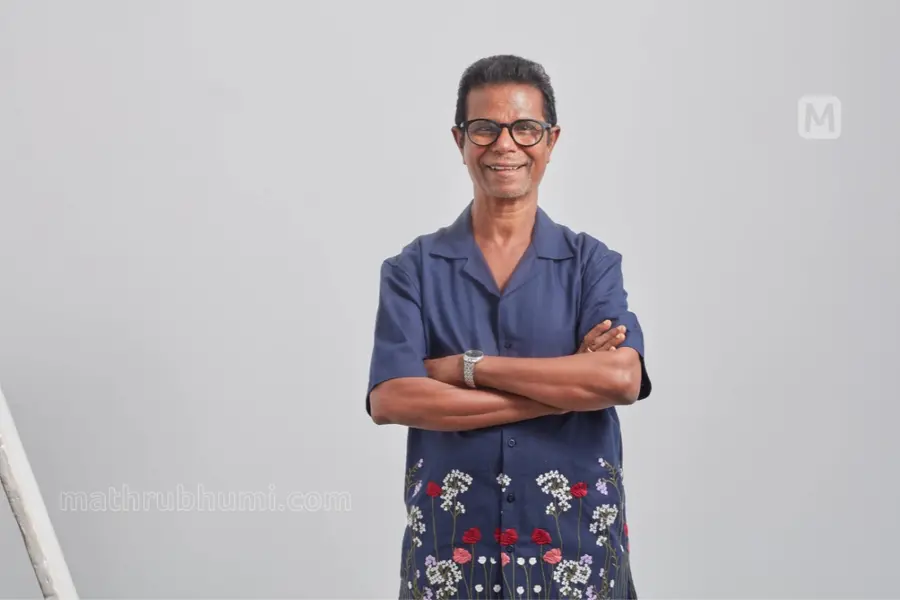
Fatherhood is often measured not by grand declarations but by quiet sacrifices. For veteran Malayalam actor Indrans, the journey of being a father was intertwined with years of relentless work, long stretches away from home, and a constant struggle to provide for his family.
As families across the world mark Father's Day on Sunday, June 21, the 70-year-old actor looks back on a life in which duty frequently took precedence over presence, leaving him with both pride and a lingering sense of regret.
Missing home while building a career
Behind the professional achievements was a father often separated from his family by work commitments.
Asked what he missed most during lengthy shooting schedules, Indrans' answer was immediate.
"My family, my children, my wife," he said.
During the years when he worked primarily as a costume designer, film schedules were demanding and exhausting. Days were consumed by work, and nights offered little opportunity for rest, let alone communication with loved ones.
"There wasn't much I could do to stay connected," he recalled. "Free time was rare. Sometimes during breaks in the day I would think about them, but by night I would be exhausted."
The situation improved somewhat when telephones became more common in homes, allowing occasional conversations with family members. Even then, he felt much of his children's childhood passed by while he was working.
"My only regret is that I couldn't spend time playing with them or watching them grow," he said.
A father absent by circumstance
Unlike many modern discussions around work-life balance, Indrans does not speak of consciously choosing work over family. For him, the realities of earning a livelihood left little room for alternatives.
When asked whether he ever declined projects after achieving financial stability because they would keep him away from home, he said such decisions were generally made for practical reasons rather than emotional ones.
By that stage, his children had already grown up.
Reflecting on parenting responsibilities, he readily credits his wife for raising their children during the years when his career demanded constant travel.
"It was mostly my wife," he said. "When one person has to travel all the time, there is little choice."
Throughout those years, she became the primary caregiver, managing the daily realities of raising a family while he worked away from home.
Learning from a new generation
Although his professional commitments limited the time he spent with his children during their formative years, Indrans says they still offered him glimpses into a changing world.
As they attended school and grew up in a different generation, they introduced him to new ideas, language and perspectives that were unfamiliar to him.
Yet work remained a constant presence in his life. Even today, he maintains a busy schedule, though he enjoys greater freedom than before.
The passage of time has also brought a new chapter, grandparenthood.
"My children have grown up, and now I have grandchildren," he said, adding that he is able to spend more time with them than he once could with his own children.
The father he knew and the father he became
Fatherhood, Indrans believes, has changed significantly across generations.
Recalling his own childhood, he described a father who was caring but emotionally reserved. There was affection, but it was rarely expressed through lengthy conversations or emotional openness.
"We were afraid of our father, though he never treated us badly," he said. "He cared deeply for us."
He remembers his father waiting by the roadside after work to watch his children return home, a quiet gesture of concern that spoke volumes without words.
Yet the relationship remained shaped by the conventions of an earlier era, when fathers often maintained a certain distance from their children.
Indrans says he was unable to recreate even that experience for his own children because of his prolonged absences. Instead, he credits their mother as the person who truly raised them.
"She was the one who struggled and worked hard," he said.
A career of perseverance
Known today as one of Malayalam cinema's most respected performers, Indrans' rise to prominence was neither immediate nor easy.
Long before national recognition and critical acclaim, he was K Surendran, a tailor from Thiruvananthapuram who was forced to leave school after Class 4 because his family could not afford it.
His path to cinema began not in front of the camera but behind it. After learning tailoring at a young age and running a small shop with his brother, he entered the Malayalam film industry in 1981 through the film ‘Choothaattam’ as a costume designer. Acting opportunities followed gradually, and over the years he became a familiar face in Malayalam cinema, particularly through comic roles.
Success, however, came slowly. For decades, his slight frame often became the subject of jokes on screen, and he found himself repeatedly cast in stereotypical comic roles. Despite appearing in more than 500 films, meaningful recognition arrived much later, when filmmakers began offering him more nuanced and layered characters.
Today, his career stands as one of Malayalam cinema's most remarkable stories of perseverance. His acclaimed performance in Home earned him a Special Mention at the National Film Awards, while recent projects have further cemented his standing as a versatile character actor. He was recently seen in ‘Chinna Chinna Aasai’ alongside actress Madhoo and also featured in ‘Karuppu’, directed by RJ Balaji and starring Suriya and Trisha Krishnan.
The actor's reflections carry added significance because they mirror the broader story of his life.
Having overcome poverty, educational deprivation and years of typecasting, Indrans has spent decades quietly rebuilding himself. In 2024, at the age of 68, he returned to school to continue the education he had been forced to abandon as a child, fulfilling a dream delayed by more than six decades.
It was another chapter in a life defined not by privilege, but by perseverance.
Published: 21 Jun 2026, 11:12 am IST
ABOUT THE AUTHOR
Related Topics
Disclaimer: Kindly avoid objectionable, derogatory, unlawful and lewd comments, while responding to reports. Such comments are punishable under cyber laws. Please keep away from personal attacks. The opinions expressed here are the personal opinions of readers and not that of Mathrubhumi.