
A new Bengali feature film that carries the intriguing title of Onko Kee Kothin, meaning,”Maths is really difficult” has suddenly become a sleeper hit in the theatres of Kolkata
As children, most of us would hit the panic button the minute “Maths” was mentioned. I remember I would run to my mother and say that I was running a fever, a blatant lie, on the eve of the weekly Maths test. Like all mothers, she would see through the trick, touch my forehead and ask me to rush to the school bus. Many who are reading this will identify with my childhood nostalgia.
A new Bengali feature film that carries the intriguing title of Onko Kee Kothin, meaning,”Maths is really difficult” has suddenly become a sleeper hit in the theatres of Kolkata. Suprisingly, both parents and children are thronging the theatres to see what the film is all about.
Says Saurav Palodhi, the strapping young director of the film about the title, “Onko ki kothin, is a metaphorical name that's not easy at all. From numerical calculations in school to the calculations of life, nothing comes easily, it's all a bit tough. How does this tough calculation affect real life, and how do we find solutions?” The film does not offer solutions, logical or absurd. It simply points out through three kids, somewhere in the range of 9 and eleven, trying to solve the severe problem of medical aid during emergencies in their small slum.
Onko Kee Kothin (Unequal Equations) has been showcased at various festivals in 2024. It was selected for the IFFI Indian Panorama and received an overwhelming response, including a standing ovation from a large non-Bengali audience and film critics. It was also selected for the Chennai International Film Festival, where it won the Best Film Jury award at the Hyderabad International Film Festival. It was also nominated in Paris Mont Blanc.
According to Palodhi, “the story is set against the backdrop of the COVID-19 pandemic, when many schools, especially in rural areas, were forced to shut down. This led to a significant number of students dropping out of school. Even today, some of these schools remain closed. This reality inspired me to explore the theme of lost opportunities and shattered dreams. The story revolves around students who had aspirations to become doctors, engineers, or pursue other careers, but with their schools closed, their paths to achieving these dreams were disrupted. My co-writer, Soumit Deb, and I developed the narrative, introduced various characters.”
No one is working out any Maths problem in the film. Through its narrative line, director Saurav Palodhi points out that the “Mathematics” of “Life” is really difficult to solve where two plus two never adds up to four, nor does two minus two result in zero or two divided by two equals zero. Life is not that easy. He does this through three kids, somewhere between seven and nine. Babin, Dolly and Tyre do not know what to do with their lives as their schools were closed during Covid and remained closed even after Covid. Confused about the time and space they do not know what to do with, the three kids decide to create a hospital in an unfinished, discarded construction to solve the problems of the sick and the aged as the nearest hospital is miles away and at least one person died while being reached there.
Babin, Tyre and Dolly’s parents are not very much bothered about their kids or their future because their present is spilling over with poverty and they have no time as they need to work just to be able to feed their kids every day. Babin’s father works in a brick kiln and suffers from a killing lung disease. His mother works as a housemaid in an affluent house nearby. Tyre’s mother is a sex worker who hates her job but minus a husband, is forced into it and is desperate to find acceptance among the neighbours. Dolly’s mother is also single and works as a nurse’s assistant at a dispensary in the neighbourhood. In a touching scene, we find her heating up a fish fry, cutting it into three equal pieces and serving it to the three kids. She does not have any.
The three kids who portray Babin, Tyre and Dolly are so incredibly real in terms of their looks, their performance and their body language that one needs to ask the director how he got them. His response is, “the character selection process was based on auditions. Given my long association with theater, I knew many people who could fit the roles after writing the script. Some were selected through auditions. For the three main children's roles, we auditioned around 250-260 kids, and the selected ones were associated with various theater groups, including my own. I focused on good actors who could develop their characters well. The same approach was applied to the adult roles. Ultimately, the selection was based on theater experience and audition performance. Some characters were specifically suited to certain senior actors, and I approached them directly, as the roles seemed tailor-made for them.”
Inspite of the dregs of poverty Babin, Tyre and Dolly live within, the kids are full of life and confident about their future. Babin is decided that he will become a doctor, Dolly will be a nurse and Tyre will be an engineer as someone needs to ‘build’ the hospital and take care of the infrastructure, right? Babin is a chubby, cuddly and happy kid very fond of his parents and worried about his ailing father who is very ill yet forced to work to keep the kitchen fires burning. Dolly is a sweet girl forever ready to serve her “doctor” and “engineer” friends in building the hospital. They set about gathering things to build the right kind of ‘hospital’ which they begin to learn along the way and have no idea about.
They try to construct some kind of “hospital” on a high floor of the discarded building which demands that they climb several floors each time they set out to work. They try to garner help from their adult friend Shah Rukh (Prosun Shome), who works at odd jobs, is a bit soft in the head but adores the kids and is forever ready to help them. He is also planning to elope with Kajol (Parno Mitra), a nurse he is in love with and marriage is ruled out as Kajol is Hindu while Shah Rukh is Muslim. Kajol refuses to elope finally because she thinks she has done no wrong by falling in love with Shah Rukh. When Kajol’s father bangs the door on her face and throws her out, she decides to walk into Shah Rukh’s ramshackle room to set up family.
A real doctor guided by Dolly’s nursing assistant mother finally comes to the rescue of the children and their ‘hospital’ when Babin’s father falls seriously ill and is brought up to the make-shift hospital in the discarded building by Shah Rukh and the two goon-looking men who are chasing the kids who took away a cylinder they were carrying in a tempo with other cylinders they also join in to help the kids. Seeing the kids’ desperate attempts to manage an oxygen cylinder, an oxygen mask and tube to save Abir’s father, the doctor says that he will help in setting a proper hospital in the discarded construction.
Though poverty is an in-built presence in the entire film, the director and script have treated the people in the slum with a lot of dignity and respect. Babin’s father is thrilled about his son wanting to become a doctor without having the least idea about how this is going to happen. Babin’s mother who does not like Tyre’s mother because she is a sex worker is forever worried about her husband and annoyed with her boss who tries to overburden her with work.
There is a lot of sarcasm disguised as wonderful humour in the film. Babin, while looking for an oxygen cylinder, uses the term “syndicate” instead of “cylinder” and when the error is pointed out, he keeps on worrying about what exactly the word “syndicate” suggests when used after the word “oxygen.” Tyre’s mother hates her job and is openly bored with the same customer who spouts Shakti Chattopadhays’ poetry all the time, hands her some money and tells her to leave. One old man forever attired in a tattered coat and suit even in the summer heat, gets very angry when asked something because he says he is worried about his umbrella he forgot to pick up. And finally, the two goons who are chasing the kids to retrieve the oxygen cylinder turn up to help the kids when Babin’s’s father is brought to the “hospital.” The sarcasm around the love story of Shah Rukh and Kajol will not get lost among the intelligent audience. There are beautiful touches of humour when Shah Rukh and Kajol are enjoying hot phhuchkas in a street-side shop, but Kajol’s father calls her and Shah Rukh, asked to take the call, does not have a clue of what to say.
The entire team deserves several pats of applause because the film comes across extremely well on all counts. First, the kudos go to the three kids and their little classmate who refuses to help the two goons looking for the kids. Babin (Riddhiman Banerjee), Dolly (Gitashree Chakraborty), and Tyre (Tapomoy Deb), perform as if they were born into the characters. They are not only good but are cuddly, adorable and sustain their innocence as kids who do not know how to realise their aspirations in life. The other actors are brilliant too. Sankar Debnath, Dipanwita Nath, Parno Mitra, Ushashie Chakraborty, Prosun Shome, Tapati Munshi who perform the character roles leave a mark with their make-up, costume, body language and dialogue delivery.
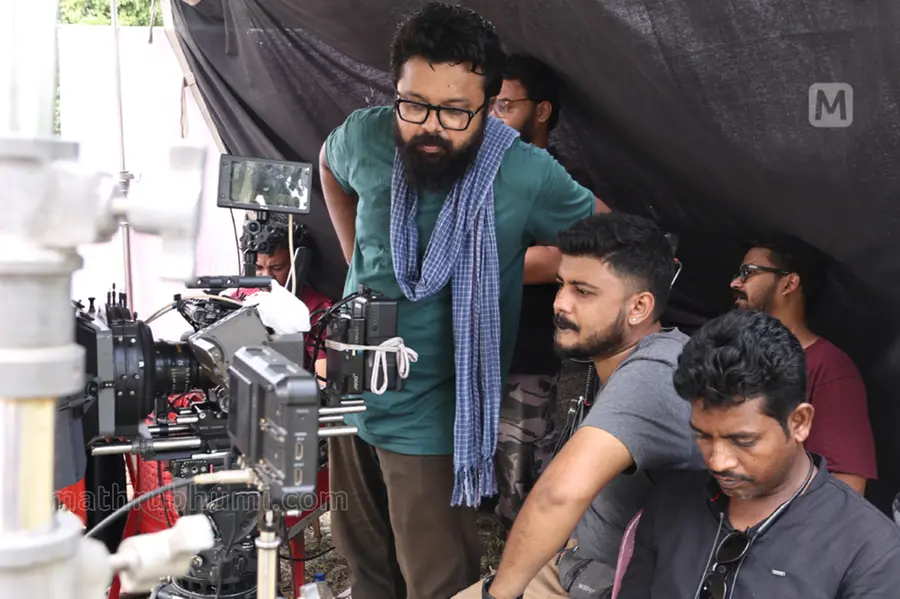
Says Palodhi, “We shot the entire project in the Rajarhat area, specifically in a slum area called Thakdari. The shoot lasted roughly 14-15 days, but it was preceded by extensive pre-production planning and workshops. I believe in thorough preparation, so I invested more time in pre-production to ensure everything was well-planned.”
Asked what he personally feels is drawing masses to the theatres though it has no romance, or severe action shots, no big stars and a simple story, Palodhi says, “I believe people prefer stories they can relate to or recognize. When we chose this subject, I knew it was a daily problem many face – children dropping out of school due to circumstances. As privileged individuals, we often overlook this issue, but it's prevalent in our surroundings. By depicting this reality, our film allows audiences to connect with the story, seeing it as their own or someone they know. The film has resonated with people, who appreciate its importance and relevance. I've witnessed firsthand how a film can gain momentum through word-of-mouth publicity, growing in popularity as people share their experiences.”
The music and the songs including one rap number enrich the film. Lagnajita Chakraborty’s haunting Amake Golpo Bolo, composed by Debdeep Mukhopadhyay, lingers long after the credits roll. The energetic rap number Chaap Niye Laabh Nei, performed by the lead trio and Doriyaa, adds punch with its smart, reflective lyrics. The song by Lagnajita that goes ekta golpo bolo (Tell me a story) which runs through the film like a theme, is beautiful. Ankkit Sengupta’s cinematography captures both the innocence and urgency of the kids’ mission and his focus on the long distance shots of the streets with the river flowing on either side and the azure blue sky adds to the visual beauty of the film. The art direction is authentic too.
“The festival screenings have given us the courage and motivation to dream bigger for this film,” sums up Palodhi, adding, “the core motto of this film is 'education for all.' As a person, I believe every child deserves access to education, regardless of their family's economic background. It's the responsibility of society and the state to ensure everyone gets an education. This was the primary driving force behind making this film.”
Looks like the film deserves a place in Ripley’s Believe It Or Not.
Published: 10 Jun 2025, 02:04 pm IST
Related Topics
Disclaimer: Kindly avoid objectionable, derogatory, unlawful and lewd comments, while responding to reports. Such comments are punishable under cyber laws. Please keep away from personal attacks. The opinions expressed here are the personal opinions of readers and not that of Mathrubhumi.
