

Sally Lunn’s is one of Bath’s oldest houses, with the building believed to date back to around 1482. The story of the bun, however, comes much later, to the 1680s.
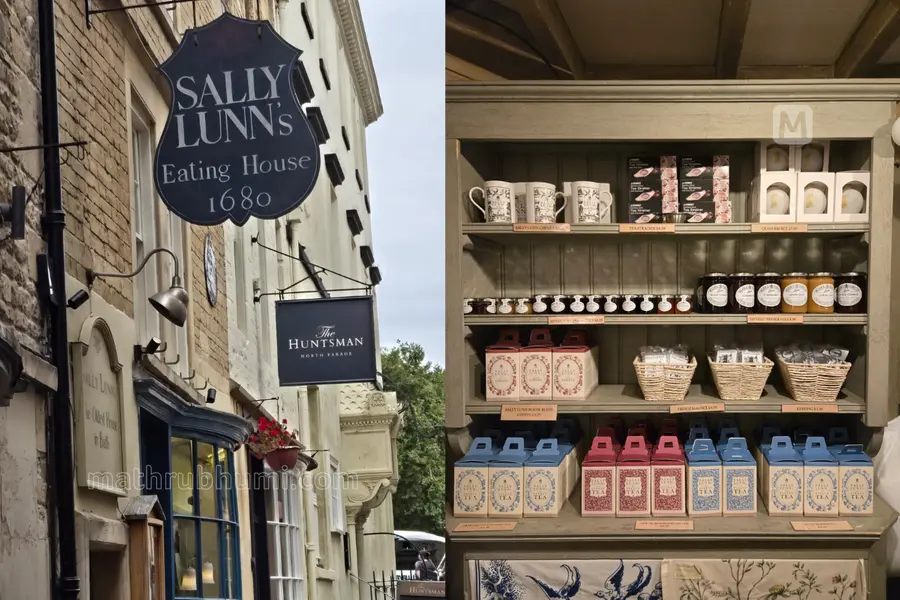
After exploring the Roman side of Bath in England, I thought I had seen the city’s most interesting side. Then I heard about Sally Lunn. Not a person I could meet, but a bun I could eat.
That immediately got my attention. I had never heard of Sally Lunn before coming to Bath. But when I learnt that there was a famous bun house in the city, in a building that dates back more than 500 years, I knew I had to go looking for it. And yes, I wanted to taste the bun too.
Sally Lunn’s is one of Bath’s oldest houses, with the building believed to date back to around 1482. The story of the bun, however, comes much later, to the 1680s.
As we walked towards it, I spotted a tiny entrance with a queue outside. An elderly couple were waiting ahead of us. It clearly wasn't just another old building that tourists stopped to photograph. Then I noticed another door right next to the entrance. I opened it.
And there it was — a small dining room filled with people sitting around tables, drinking tea and eating something that looked like a very large, very tempting bun.
I wanted one
Instead of joining the queue, we went downstairs to the museum and old kitchen. The staircase was narrow and dark, and I held firmly on to the iron railing. After travelling all the way from Kochi to Bath, I certainly didn't want my holiday to end with a tumble down a 500-year-old staircase!
At the bottom, an old wooden door opened into the historic kitchen. There were old cooking utensils, firewood, a water pump and displays explaining the history of the bun and how it was made.
And then I met Sally Lunn — at least, her story.
According to the popular story, Sally Lunn was a young French refugee who arrived in England around 1680 after fleeing France. She eventually came to Bath and worked in a bakery. Her French name was difficult for the locals to pronounce, and she came to be known as Sally Lunn.
She brought her baking skills
The bun she made became famous. The Sally Lunn bun is big, soft and wonderfully light. It is somewhere between bread and brioche, with a gentle sweetness. Break it open and the inside is soft and fluffy. You can have it sweet or savoury.
For someone coming from India, where tea and snacks are almost inseparable, the whole experience felt strangely familiar — except that this time the snack had more than 500 years of history behind it.
We took one home
Our Sally Lunn bun packed in a colourful box, and we walked out carrying what had become our most delicious souvenir from Bath. Sometimes you go looking for monuments and museums, and end up discovering something as simple as a bun.
And this was no ordinary bun.
More than 300 years ago, a young French woman arrived in England, found work in a bakery and created something that survived through generations. Centuries later, a traveller from India walked into the same historic place, discovered her story and walked out carrying her bun in a box.
There is even a little Jane Austen connection. Austen mentioned Bath buns in a letter and jokingly complained that they had upset her stomach.
Thankfully, my Sally Lunn experience had a happier ending.
Sometimes, you can tear off a piece, spread some butter on it and eat it. And that is exactly what I did. Not just a bun, after all. It was a delicious little taste of Bath's history.
Published: 08 Oct 2026, 11:55 am IST
ABOUT THE AUTHOR
Disclaimer: Kindly avoid objectionable, derogatory, unlawful and lewd comments, while responding to reports. Such comments are punishable under cyber laws. Please keep away from personal attacks. The opinions expressed here are the personal opinions of readers and not that of Mathrubhumi.