

Jesme speaks openly about patriarchy within religious institutions
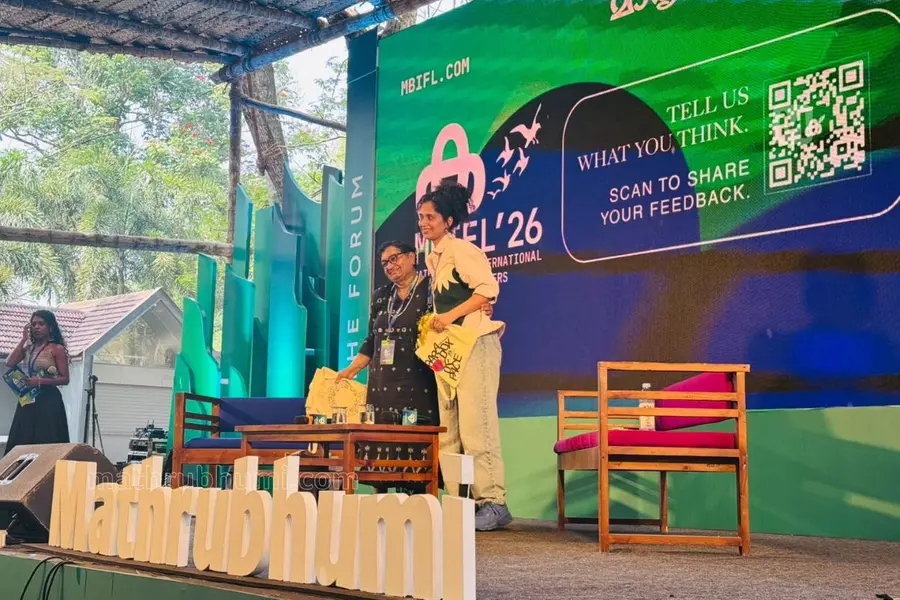
For years, Sister Jesme was known as the Church’s whistleblower. Speaking at the Mathrubhumi International Festival of Letters (MBIFL) 2026, she prefers another description now: a woman who chose freedom over fear.
“I enjoy 101 per cent freedom now,” she says. “I have a life without looking at the clock. From a cocoon, I have come out as a fluttering butterfly.”
Jesme entered the convent by choice, drawn by what she calls her “romance with Jesus”. She imagined religious life as a space for angels. What she encountered instead, she says, was an artificial system sustained by fear.
“My beliefs almost blinded me,” she reflects. “Inside, I realised it was all fake—far from what Jesus wanted.”
Bound by vows of obedience, chastity and poverty, Jesme initially tried to submit. But questions soon surfaced. “Jesus kept asking me—why don’t you question?” she says.
When she did begin to question, she was ostracised. Jesme speaks of how society keeps two books—the good book and the bad book—and how fear of slipping into the latter keeps people compliant. “I finally thought, let my bad book have an entry,” she says.
Her resistance sharpened when she became principal of the institution by seniority. Despite receiving a national award from Delhi—the first such recognition for the institution in 60 years—political pressure mounted. She was gheraoed, and efforts followed to label her mentally ill.
“The Mother General told me, ‘I know you are not. But we have to do this,’” Jesme recalls.
Taken for psychiatric evaluation, she managed to escape.
Now outside the institution, Jesme speaks openly about patriarchy within religious structures. “Churches are more androcentric than the society outside,” she says, adding that fear is routinely used as a tool of discipline.
She no longer relates to Jesus as God. “I see him as a good human being,” she says. “We all have innocence. What we lack is prudence.”
She is sharply critical of institutionalised religion in education. “I would ask all religious institutions running schools and colleges to shut down,” she says. “They function for profit, not enlightenment.”
Quoting C V Raman, she adds: If I am told there is an afterlife, I won’t live this one fully.
Once described by society as a fallen angel, Jesme now walks “with my head held high”. “One day,” she says quietly, “they will be exhausted.”
Asked where she found the strength to leave, her answer is steady and unadorned. The strength is within us.”
Today, she says, she is living her “sweet seventeen”—the early years of a life reclaimed.
Published: 30 Jan 2026, 07:45 pm IST
ABOUT THE AUTHOR
Related Topics
Disclaimer: Kindly avoid objectionable, derogatory, unlawful and lewd comments, while responding to reports. Such comments are punishable under cyber laws. Please keep away from personal attacks. The opinions expressed here are the personal opinions of readers and not that of Mathrubhumi.