

Discussions at MBIFL 2026 offered a reality check on expectations around the proposed India–EU Free Trade Agreement, with industry leaders cautioning other way
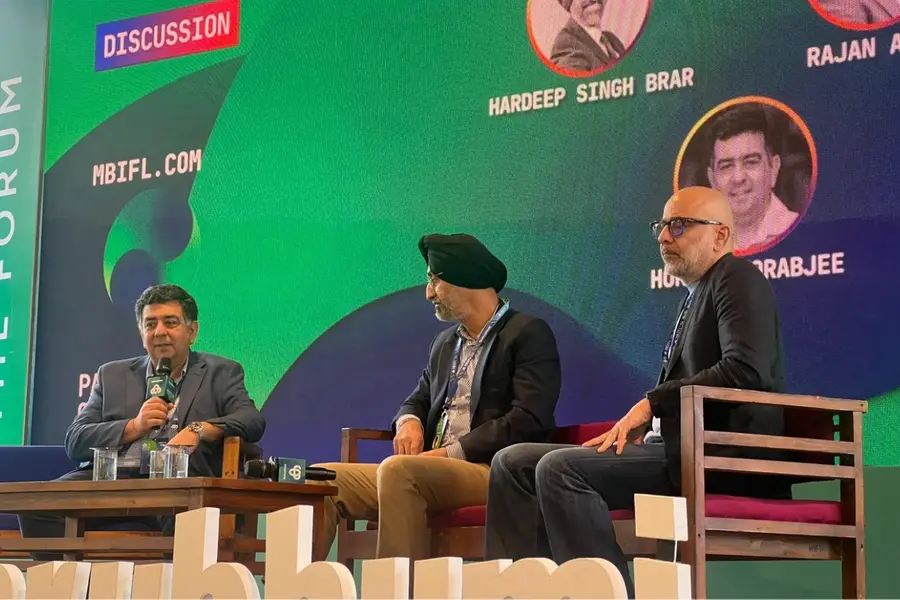
The Mathrubhumi International Festival of Literature (MBIFL) 2026 brought together industry leaders, policymakers, and car enthusiasts for a session that tried to cut through the hype around luxury car pricing in India.
A topic that generated more questions than answers was the proposed India–EU Free Trade Agreement (FTA) and its potential effect on the cost of imported luxury cars. Speakers at the session, including Rajan Amba, Managing Director of Jaguar Land Rover India, and BMW India’s Hardeep Singh Brar, sought to clarify what consumers can realistically expect.
What exactly is the India–EU FTA?
In simple terms, it is a trade pact being negotiated between India and the 27-member European Union aimed at reducing tariffs and easing market access for goods and services. The idea is to encourage trade, investment, and economic cooperation between both regions. For car buyers in India, the most-discussed aspect is the potential reduction of steep import duties on European luxury cars. But while the agreement promises long-term benefits for the industry, its immediate impact on sticker prices remains uncertain.
At the session, Rajan Amba addressed widespread speculation head-on. “You can’t simply reduce import duty from 110% to 40% on paper and expect prices to fall by half,” he said. “That’s not how the system works.” Currently, fully built imported cars, or CBUs, attract duties of up to 110%, whereas locally assembled CKD (Completely Knocked Down) models are taxed at around 15%. Many luxury brands already use CKD assembly in India, which means that the scope for dramatic price correction is limited.
CKD stands for Completely Knocked Down, meaning a vehicle is shipped in fully disassembled parts to another country for local assembly, which helps reduce import duties and promotes local manufacturing.
BMW India’s Hardeep Singh Brar echoed this reality. “For CKD models, we are already paying close to 15% duty. Even if duties reduce further, the actual benefit is marginal,” he said. Brar also pointed out the long timeline: “Even if the FTA is signed soon, implementation will take 18–24 months, followed by a gradual phased reduction stretching over several years. Meaningful impact, if any, will only be visible closer to 2030 or 2032.”
Currency fluctuations are another complicating factor. Over the past year, the euro has weakened against the rupee—from around ₹93 to roughly ₹108—erasing any potential duty-related savings. “That alone wipes out any benefit,” Brar explained.
The session also highlighted a paradox: the mere anticipation of price reductions is already affecting sales, as buyers postpone purchases in hopes of future discounts. “Yes, it has impacted us,” Brar admitted. “People are waiting. But the reality is prices are more likely to go up due to exchange rates and cost pressures.” BMW has already announced price hikes of 2–3%, driven entirely by currency volatility rather than policy changes.
Both Amba and Brar urged consumers to temper expectations from the Union Budget. “Until there is clarity on documentation, timelines, and structure, it’s irresponsible to promise outcomes,” Amba said.
In short, while the India–EU FTA could strengthen long-term stability and competitiveness for luxury car brands, for Indian consumers dreaming of a sudden drop in prices, the message from the industry is clear: the discounts may remain more of a hope than a reality.
Published: 29 Jan 2026, 07:42 pm IST
ABOUT THE AUTHOR
Disclaimer: Kindly avoid objectionable, derogatory, unlawful and lewd comments, while responding to reports. Such comments are punishable under cyber laws. Please keep away from personal attacks. The opinions expressed here are the personal opinions of readers and not that of Mathrubhumi.