
The helicopter replacement programme represent more than just a procurement decision -- it is a test of India's commitment to indigenous defence manufacturing.
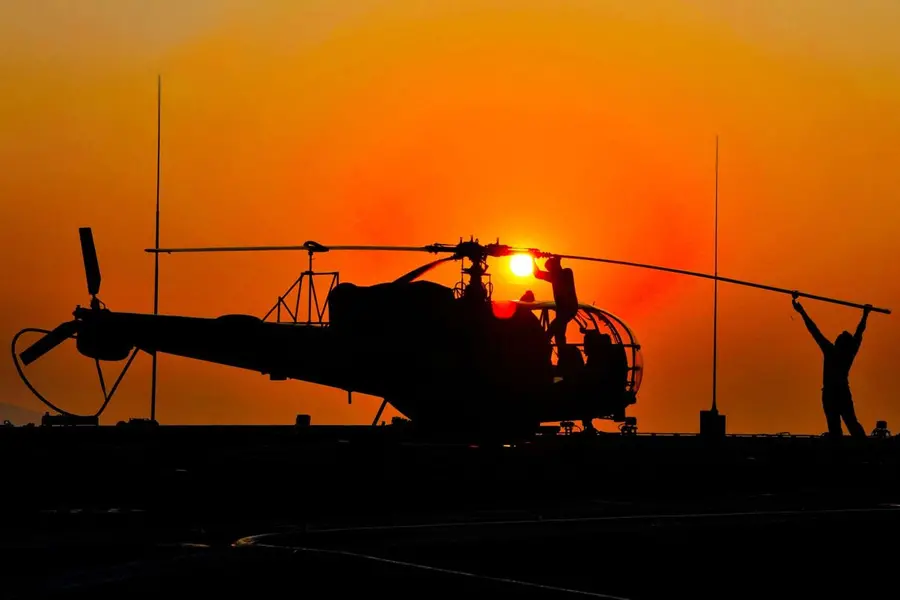
India's armed forces are at a critical juncture. After decades of delays and bureaucratic hurdles, the country has finally issued a fresh request for information (RFI) for 200 new reconnaissance and surveillance helicopters to replace its dangerously outdated Cheetah and Chetak fleet. With scores of pilot lives lost over the years and operational capabilities severely compromised, this replacement programme cannot afford another failure.
Deadly Legacy of Vintage Helicopters
The statistics paint a grim picture that has haunted the defence establishment for years. All pilots who have done time in the Indian Armed Forces know at least one person who has died in a Chetak/Cheetah crash, according to former Navy test pilot Captain KP Sanjeev Kumar. This chilling reality underscores the urgent need for modernisation.
Around 400 HAL Chetak and Cheetah helicopters are scheduled to be retired from 2027 onwards, but the replacement process should have begun years ago. Around 134 of these helicopters are 30 to 50 years old and are nearing the end of their Total Technical Life. The Army operates approximately 190 units of these helicopters, of which at least 25 are in maintenance at HAL, severely affecting operational readiness.
The human cost has been devastating. During the last three years (2012-13, 2013-14 and 2014-15), six accidents have taken place involving Cheetah and Chetak helicopters of the Armed Forces in which nine defence personnel have died. These are not just statistics -- they represent families destroyed and military careers cut short by aging technology.
Why the Replacement Cannot Wait
The Cheetah and Chetak helicopters, originally designed in the 1960s, suffer from fundamental limitations that make them unsuitable for modern warfare. These helicopters were inducted in the late sixties and seventies and are not only no longer fit for flying but are plagued by a high crash rate and huge serviceability problems.
The technological gap is stark. These vintage machines lack modern avionics, glass cockpits, and stability augmentation systems that are standard in contemporary helicopters. They cannot operate effectively in low visibility conditions or severe weather, severely limiting their operational utility. In high-altitude areas like Siachen, where India faces constant security challenges, these limitations become life-threatening.
The serviceability crisis is equally concerning. With a significant portion of the fleet constantly undergoing maintenance, the armed forces struggle to maintain operational readiness. This has created a dangerous capability gap that adversaries could potentially exploit.
HAL's Golden Opportunity; International Competition
Enter Hindustan Aeronautics Limited's Light Utility Helicopter (LUH), which represents India's best hope for indigenous helicopter manufacturing success. HAL's Helicopter Division, Tumakuru was inaugurated by Prime Minister Narendra Modi in February 2023 with a capacity of 30 helicopters per annum. The facility is already operational and it is planned to complete production of 12 LUH by March 2025.
The LUH specifications are impressive for a domestically developed helicopter. According to HAL, it possesses a cruise speed of 235 km/h, maximum speed of 260 km/h, service ceiling of up to 6.5 km, and a range of 350 km with maximum take-off weight of 3.12 tonne. More importantly, it features modern glass cockpit technology and can operate in the challenging high-altitude conditions that define much of India's strategic frontiers.
However, HAL faces formidable international competition. Airbus Helicopters has announced that it is partnering with the Tata Group to establish a Final Assembly Line for helicopters in the country, specifically for the H125 helicopter. Airbus has been leading the domestic civil and parapublic helicopter market since 2010 and brings decades of experience.
The competition extends beyond just helicopters. In 2018, the civil or parapublic market over five seats was dominated by Airbus Helicopters with 356 deliveries, a 54% share, ahead of Leonardo Helicopters (21%), Bell Helicopters (12%), Russian Helicopters (10%). This global dominance translates to superior supply chains, maintenance networks, and proven reliability records.
How HAL Can Secure Victory
For HAL to win this crucial contract and establish India as a helicopter manufacturing hub, the company must dramatically increase its productivity and operational efficiency. The current production capacity of 30 helicopters per year at Tumakuru is insufficient for the massive requirement of nearly 400 helicopters across all services.
HAL is reimagining its production approach for the Light Utility Helicopter, aiming to meet the burgeoning demand from the Indian Army and Indian Air Force while fostering the growth of the domestic aerospace manufacturing ecosystem. The key lies in HAL's shift from conventional manufacturing to a collaborative approach.
HAL's plan involves a shift from conventional manufacturing to a more collaborative and decentralized approach, with the final integration of the airframe taking place at HAL's Tumakuru facility using advanced coupling jigs to ensure precision and efficiency. This strategy allows HAL to leverage the expertise of Indian suppliers and MSMEs while maintaining quality control.
Accelerated Timeline Execution
Speed of delivery will be crucial. As of November 2023, a full fledged order for the three branches of Armed Forces is expected to be finalized within the next 18-20 months, with deliveries projected to commence from 2026 onward. HAL must ensure it can meet these timelines while maintaining quality standards.
The recent progress is encouraging. As of 19 February 2025, the LUH prototypes logged 1,161 test flights, demonstrating the maturity of the design. However, production readiness is different from prototype testing.
Competitive Pricing and Support
HAL's domestic manufacturing advantage could translate to competitive pricing, but this must be coupled with world-class after-sales support. While HAL might leverage its domestic manufacturing base to offer a potentially more competitive price point, Airbus could counter with attractive financing options and long-term maintenance contracts.
The Strategic Imperative
This helicopter replacement programme represent more than just a procurement decision -- it is a test of India's commitment to indigenous defence manufacturing. Success would validate the "Make in India" initiative and establish HAL as a credible competitor in the global helicopter market. Looking ahead, HAL has set an ambitious target of producing over 1,000 LUH helicopters in the next two decades.
Failure, however, would likely cement foreign dependence for another generation. The stakes could not be higher for HAL, which has struggled with production delays and cost overruns in previous programmes.
The armed forces have waited over two decades for this replacement. The RFI process offers a fresh start, but only if HAL can demonstrate the productivity, reliability, and competitive pricing that modern helicopter operations demand. The company's engineering capabilities are proven -- now it must prove its manufacturing excellence.
As per a Times of India report, the defence ministry has repeatedly acknowledged the critical operational void created by the aging fleet. This time, the solution must be indigenous, efficient, and delivered on schedule. HAL's moment of truth has arrived -- and with it, the future of India's helicopter manufacturing ambitions hangs in the balance.
Published: 09 Aug 2025, 03:08 pm IST
Disclaimer: Kindly avoid objectionable, derogatory, unlawful and lewd comments, while responding to reports. Such comments are punishable under cyber laws. Please keep away from personal attacks. The opinions expressed here are the personal opinions of readers and not that of Mathrubhumi.
