
Stokes became the only American to be imprisoned as a political prisoner by the British in connection with India's freedom struggle.
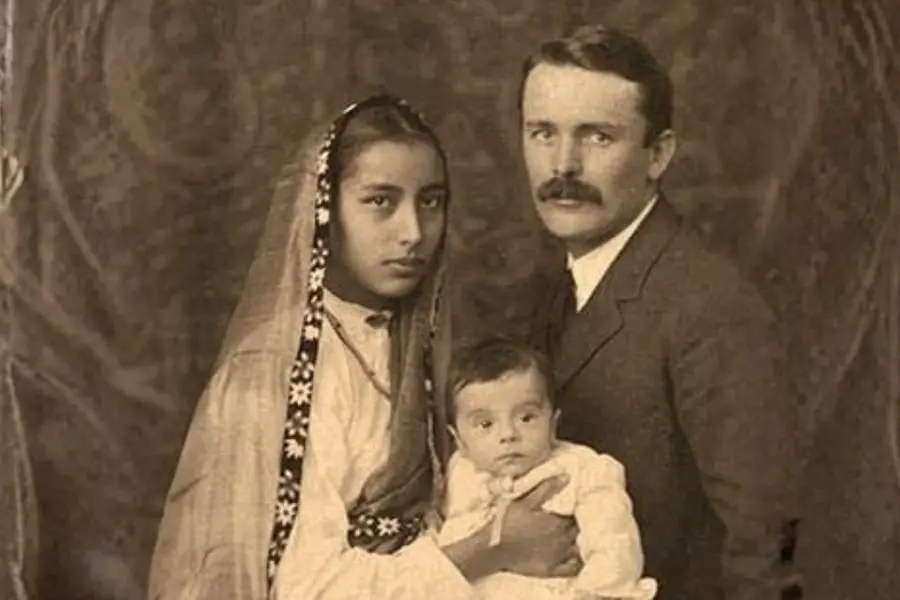
On Independence Day 2026, the story of Samuel Evans Stokes Jr. offers a remarkable reminder that India’s freedom struggle drew people far beyond its borders. Born into a wealthy American Quaker family, he came to India to serve leprosy patients and stayed to become an Indian citizen in spirit, a freedom fighter, political prisoner and pioneer of Himachal Pradesh’s apple economy.
When Samuel Evans Stokes Jr. left Philadelphia for India in 1904, he was only 22. He was the eldest son of a wealthy American businessman and had grown up with every opportunity that money could offer. His father, Samuel Evans Stokes Sr., had founded the Stokes and Parish Machine Company, a leading elevator manufacturer in the United States.
But business held little attraction for the young Stokes. He was drawn instead to a life of service.
In 1904, he travelled thousands of miles to India to work at a leprosy colony in Subathu, near Shimla. His parents opposed the decision, unable to understand why their privileged son would abandon a comfortable life in America to work among people suffering from a disease that carried enormous social stigma.
Raised as a Quaker, he was increasingly fascinated by the spiritual traditions and asceticism he encountered in India. He adopted a simple life among villagers and became a Christian Sannyasi, choosing poverty and service over privilege.
In 1912, he married Agnes, the daughter of a first-generation Christian family, and settled near her village in Kotgarh. He purchased farmland there and began building a new life in the Himalayan hills. But rather than returning to the life of privilege he had left behind, he invested himself in the land and the people around him.
The American who helped put Himachal on the apple map
Stokes was not a conventional farmer. With access to books and agricultural resources unavailable to many local farmers, he began studying crops that could thrive in the Himalayan climate.
In 1916, he identified a variety of apples developed by the Stark brothers of Louisiana as particularly suitable for the Shimla Hills. He began cultivating the variety on his farm in Kotgarh.
The results were striking. The bumper harvests demonstrated that commercial apple cultivation could flourish in the region. Other farmers began following his example. Over the following decades, Stokes acquired more land and continued cultivating apple varieties that local farmers could use to establish their own orchards.
From Satyananda to freedom fighter
The personal transformation that had begun when he arrived in India continued throughout his life. After the death of his son Tara from amoebic dysentery, Stokes' relationship with Indian spirituality deepened further.
In 1932, he converted to Hinduism and took the name Satyananda. His wife Agnes adopted the name Priyadevi. Stokes developed a strong sense of social justice and became increasingly involved in the Indian independence movement.
He joined the Indian National Congress and achieved a distinction that was extraordinarily rare for a foreign-born person at the time: he became a member of the All India Congress Committee (AICC).
Along with Lala Lajpat Rai, he represented Punjab. He was also the only non-Indian to sign the Congress manifesto in 1921 calling upon Indians to quit government service. For Stokes, the decision came with enormous personal consequences.
The American who became a British political prisoner
The British government arrested Stokes in 1921 for sedition and for promoting hatred against the colonial government. He became the only American to be imprisoned as a political prisoner by the British in connection with India's freedom struggle.
Mahatma Gandhi publicly defended Stokes after his arrest, arguing that his decision to share the hardships of Indians and participate in their struggle had made him unacceptable to the British authorities.
He died on May 14, 1946, less than a year before India became independent. He therefore never witnessed the tricolour being raised over an independent India. Yet his life had already become intertwined with the country's transformation.
Published: 13 Aug 2026, 01:10 pm IST
Related Topics
Disclaimer: Kindly avoid objectionable, derogatory, unlawful and lewd comments, while responding to reports. Such comments are punishable under cyber laws. Please keep away from personal attacks. The opinions expressed here are the personal opinions of readers and not that of Mathrubhumi.
