
AIADMK and DMK leaders tour delta districts while farmers face crop damage, limited storage and transport bottlenecks during the northeast monsoon.
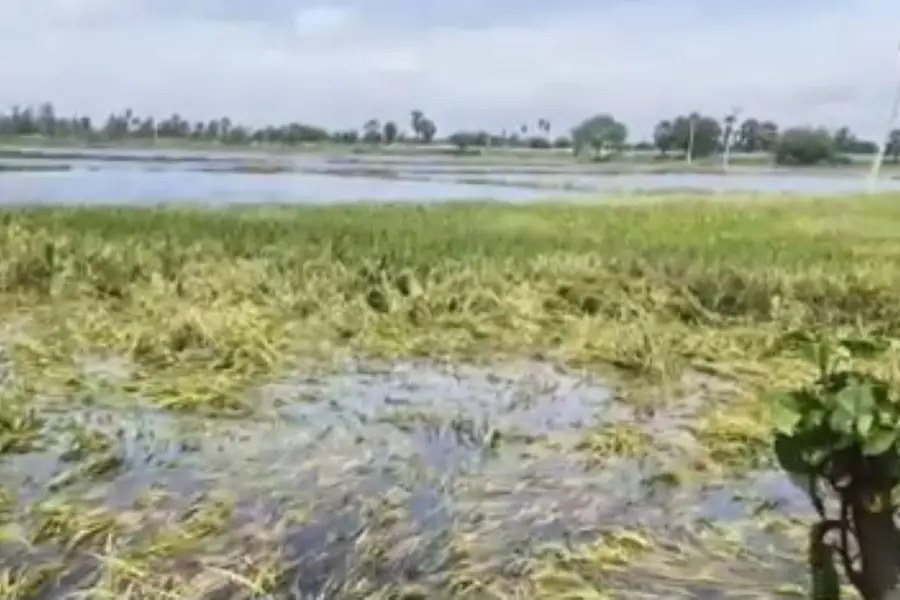
Chennai: Widespread distress continues to mount among farmers in Tamil Nadu’s Cauvery delta, even as senior leaders from both the ruling DMK and opposition AIADMK toured the region to assess the impact of the northeast monsoon.
The twin challenges of delayed paddy procurement and heavy rainfall have left thousands of tonnes of harvested Kuruvai crops damaged or at risk of rotting.
Leader of the Opposition and AIADMK general secretary Edappadi K Palaniswami visited several delta districts on Wednesday, interacting with farmers and inspecting rain-soaked heaps of paddy stacked outside Direct Procurement Centres (DPCs).
Meanwhile, Food and Civil Supplies Minister R Sakkarapani held meetings with district officials to review procurement and storage arrangements, assuring that urgent steps were being taken to expedite lifting and milling. Farmers’ associations, however, said the government’s response came too late to prevent significant losses.
PR Pandian, president of the Coordination Committee of All Farmers Associations of Tamil Nadu, described the situation as a “historic bottleneck”, blaming poor planning and coordination in procurement operations.
“This year, over 6.31 lakh acres were cultivated under Kuruvai, yielding nearly 13 lakh metric tonnes of paddy. But so far, only around six lakh tonnes have been procured, leaving nearly four lakh tonnes exposed to the rains. Another two lakh tonnes are yet to be harvested. Paddy bags have been lying for days in front of DPCs, now soaked by continuous rain,” Pandian said.
In Nagapattinam district, where over 1.1 lakh acres were cultivated, the highest in recent years, thanks to steady water release from the Mettur dam, farmers said the rain had completely altered what was shaping up to be a good harvest.
Cauvery S. Dhanapalan, general secretary of the Cauvery Farmers Protection Association, said, “The Kuruvai crop was excellent this season, but continuous rainfall has damaged flowering and affected the samba crop too. More than 60 per cent of Kuruvai has been harvested, but much of it lies drenched outside DPCs.”
Farmers reported that DPCs are operating far beyond capacity, with each centre designed to hold about 3,000 sacks but now storing over 10,000. Limited storage, transport bottlenecks, and slow movement of stocks to rice mills have worsened the situation.
“There's confusion over milling orders, shortage of loaders, and lack of coordination between agencies. Barely one-tenth of the paddy arriving at DPCs is being procured. The rest is being left to spoil in the rain”, said Dhanapalan.
IANS
Published: 23 Oct 2025, 11:11 am IST
Disclaimer: Kindly avoid objectionable, derogatory, unlawful and lewd comments, while responding to reports. Such comments are punishable under cyber laws. Please keep away from personal attacks. The opinions expressed here are the personal opinions of readers and not that of Mathrubhumi.
