
Experts have suggested that Kerala adopt the Jammu and Kashmir model, where farmers rear silkworms as a secondary activity alongside their main crops.
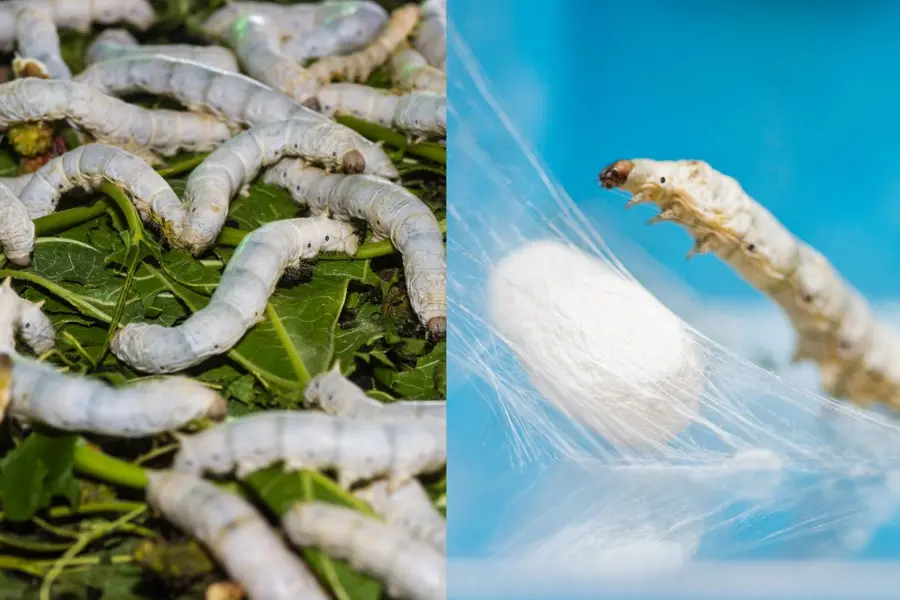
Palakkad district in Kerala has emerged as a cornerstone of India’s silk sector by producing high-quality silkworm seeds. Supplied by the Silkworm Seed Production Centre in Palakkad, these seeds feed research at the Central Sericultural Research & Training Institute in Pampore, Jammu and Kashmir, to develop new silkworm variants. Palakkad is among 218 districts chosen under the Mera Desh, Mera Resham scheme to reduce global reliance on Chinese silk supplies. Kerala produced 18 metric tonnes of raw silk during the 2025-26 financial year. Although mulberry cultivation land (crucial for silkworm rearing) in the state declined from 144 hectares in 2019-20 to 90 hectares, officials have launched surveys to rebuild farm acreage across key hubs in Palakkad, Wayanad, Idukki, and Thrissur. Experts note that Kerala possesses suitable climate and soil conditions. They recommend adopting Jammu and Kashmir's model, where over 29,000 farmers earn between 1 lakh and 2 lakh rupees annually by raising silkworms as a secondary crop alongside main harvests.
Expanding production across Indian states
On the national stage, India stands as the second-largest global silk producer and its primary consumer, with silk representing 0.2 per cent of world textile production. The Central Silk Board, operating under the Ministry of Textiles, aims to double the country's 55,000 crore rupee silk value chain by 2030. National raw silk production rose from 31,906 metric tonnes in 2017-18 to 38,913 metric tonnes in 2023-24, eventually reaching 41,121 metric tonnes as authorities push towards a 2030 target of 54,000 metric tonnes. Mulberry silk makes up over 70 per cent of total production, supported by mulberry plantation land expanding from 223,926 hectares to 263,352 hectares. Non-mulberry varieties such as eri, tasar, and muga account for the remainder. Silk exports grew from 1,649.48 crore rupees in 2017-18 to 2,027.56 crore rupees in 2023-24, hitting 2,300 crore rupees in the last fiscal year and expecting to pass 2,500 crore rupees in FY 26. India also exported 3,348 metric tonnes of silk waste in 2023-24. Over 50 districts were added in recent years, taking the national total to 476 silk-producing districts across almost all states. Gujarat recently joined with 100 eri silk farmers, while surveys were conducted along Rajasthan's borders to evaluate farming potential.
Modern schemes and technical innovation
Government interventions through the Silk Samagra scheme have driven industry investment in research, capacity building, and mechanisation. The Silk Samagra-2 scheme, operating with a budget of 4,679.85 crore rupees from 2021-22 to 2025-26, has delivered 1,075.58 crore rupees in central assistance to over 78,000 beneficiaries. This includes dedicated financial support to Andhra Pradesh and Telangana over the last three years. Other initiatives include the Raw Material Supply Scheme, which delivered 340 lakh kilograms of subsidized yarn in 2023-24, alongside the National Handloom Development Programme and the SAMARTH training programme. Technical innovation remains central to growth. In September 2026, a climate-controlled model silkworm rearing house was inaugurated in Sahaspur, Dehradun, to help farmers regulate summer temperatures and harvest multiple crops yearly. In parallel, IIT Roorkee supported raw material generation by planting 100,000 mulberry saplings in Almora district
Published: 14 Sept 2026, 12:16 pm IST
Disclaimer: Kindly avoid objectionable, derogatory, unlawful and lewd comments, while responding to reports. Such comments are punishable under cyber laws. Please keep away from personal attacks. The opinions expressed here are the personal opinions of readers and not that of Mathrubhumi.
