
New system dries Kerala paddy fast, preserves local rice varieties, reduces spoilage, and boosts farmers’ earnings.
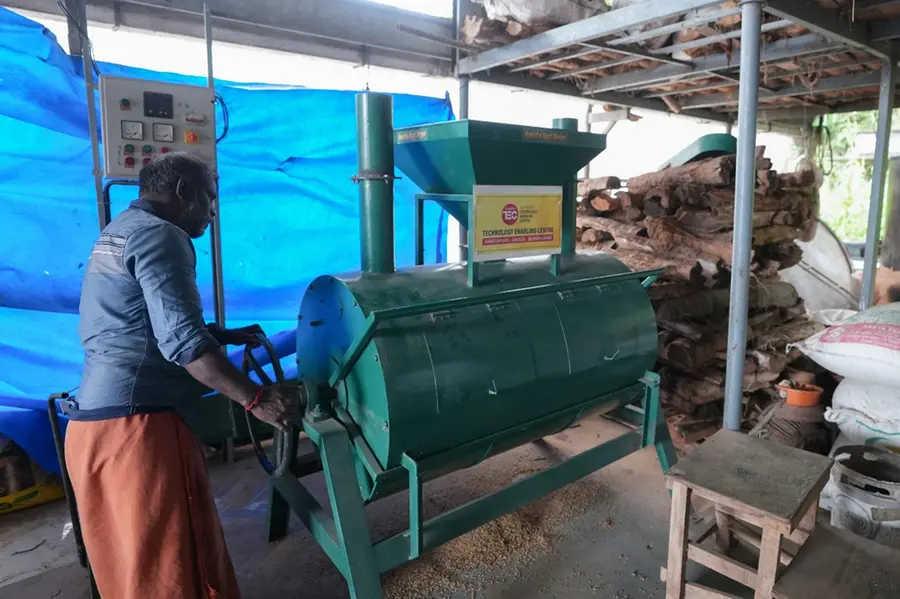
Drying paddy has long been a struggle for Kerala’s farmers, especially during the six-month monsoon. Traditional sun-drying can take up to two days, and heavy rains often leave grains damp, mouldy, or spoiled. But a new system promises a dramatic change: it can dry up to 400 kilograms of paddy in just four hours, preserving quality and reducing losses.
The Controlled-Environment Crop Dehydration System was developed by Amrita University through its research and innovation division, Amrita Technology Enabling Centre (Amrita TEC). Supported by the Department of Science and Technology (DST), Government of India, the project helps farming communities achieve better income stability.
The controlled-environment process ensures that rice retains its aroma, nutrition, and traditional qualities — a boon for both farmers and consumers. This is particularly important for Kerala’s indigenous rice varieties, which include Navara, Jeerakasala, Gandhakasala, Rakthashali, Pokkali, Chomala, Thavalakkannan, Kunnadan, and Kuthari. Protecting these crops helps farmers secure fair prices for every grain they grow.
Beyond speed and quality, the system eases labour demands. Farmers no longer need to spend long hours under the sun, making the harvest less stressful and more profitable.
Amrita TEC says the system has already drawn interest from agricultural cooperatives and farmer-producer organisations to initiate technology transfer and establish shared processing facilities.
Published: 08 Nov 2025, 01:04 pm IST
Disclaimer: Kindly avoid objectionable, derogatory, unlawful and lewd comments, while responding to reports. Such comments are punishable under cyber laws. Please keep away from personal attacks. The opinions expressed here are the personal opinions of readers and not that of Mathrubhumi.
