
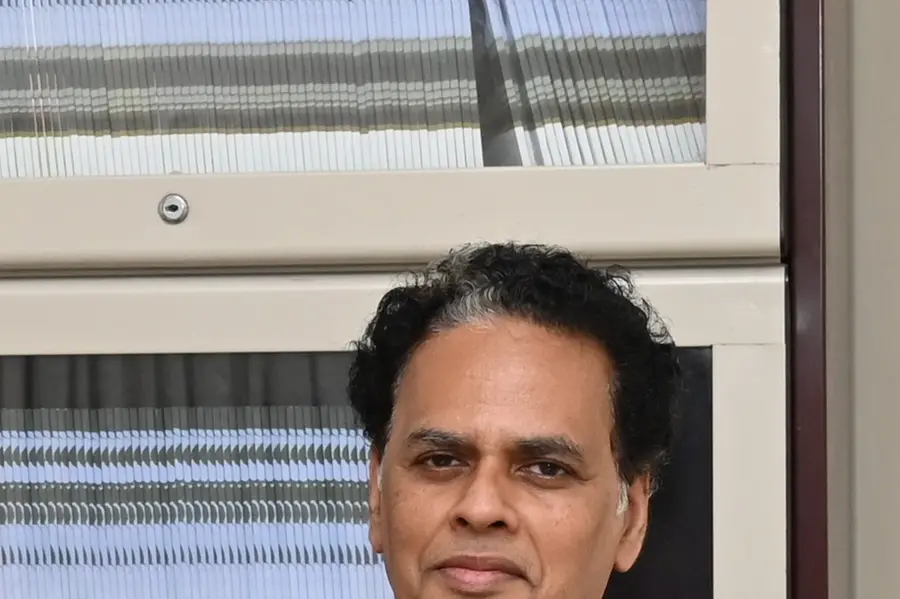
Expressing views on the mainstream narrative on PhD theses in Kerala, Dr. Achuth Sankar S Nair, Professor and Head of the Department of Computational Biology and Bioinformatics, Kerala University, Karyavattom, Thiruvananthapuram said "it is fallacious to claim that there is a general drop in quality of research".
Interacting with Mathrubhumi English, Dr Achuth Sankar said "it is impossible to make such a conclusion across subjects, because no one may have such a wide scholarship or have read a reasonable sample of research, to make such an assessment".
Also Read
To explain the context further, he highlighted the recent controversy related to Kerala State Youth Commission chairperson Chintha Jerome's PhD and the narrative that was in the limelight. "I do not see the mistake (or a short copy-paste) that crept into Chintha's thesis as a pivot for the quality of research. If a science thesis referred to x-y instead of x+y, it could have a much more devastating effect, but the media and the general public may not be able to discuss it," he said.
Achuth Sankar pointed out that he is not endorsing anything like "it's completely fine for the researchers to make mistakes in theses". According to him, mistakes in theses can be rectified or further actions can be taken against them. However, many other issues can directly or indirectly affect the quality of research in the state, he noted.
He called out the general notion of seeing research outputs through the utility concept. "Some people ask what is the economic contribution or the tangible outcomes of research, especially about the ones in social sciences. It would be unwise to ask what is the use of research in language and literature in comparison to science and technology research. Each discipline has its own research ethos. To me, the output of research in language and literature is a better person, with fine sensitivities about the social issue or aesthetic aspect of the topic researched," he said.

Achuth Sankar also referred to a situation to corroborate the argument. 'We have seen writers, poets, artists and filmmakers have a better approach to ending conflicts and wars. Because their works touch human hearts. I don't think scientists, engineers or economists can do that."
He expressed his concerns over the presence of a veiled system in varsities that spoilsport the enthusiasm of researchers. "Sometimes forces that are not even related to universities decide the PhD awardees. It is their dictum that decides who deserves a PhD. So the ultimate question is who will bell such string-pullers," he said.
He put forth the idea of coming up with an indigenous framework like the Kerala Social Sciences Impact Factor to assess how relevant the research was to the state. "Citation-based criteria like impact factor (IF) often prioritise quantitative aspects over qualitative aspects. And also, academicians should have better forums devoid of external influences to discuss issues," he added.
Published: 01 Apr 2023, 02:20 pm IST
ABOUT THE AUTHOR
Disclaimer: Kindly avoid objectionable, derogatory, unlawful and lewd comments, while responding to reports. Such comments are punishable under cyber laws. Please keep away from personal attacks. The opinions expressed here are the personal opinions of readers and not that of Mathrubhumi.