
In an era where digital literacy is as essential as traditional education, Kerala’s pioneering initiative, 'Little KITEs', stands as a beacon of hope and progress. This feature explores the origins, impact, and future of this transformative program aimed at empowering adolescents with future-ready skills.
A recent UNICEF India study has praised Kerala's digital education initiatives (EdTech) as a model not just for other Indian states but also for middle-income and developed countries. The report, titled "Empowering Adolescents with Future-Ready Skills - The Inspiring Story of Little KITEs," was published in Thiruvananthapuram.
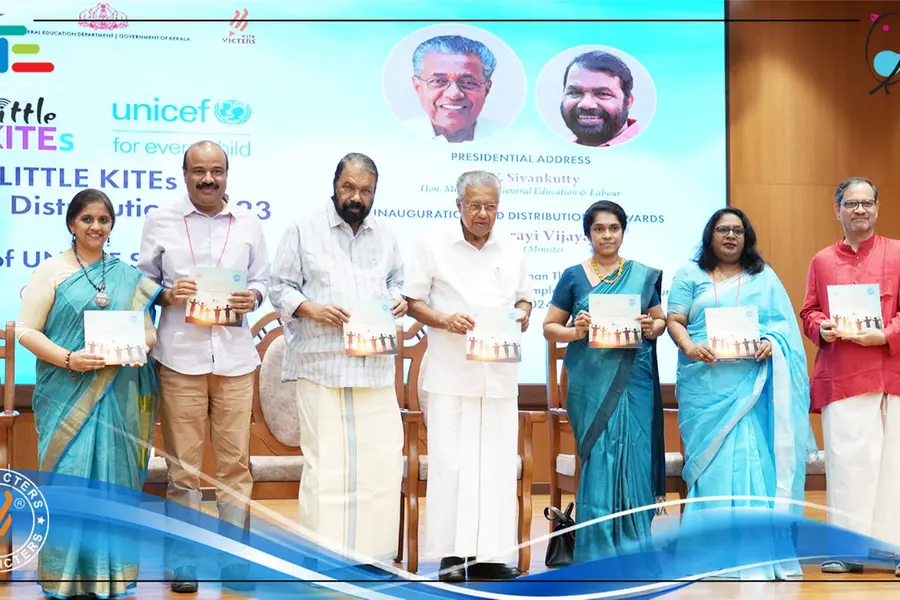
Rani George IAS, Principal Secretary of the General Education Department received the Study report from Pramila Manoharan, UNICEF India Educational Specialist, in the presence of Pinarayi Vijayan, Kerala Chief Minister and V Sivankutty, Minister for General Education & Labour.
Recognizing the critical role of digital inclusion in education, Kerala launched the 'Little KITEs' program in 2018 as part of the Public Education Rejuvenation Mission. This initiative targets high school students (Grades 8, 9, and 10) across over 2,000 government and aided schools in the state. The primary objective is to equip students with digital skills, fostering a new generation capable of navigating and shaping the technological landscape of the future.
The COVID-19 pandemic underscored the importance of robust digital infrastructure in education. Schools worldwide faced unprecedented challenges, with many students left without access to learning. 'Little KITEs' has been instrumental in mitigating such disruptions by providing students with the necessary tools and training to continue their education remotely.
Aligned with UNICEF’s Life Skills Framework, 'Little KITEs' emphasizes critical thinking, creativity, problem-solving, collaboration, and communication. The program's curriculum includes advanced topics such as IoT, AI, Robotics, 3D Animation, Multimedia, Language Computing, Electronics, and Mobile App Development. This comprehensive approach ensures that students are not only technologically proficient but also equipped with essential life and socio-emotional skills.
Since its inception, 'Little KITEs' has reached over 1.8 million students, making it the largest ICT student network in India. The program has received numerous accolades, including the 'Best Innovation Project' award in 2022. A significant milestone was the collaboration announced in September 2022 between Kerala’s KITE and Finland’s Education Department, aiming to adapt the 'Little KITEs' model in Finnish schools.
One of the program's strengths lies in its holistic approach, involving not just students but also parents and the broader community. Schools interested in setting up a 'Little KITEs' unit must apply through KITE’s online portal, detailing their technological resources. The selection process includes an online aptitude test for students, assessing their IT, mathematics, and logical reasoning skills. Parental and community engagement is crucial, ensuring a supportive environment for students' technological experiments and innovations.
Looking ahead, 'Little KITEs' aims to expand its reach and impact further. Recent initiatives include the deployment of 20,000 additional robotic kits and AI training for 80,000 teachers. Such efforts are geared towards fostering an environment where digital literacy and innovative thinking become cornerstones of education.
“The UNICEF study identifies the Little KITEs program as a truly unique FOSS-based EdTech intervention, and we’re committed to sharing its success stories with other States and Countries,” said Dr.Akila Radhakrishnan, Social Policy Specialist with UNICEF India. “KITE seeks partnerships with UNICEF and others to bring Little KITEs to new regions. The study identifies areas to strengthen the Little KITEs program. We are also looking for FOSS community help to support AI development,” said K Anvar Sadath, CEO of KITE.
'Little KITEs' exemplifies how targeted educational interventions can bridge the digital divide and prepare adolescents for the challenges of the future. By equipping students with critical digital skills and fostering a spirit of innovation, Kerala is not only enhancing its educational landscape but also setting a model for others to follow. As the program continues to grow and evolve, it holds the promise of creating a digitally literate and empowered generation ready to lead in the 21st century.
Published: 08 Jul 2024, 10:11 am IST
Related Topics
Disclaimer: Kindly avoid objectionable, derogatory, unlawful and lewd comments, while responding to reports. Such comments are punishable under cyber laws. Please keep away from personal attacks. The opinions expressed here are the personal opinions of readers and not that of Mathrubhumi.
