
This is reportedly the first time since the National Testing Agency began conducting NEET-UG in 2019 that the test has been cancelled in its entirety.
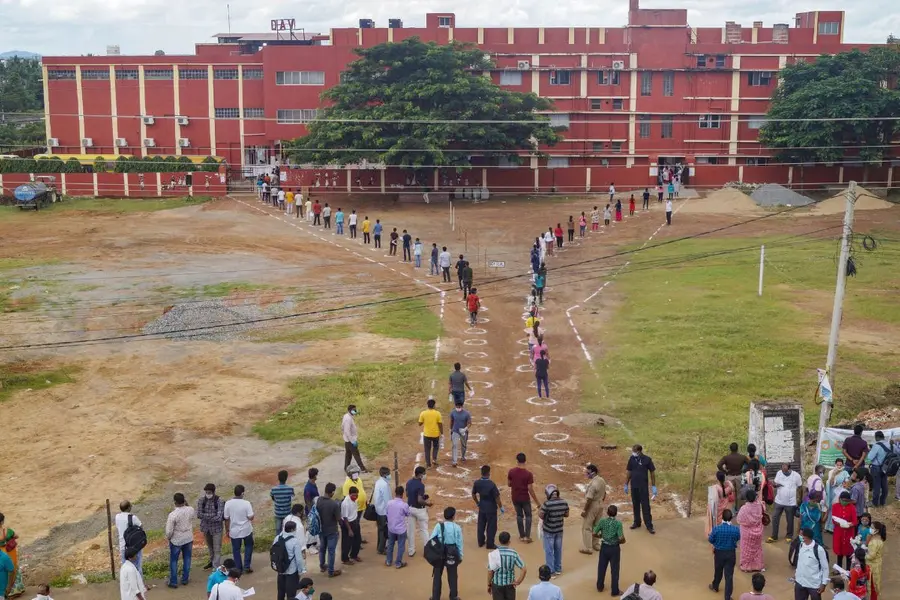
The cancellation of NEET-UG 2026 has created fresh uncertainty for medical aspirants across India, many of whom are now facing concerns over further delays in their path to securing MBBS and allied medical seats. The decision comes against a backdrop of repeated controversies surrounding the examination, including allegations of paper leaks and instances where the test had to be reconducted. Earlier concerns had already intensified following the 2024 episode involving grace marks being awarded to 1,563 candidates.
Students who sat for this year’s examination are currently awaiting an updated timetable, revised admit card details, confirmed examination centres, and clarity regarding the counselling schedule. The latest disruption has once again raised wider questions about the security and integrity of large-scale competitive examinations in India, particularly those linked to medical admissions.
This is reportedly the first time since the National Testing Agency began conducting NEET-UG in 2019 that the test has been cancelled in its entirety. The situation has also revived comparisons with the JEE (Main), which has largely avoided controversies of similar scale.
Over recent years, NEET-UG has faced scrutiny over irregularities. In 2024, it was partially reconducted for more than 1,500 candidates after discrepancies involving marks and grace scoring surfaced, prompting criticism of the examination process and its administration.
Why NEET is considered more vulnerable
A key distinction between NEET-UG and JEE (Main) lies in their mode of delivery. NEET is conducted entirely in pen-and-paper format in a single nationwide shift, and is offered in multiple languages, including English, Hindi, Tamil, Telugu, Bengali and Urdu.
By contrast, JEE (Main) is primarily computer-based and conducted in multiple sessions, reducing the logistical risks associated with physical question paper handling.
ALSO WATCH | ‘What is our fault?’: NEET aspirants devastated after exam cancellation
Offline examinations such as NEET involve complex processes including printing, packaging, transport, and secure storage of question papers across the country. This multi-layered chain introduces additional points of vulnerability where breaches could potentially occur.
Computer-based testing, on the other hand, delivers question papers digitally, significantly limiting the risk of physical tampering during transit or storage.
Key differences between NEET and JEE
NEET-UG is the gateway for undergraduate medical programmes such as MBBS, BDS, BAMS, BHMS, BSMS, and BUMS across India.
JEE (Main) serves as the primary entrance test for engineering and architecture courses in institutions including the Indian Institutes of Technology, National Institutes of Technology, IIITs, and other centrally funded technical institutions. Successful candidates may also qualify for JEE (Advanced), conducted separately by the IITs.
While JEE (Main) is conducted in multiple papers—covering engineering, architecture, and planning—it is predominantly computer-based, unlike NEET’s offline format.
Why NEET cannot easily move online
Despite repeated calls for an online format, officials have pointed to significant logistical constraints due to the scale of NEET-UG, which attracts over 22 lakh candidates annually. In comparison, JEE (Main) sees around 14 lakh applicants.
Current infrastructure reportedly supports computer-based testing for only about 1.5 lakh candidates per shift. Moving NEET online would therefore require multiple shifts over several days.
ALSO READ | NEET shockwave: ₹28 lakh question paper, Kerala student link, and nationwide crackdown
This raises the issue of score normalisation, already used in JEE (Main), where results across different question papers are adjusted to ensure fairness. However, experts caution that applying such a system to a high-stakes medical entrance examination could lead to disputes, legal challenges, and delays in admissions.
Overall, the cancellation has intensified debate over examination security, format suitability, and the future structure of India’s largest medical entrance test.
Published: 14 May 2026, 08:15 pm IST
Related Topics
Disclaimer: Kindly avoid objectionable, derogatory, unlawful and lewd comments, while responding to reports. Such comments are punishable under cyber laws. Please keep away from personal attacks. The opinions expressed here are the personal opinions of readers and not that of Mathrubhumi.
