
The board says the digital evaluation process is designed to improve transparency, accuracy and consistency in marking
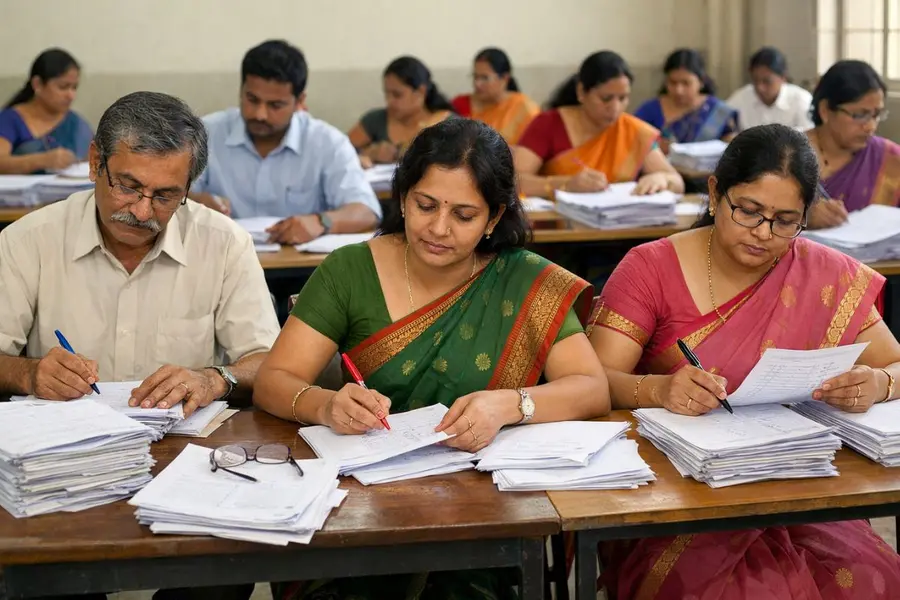
The Central Board of Secondary Education has detailed the complete evaluation procedure followed under its newly introduced On-Screen Marking system for Class 12 board examinations, following concerns expressed by some students over their marks after the declaration of results.
In a detailed explanation, CBSE outlined how answer scripts are scanned, digitally evaluated, verified and processed before final scores are compiled. The board said the On-Screen Marking system, commonly referred to as OSM, has been implemented to make the evaluation process more transparent, secure and accurate. Actual evaluation work under the system began on March 7, 2026.
Multi-layered process for scanning and evaluation
According to CBSE, the process starts at the receipt and secrecy stage, where answer books collected from examination centres are coded by external experts to conceal the identity of candidates.
The answer sheets are then scanned using high-resolution scanners before being subjected to a first-level quality assessment by the agency team. If the scanned image is found to be unclear or unsatisfactory, the answer book is scanned again to maintain quality standards.
Once the scanning process is completed, the digital copies are dispatched electronically to regions other than the one in which the examination was conducted. CBSE said this step has been introduced to maintain confidentiality and reduce the possibility of bias during evaluation.
The board also stated that evaluation centres are provided access to the system only through whitelisted static IP mechanisms, aimed at preventing unauthorised access to the digital platform.
Teachers award marks directly on digital platform
Under the OSM system, answer scripts are organised set-wise and allotted to evaluators online. Teachers assess the scanned copies and enter marks directly into the digital system instead of checking physical answer books manually.
CBSE said evaluators also conduct an additional quality check while marking the answer sheets. If any issue is detected in a scanned copy, evaluators are permitted to reject the script with remarks. The board then takes corrective measures before the evaluation process resumes.
After evaluators complete the marking process, the answer books are reviewed by Assistant Head Examiners and Head Examiners to ensure uniformity, consistency and accuracy in the awarding of marks.
CBSE conducted training and trial runs before implementation
The board also shared details about the preparation carried out before implementing the On-Screen Marking system for the 2026 Class 12 board examinations.
CBSE conducted a dry run of the system on January 20 and 21 in five schools, involving nearly 100 teachers. From February 9 onwards, demonstration sessions and feedback exercises were organised to familiarise teachers with the platform and gather suggestions for improvement.
A nationwide webinar explaining the OSM process was held on February 13 and attended by schools and teachers from across the country. Two days later, on February 15, teachers were provided portal access to practise digital evaluation using answer books from previous years.
The board confirmed that the actual evaluation process under the On-Screen Marking system officially commenced on March 7, 2026.
Students raise concerns after Class 12 results
CBSE has maintained that the On-Screen Marking system helps minimise totalling and tabulation errors, improves consistency in marking and accelerates the overall result preparation process.
However, after the announcement of the Class 12 board examination results, several students and parents voiced concerns on social media, claiming that they had received lower-than-expected marks under the newly introduced evaluation method.
The board reiterated that the system has been designed to improve fairness, efficiency and accuracy in the assessment process while ensuring greater transparency in the conduct of board examinations.
Published: 18 May 2026, 04:27 pm IST
Related Topics
Disclaimer: Kindly avoid objectionable, derogatory, unlawful and lewd comments, while responding to reports. Such comments are punishable under cyber laws. Please keep away from personal attacks. The opinions expressed here are the personal opinions of readers and not that of Mathrubhumi.
