
In a circular issued to legal education institutions and State Bar Councils, the BCI said the directions should not be treated as a routine advisory
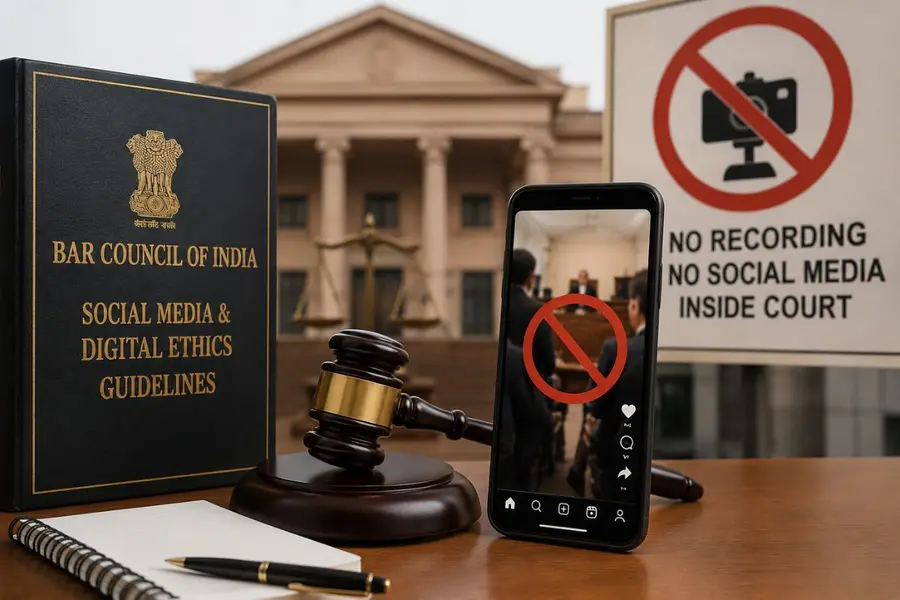
New Delhi: The Bar Council of India (BCI) has asked all State Bar Councils and law colleges to immediately implement its new social media and digital ethics guidelines, warning advocates, law students, interns and research scholars against posting content that could undermine the dignity of courts or breach professional confidentiality.
In a circular issued to legal education institutions and State Bar Councils, the BCI said the directions should not be treated as a routine advisory. Instead, it instructed colleges and Bar Councils to actively educate students and advocates about the new rules rather than merely uploading the circular to websites or forwarding it through messaging apps.
Also Read

The guidelines apply to students enrolled in LLB, LLM, PhD, diploma, certificate and other law-related programmes, as well as interns and research scholars.
BCI flags rise in courtroom reels and legal misinformation
The BCI said the guidelines were introduced in response to a growing trend of social media content featuring courts, legal internships and judicial proceedings.
According to the Council, advocates, law students, interns and social media users have increasingly been creating and sharing reels, videos, memes, edited clips and promotional posts showing court premises, court corridors, chambers, internships, professional engagements and even parts of live-streamed court hearings.
The Council also raised concerns over the spread of legal misinformation online, saying individuals who are not enrolled advocates, along with some law students, interns and self-styled legal influencers, have been sharing simplified, sensational or inaccurate legal advice on social media.
The BCI said the issue is especially worrying during internships, with some students posting photographs and videos of chamber work, client meetings, court visits and case files.
It stressed that interns, junior advocates, associates, clerks and office staff are equally bound by professional confidentiality and must not disclose or publicise client details, legal strategies, pleadings, research or internal discussions.
Internships are for learning, not content creation
The circular reminded law colleges that internships are intended to teach students legal practice, discipline and professional ethics, not to build a social media following.
Under the new guidelines, students and advocates are prohibited from recording court hearings or client meetings, revealing case details or litigation strategies, or posting content such as "day in court", "day in chamber", "internship reveal", "case file", "courtroom drama" or "lawyer life" if it compromises confidentiality or trivialises court proceedings.
Violations may invite disciplinary action
The BCI warned that those found violating the guidelines could face disciplinary action depending on the seriousness of the offence. Students may lose internship opportunities, be reported to their law colleges, internship coordinators, Bar Associations or law firms, and could also face counselling, warnings or other action permitted under the law.
The Council clarified that the guidelines are intended to promote ethical conduct and prevent professional misconduct. It added that the rules should not be used to suppress lawful criticism or initiate action based on unverified allegations, while directing all State Bar Councils and legal education institutions to ensure their immediate implementation.
Published: 19 Jul 2026, 12:23 pm IST
Related Topics
Disclaimer: Kindly avoid objectionable, derogatory, unlawful and lewd comments, while responding to reports. Such comments are punishable under cyber laws. Please keep away from personal attacks. The opinions expressed here are the personal opinions of readers and not that of Mathrubhumi.