
CBSE mandates 75% attendance, two-year study and internal assessments for Class 10 and 12 board exam eligibility under NEP 2020.
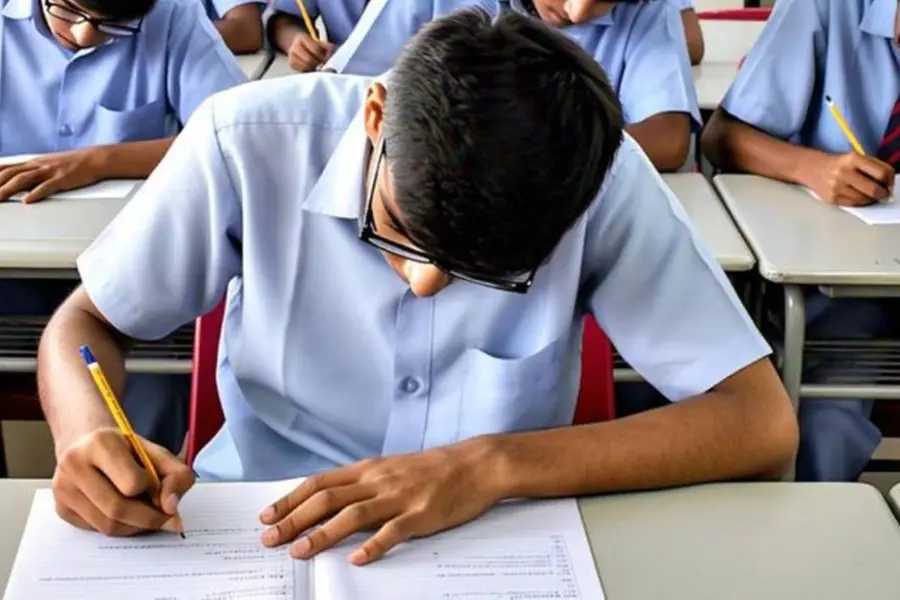
The Central Board of Secondary Education (CBSE) has issued a sweeping directive that notably tightens eligibility norms for Class 10 and 12 board exams. Students must now meet strict academic, attendance and internal assessment requirements to be allowed to sit for the exams—marking one of the board’s most stringent reforms in recent years.
How does CBSE differ from NIOS?
While the National Institute of Open Schooling (NIOS) follows an open and distance learning model, CBSE operates strictly through face-to-face schooling. The board clarified that its framework is designed to uphold discipline, accountability and the principles of the National Education Policy (NEP) 2020.
What is the new two-year structure?
CBSE has formally declared that board classes are now part of a two-year academic programme.
- Class 9 and 10 together form the foundation for the Class 10 exam
- Class 11 and 12 together constitute the course for Class 12
Any subject offered in board exams must be studied continuously over these two years. Students who attempt to bypass this structure—by enrolling late or skipping foundational years—will be disqualified.
What are the attendance requirements?
Students must maintain a minimum of 75% attendance to be eligible for board exams.
- Schools must track attendance daily
- Up to 25% condonation may be granted only in exceptional cases such as medical emergencies, bereavement or national-level participation in sports or cultural events
- Valid documentation is mandatory for exemptions. Students who fail to meet attendance norms without justification will be deemed ineligible—even if they are regular enrollees.
Is internal assessment now compulsory?
Yes. Under NEP-2020, internal assessment is now a core component of evaluation.
- It spans two years and includes tests, projects and classroom participation
- Students who miss school regularly will also miss internal assessments
- Without these records, CBSE will not declare results—even if the student appears for theory exams. Such students will be placed in the ‘Essential Repeat’ category.
What are the rules for additional subjects?
CBSE has imposed new limits on additional subjects:
- Class 10 students may opt for two additional subjects beyond the compulsory five
- Class 12 students may choose one additional subject only. These subjects must also be studied for the full two-year duration. Schools must have CBSE approval, qualified faculty and proper infrastructure to offer these subjects. Otherwise, students will not be allowed to register for them.
What about private candidates and repeaters?
Students who were previously placed in the ‘Compartment’ or ‘Essential Repeat’ category may reappear as private candidates. However, those who have not followed the two-year study and attendance norms are not eligible to offer additional subjects as private candidates.
Why is this directive significant?
This move targets:
- ‘Dummy candidates’ who register without attending classes
- Schools offering unapproved subjects without proper facilities
- Students bypassing internal assessments
By linking exam eligibility to classroom learning, attendance and continuous evaluation, CBSE is enforcing a comprehensive compliance regime.
What’s the broader impact?
These reforms align with NEP-2020’s emphasis on holistic, year-round learning.
- For students: consistent school participation is now as crucial as final exam performance
- For schools: poor record-keeping and unauthorised subject offerings may lead to disciplinary action, including disaffiliation.
Published: 15 Sept 2025, 11:21 pm IST
Disclaimer: Kindly avoid objectionable, derogatory, unlawful and lewd comments, while responding to reports. Such comments are punishable under cyber laws. Please keep away from personal attacks. The opinions expressed here are the personal opinions of readers and not that of Mathrubhumi.
