

What is striking is that the weaponisation of this draconian provision has not remained confined to BJP-ruled states. Even in Left-governed Kerala, the law has been invoked
What could be more contemptuous of the judiciary than smuggling back into force an archaic, undemocratic colonial law already frozen by the Supreme Court? Yet when the contemnor is none other than the Union government, will the judiciary act?
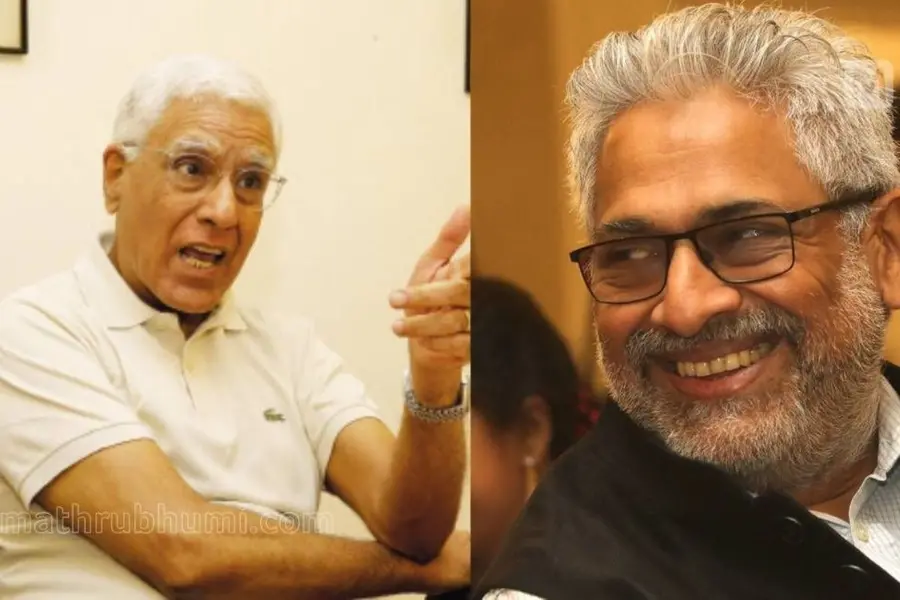
On August 14, the Assam Police summoned two senior journalists of The Wire—Karan Thapar and Siddharth Varadarajan—under Section 152 of the Bharatiya Nyaya Samhita (BNS) 2023, the new sedition clause that criminalises acts deemed to endanger India’s sovereignty, unity and integrity. The summons, carrying a threat of arrest, must be seen as nothing short of contempt of court—for several reasons.
First, the summons was sent to The Wire’s Founder editor Varadarajan exactly on the day, August 12, the Supreme Court granted him and his team interim protection from coercive action in connection with an FIR filed by the Assam Police.
Second, the police invoked Section 152 just a week after a three-judge bench headed by Chief Justice B. R. Gavai agreed to examine its constitutional validity.
Third, Section 152 is itself a sleight of hand: a rebranded replica of the infamous Section 124-A of the IPC, which the Supreme Court suspended in 2022.
This is despite the Centre’s own admission before the apex court that Section 124-A was outdated and would be scrapped. Yet the BNS reintroduced it, almost word for word.
The Guwahati Crime Branch has now directed the two journalists to appear on August 22, warning that failure to do so would lead to arrest. The summons merely stated that there were “reasonable grounds” to question them, but offered no details. The underlying FIR reportedly stems from a complaint by a BJP leader, triggered by The Wire’s various articles, including the June 29 report citing a presentation by India’s defence attaché to Indonesia, Captain Shiv Kumar, who disclosed that India lost fighter jets during Operation Sindoor.
According to The Wire, the FIR also listed 12 articles it published in the aftermath of the Pahalgam terrorist attack as “endangering the country’s sovereignty”. They involved the following authors or interview subjects (not named in FIR): former editor of The Tribune Harish Khare, Observer Research Foundation senior fellow Manoj Joshi, former Intelligence Bureau official Avinash Mohananey, former chief of RAW A.S. Dulat, Colonel (retired) Ajai Shukla, former ADG of the Border Security Force S.K. Sood, senior journalist Anand Sahay, educationist Rohit Kumar, senior defence journalist Rahul Bedi, researcher Nirmanya Chouhan and retired Indian Army officer, Ali Ahmed.
The irony is stark. The BNS, touted by the government as a replacement for colonial-era laws, was introduced with the claim that oppressive provisions like Section 124-A had been discarded. That section, historically used to jail leaders from Tilak to Gandhi, had long been denounced as a weapon against free speech. In a landmark order, a three-member bench of the Supreme Court headed by Chief Justice NV Ramana froze the colonial relic in May 2022, directing governments not to register FIRs, continue investigations, or take coercive steps while its validity was under reconsideration. Human rights bodies worldwide hailed the order.
Section 124-A has faced relentless criticism since Independence from writers, journalists, civil rights activists, and even political parties, while in opposition, for its blatant violation of fundamental rights. Yet no democratically elected government—regardless of party—ever repealed it, until the Supreme Court finally froze its operation in 2022. This vindicated the charge that rulers, whether colonial or indigenous, rarely tolerate serious challenges to their authority. Even the restrictions laid down by the Supreme Court in 1962 on the law’s application were routinely flouted, as authorities used it to stifle free speech and punish even minor criticism of governments at both the Centre and in the states. Its misuse reached grotesque proportions in 2018, when more than 15,000 tribals in Jharkhand’s Khunti district were booked under the sedition law merely for protesting government encroachment on their traditional land rights. Such cases have multiplied, especially under the present BJP government, revealing the law’s continuing utility as a weapon against dissent.
The Centre itself had assured the court of its intent to scrap law, with the Solicitor General citing the Prime Minister’s resolve to weed out “outdated colonial laws”. Yet, in less than a year, Section 152 of the BNS resurrected sedition under another name. Unsurprisingly, journalists and activists have challenged it again in the Supreme Court, pointing out its near-verbatim overlap with the repealed provision. In December last year, in a case against a Sikh preacher accused of extremism, the Rajasthan High Court ruled that Section 152 should not be used to stifle legitimate criticism.
The new clause criminalises any speech or expression that “excites or attempts to excite secession or armed rebellion or subversive activities, or encourages separatist feelings, or endangers the sovereignty or integrity of India.” On August 7, Chief Justice Gavai, along with Justices K. Vinod Chandran (a former judge of the Kerala High Court) and N. V. Anjaria, issued notice to the Centre on the petitions.
That very week, the Assam Police invoked the same law under challenge to summon journalists already under the Court’s protective umbrella. The brazenness raises a chilling question: if the state can so openly defy the spirit of the Supreme Court’s orders, can the judiciary afford to look away? Among the very few journalists who have refused to capitulate before the BJP government, both Thapar and Varadarajan have been BJP’s eyesore for a long time. The present action is only the latest among a series of attempts to bring them to their knees.
Critics of the Central government’s conduct — including Operation Sindoor in the aftermath of the Pahalgam incident — have increasingly been targeted by police under Section 152, often on complaints filed by Sangh Parivar activists. Those booked under this law span a strikingly wide spectrum: Ali Khan Mahmudabad, historian and professor at Ashoka University; satirists Madri Kakoti and Shamita Yadav (known as Dr Medusa and Ranting Gola); Bhojpuri singer Neha Rathi; Pushpa Sathidar, widow of noted Nagpur-based filmmaker Veera Sathidar; and even a 20-year-old autorickshaw driver.
What is striking is that the weaponisation of this draconian provision has not remained confined to BJP-ruled states. Even in Left-governed Kerala, the law has been invoked. In May, the Kottarakkara police booked Malayali actor-director Akhil Marar for sedition after he released a video criticising Prime Minister Narendra Modi and India’s stance on the latest conflict with Pakistan. The case was registered on a complaint filed by Aneesh Kizhakkekara, president of the BJP’s Kottarakkara mandalam unit.
Published: 21 Aug 2025, 09:42 am IST
ABOUT THE AUTHOR
Related Topics
Disclaimer: Kindly avoid objectionable, derogatory, unlawful and lewd comments, while responding to reports. Such comments are punishable under cyber laws. Please keep away from personal attacks. The opinions expressed here are the personal opinions of readers and not that of Mathrubhumi.