
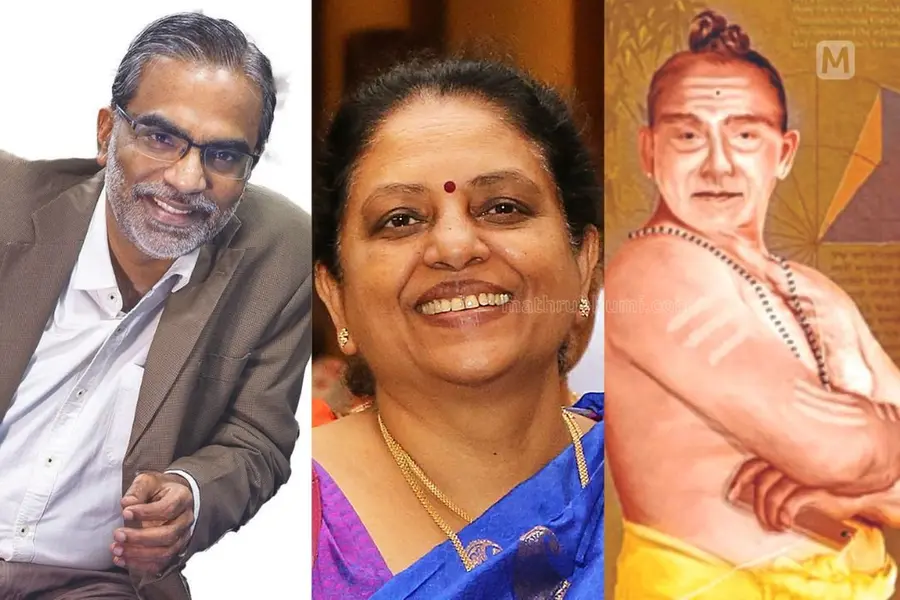
How many of us know that a river flowing 4 km beneath and parallel to the great Amazon forests of South America through Brazil and Peru is named after a Malayali? He is the geophysicist, Valiya Mannathal Hamza (82) from Kozhikode who co-discovered a 6000 km-long subterranean aquifer, like India’s legendary Saraswati, in 2011 which is now referred to as “Rio Hamza” (River Hamza). Hamza, a post-graduate from the University of Kerala is a permanent professor at Brazil’s National Observatory.
I am sure very few in Kerala must have known about Hamza. This is the same story of Kerala’s most scientists who despite having made their indelible marks in their respective fields, the state has remained either ignorant of them or did not care to take note. Like the subterranean river Hamza discovered, most of our scientists too remain largely invisible.
Mookkuthala, an obscure village in Malappuram, has been continuously in the news during the last few days. First was when Mookkuthala’s famous son Pakaravoor Chitran Namboodiripad (103), passed away. He was an educationist, social reformer, and intrepid trekker who visited the Himalayas 29 times, the last when he was 99! The village was in the news again soon when Kerala celebrated the great M T Vasudevan Nair’s ninetieth birthday. Media turned the arclights on Mookkuthala which was the location for MT’s classic film, 'Nirmalyam'. The third time was when Thalappil Pradeep won one of the most coveted global prizes in the field of energy. Pradeep did his schooling in Mookkuthala Government High School, which incidentally was once owned by none other than Chitran Namboodiripad who gifted it to the government many years ago for a token price of Rs 1.
Pradeep (60), an institute professor and professor of chemistry at the Indian Institute of Technology, Madras, is this year’s winner of the prestigious ENI Prize instituted by the Rome-based ENI, a multinational energy company for outstanding contribution in the field of energy conservation and protection of the environment. The ENI award instituted in 2007 is often called the Nobel Prize for Energy Research. Winner in one of the three major categories, Pradeep has been chosen for the Advanced Environment Solutions Award dedicated to research on air, water, and land protection and industrial site remediation. Pradeep is recognised for his groundbreaking research on affordable ways to remove toxic contaminants from drinking water. His research at IIT has led to sustainable and cost-effective technology to use nanoscale materials for water purification which has benefited 1.3 million people in India. Winners in the other two categories are Matthew Rosseinsky of the University of Liverpool who won the Energy Frontiers award for research into renewable energy and Yu Huang of the University of California (Los Angeles) and Jeffrey R Long from the University of California (Berkeley) who jointly won the prize for Energy Transition. The jury consisted of eminent scientists including Jean-Marie Lehn who won the Nobel for Chemistry in 1987. Past jury members included 1996 Nobel winners like Robert Richardson (Physics) and Sir Harold Kroto (Chemistry). The prize carrying a cash award of 200000 Euros will be presented by the President of Italy.

Unfortunately, Pradeep is relatively unknown to us despite being one of India’s most acclaimed scientists. Unlike many famed Malayalis settled abroad and unknown to most of us, Pradeep is a totally homegrown talent and it could be why he firmly believes that science’s primary objective should be to improve the lives of common people. Belonging to Pantavoor village in Malappuram, Pradeep’s father, MM Thalappil, taught in the Mookkuthala school besides being a writer. Young Pradeep walked 4 km every day to the school where he studied in Malayalam medium. A brilliant student, Pradeep later studied at MES College Ponnani, St Thomas College, Thrissur, and Farook College in Kozhikode before he joined the Indian Institute of Science (IISc) for PhD under illustrious professors like CNR Rao and MS Hegde. After joining IIT when he was 30, Pradeep did his post-doctoral research at the University of California (Berkeley) and Purdue University (Indiana). A keen supporter of the popular science movement, he has written books in Malayalam (besides many in English) for Kerala Sastra Sahitya Parishad. His book in Malayalam, Kunjukanangalkk Vasantham, (Springtime for nanoparticles) is a winner of the Kerala Sahitya Akademi award. He regularly writes for mainstream publications besides the globally reputed scientific journals. Yet, notwithstanding our claimed enlightenment, Kerala has been largely ignorant of him.
For the uninitiated, “institute professor” in an IIT is the highest title in the institute and Pradeep is the second among the five faculty members who have been conferred at Madras IIT. He is also among the first set of Institute Chair Professors appointed at the IIT. He has conceptualised and built the International Centre for Clean Water at IIT. A specialist in molecular and nanoscale materials, his research interests include clean water, surfaces, instrumentation, and business incubation. His group’s discovery following a decade-long research led to the world’s first nanochemistry-based water filter for pesticide removal. According to his website (pradeepresearch.org), this technology has benefited about 9 million people. Combining several nanoparticles, an “all-inclusive affordable drinking water purifier” has been developed. Called “Amrit”, the technology is being implemented in the arsenic-affected regions of India and benefitted more than 1 million people. The cost works out to be less than 2.5 paise for purifying 1 liter of water. According to the World Health Organization, states most affected by arsenic contamination of groundwater are West Bengal, Jharkhand, Bihar, Uttar Pradesh, Assam, Manipur, and Chhattisgarh. Long-term intake of arsenic-contaminated water leads to arsenic poisoning (arsenicosis), with cancer of the skin, bladder, kidney, or lung or diseases of the skin, or blood vessels of legs and feet. In a recent interview, Pradeep said Kerala has been relatively less affected by arsenic though fluoride contamination is prevalent in parts of Palakkad district which can be treated with his group’s technology.
Four companies have been incubated with the participation of IIT Madras to use the technologies developed by Pradeep’s research group which has also developed a UHV ion scattering spectrometer and an ultra-low energy mass-selected ion scattering instrument.
Though Kerala has not largely known him, awards and honours from all over the world have been chasing Pradeep and his team for some time now. They include the Shanti Swarup Bhatnagar Prize, TWAS Prize, Padma Shri, VinFuture Special Prize, Prince Sultan Bin Abdulaziz International Prize for Water, IISc Distinguished Alumnus Award, Vishwakarma Medal of the Indian National Science Academy, Nikkei Asia Prize, JC Bose National Fellowship, etc.
Though we have not been enlightened enough to duly fully recognise or honour them unlike our literary icons or movie and sports stars, Kerala has a long lineage of illustrious scientists starting from the legendary Kerala School of Astronomy and Mathematicians founded by Madhava of Sangamagrama in Tirur of the 14th century or Cherthala’s Itty Achudan, the celebrated herbalist who co-authored the classic, Hortus Malabaricus with the Dutch Governor, Hendrik van Rheede in 17th century. The modern era has seen globally known Malayali scientists like the botanist EK Janaki Ammal (1897-1984) of Thalasseri who was the first woman in the USA to obtain PhD in botany, eminent meteorologists and meteorologists like PR Pisharoty (1909-2002) from Kollengode who is called the Father of Remote Sensing in India or “India’s weather woman”, Anna Mani (1908-2001) from Peermede, India’s first surgeon general, Mary Poonen Lukose (1886-1976) from Thiruvananthapuram, physicist MGK Menon (1928-2016), the prominent structural biologist Mamannamana Vijayan (1941-2022) of Thrissur or theoretical physicist and cosmologist Thanu Padmanabhan (1957-2021) of Thiruvananthapuram who left us recently, top photochemist Manappurath Verghese George (1928- 2019) and so on.
Like Hamza, many other world-renowned Malayali scientists continue to enrich our lives. MS Swaminathan (97) from Mankombu, known as the Father of India’s Green Revolution, acclaimed cardiac surgeon MS Valiathan (89) from Mavelikkara,“Indian missile woman” Tessy Thomas (60) from Alappuzha, biophysicist KRK Eswaran (87) from Kalpathi, the biomedical engineer Shyni Varghese from Tiruvalla who is a “triple professor” in three different departments of the Duke University, A Ajayaghosh (61) from Kollam who is the first Infosys Prize winner for chemistry, the renowned amphibian biologist SD Biju (60) from Kadakkal village, known as “frog man of Kerala” credited with discovering 25% of India’s amphibian diversity, the maverick quantum physicist CS Unnikrishnan who challenges Albert Einstein's Special Theory of Relativity, pioneer nanotechnologist Pulickel Ajayan (63), the founding chair of the Rice University’s (USA) Material Sciences and Nanoengineering department or space scientists like K. Kasturirangan (82) and others.
There would be many others of equal importance whose names I have missed due to my own limited awareness. Unfortunately, Kerala hardly looks keen to make use of her great sons and daughters whom the world admires for their pioneering contributions. MA Baby, when he was the state Education Minister, had launched an imaginative programme -"Erudite"- to invite Nobel winners to undertake lectures for university students. The project got closed as usual after his tenure was over. If not Nobel winners, why can’t our governments or universities invite those prominent scholars from Kerala who have made a global mark to speak to our students and teachers to help elevate our higher education system which has lost much of its past glow as one of India’s best?
Published: 29 Jul 2023, 10:12 am IST
Disclaimer: Kindly avoid objectionable, derogatory, unlawful and lewd comments, while responding to reports. Such comments are punishable under cyber laws. Please keep away from personal attacks. The opinions expressed here are the personal opinions of readers and not that of Mathrubhumi.