

Satheesan faces questions over UDF reversals, controversies and perceived similarities with Pinarayi Vijayan’s leadership style.
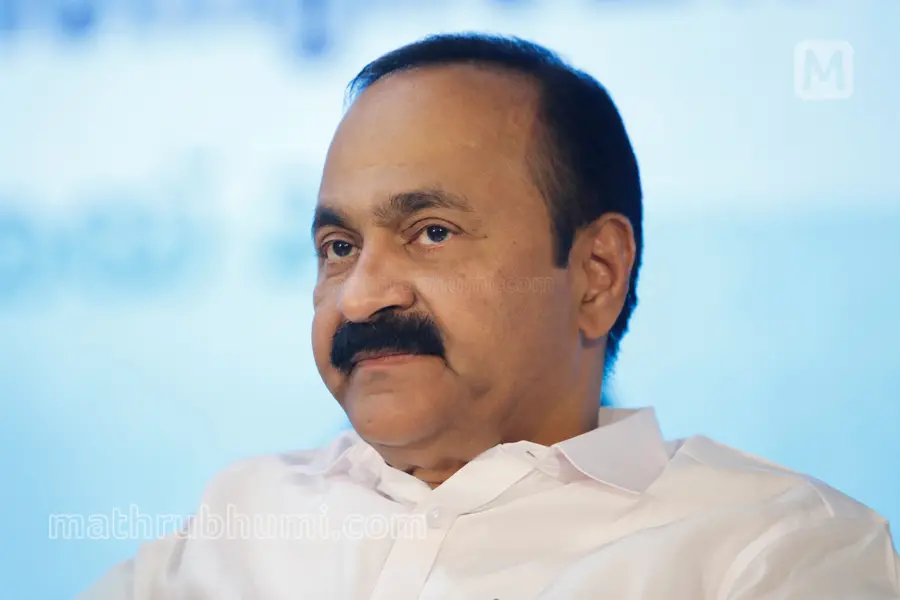
What has happened to V. D. Satheeshan, all of a sudden? Wasn't he, for the past five years, the voracious reader, the warrior for democracy, the champion of media freedom, transparency and ethical politics? Wasn't he the picture-perfect antithesis of Pinarayi Vijayan, the unsmiling dark lord of authoritarianism, arrogance and hubris?
Yet, barely four months after taking over as Chief Minister, even his staunch supporters see in Satheesan the mirror image of his own nemesis, the former Chief Minister Pinarayi Vijayan. As Pinarayi was once mocked as “Modi in Mundu”, some now call Satheesan “Pinarayi in Khadar”.
Some of these comparisons may be exaggerated. But such questions are increasingly being heard across Kerala with each passing day since the former Opposition leader became Chief Minister.
Why do the Chief Minister and the UDF government keep finding themselves constantly in self-created soups, even before settling down in office? Since this defies common sense, one may even be tempted to presume that Keralam's 13th Chief Minister is unwittingly strengthening “triskaidekaphobia”- the term denoting the superstitious fear of the number 13.
Every democratic government enjoys a honeymoon period with the people, when both sides see only the best in each other. Very few governments, however, in Kerala or elsewhere in the democratic world, may have experienced a honeymoon as short-lived as that of the present UDF government. Indeed, the portents turned dark even before the government was born, or before the euphoria over the massive electoral triumph had subsided. The ugly fracas among the three senior-most leaders for the Chief Minister’s post delayed the government formation and squandered much of the huge goodwill that had brought the UDF to power after an unprecedented decade in the wilderness.
Thanks to popular support and the media, Satheeshan deservedly won the CM’s seat, despite KC Venugopal and Ramesh Chennithala enjoying stronger support within the Congress High Command's reckoning and among the newly elected party legislators. Thereafter it looked like smooth sailing for Satheesan. Unlike in the past when UDF partners wrangled over ministerial berths and portfolios, Satheesan completed the ministry formation exercise in a jiffy.
But things soon turned sour, with the government surprising everyone by committing one blunder after another. The appointment of Power Minister Sunny Joseph’s brother-in-law as his additional secretary, and of the lawyer who had represented an accused in the Sabarimala gold theft case as the state’s Devaswom Special Pleader, outraged even hardcore UDF supporters, including the media. This forced the government to reluctantly reverse both the appointments.
Even more startling were the ministry’s brazen moves from its very first cabinet meeting onwards to implement the exact policies and projects of the previous government, which the UDF had bitterly opposed only days earlier! The decision to proceed with the centrally funded PM Shri scheme, the permission for low-alcohol beverages in the state, or the extension of the costly contract for private helicopter services for the government are cases in point. The latest is the posting of Muslim League’s M K Muneer and Forward Bloc’s G Devarajan to highly expensive ornamental posts carrying cabinet by Satheesan, who was a trenchant critic of the last Pinarayi government’s profligate political appointments! No wonder that the government earned the label of “U-Turn sarkar”.
Implementing policies or projects a ruling party opposed while in opposition is, of course, not uncommon in democratic politics. This applies to both good and bad policies. Friends and foes of Communists alike had anticipated a red revolution when Kerala became one of the world’s earliest regions to elect a Communist Party in 1957. Yet, the most realistic person at the time was none other than the new Chief Minister, E. M. S. Namboodiripad. Even in his first radio address after swearing in, Namboodiripad candidly announced that his government had no authority to implement anything beyond what the Indian Constitution permitted. He even said his government’s priority was to implement various programmes that the Congress government at the centre had announced but never carried out. The EMS government’s historic land reforms were one of them. Eschewing its decades-long campaign against bourgeois capitalists such as the Tatas and Birlas, the Communist government invited the Birlas to set up Kerala’s largest private industry by offering liberal concessions and privileges, without foreseeing the disastrous consequences for the state’s ecology. The state’s first working-class government was also forced to order its police to shoot at striking cashew workers at Chandanathope in Kollam, killing two.
However, Satheesan government’s U-turns hardly appear as unavoidable compromises or compulsions. Even as the government was neck-deep in these controversies, its moral image took a bigger hit when multiple ministers, including Satheesan himself, were caught enjoying expensive gifts or services from wealthy businessmen and non-residents. Satheesan travelled on someone’s private jet to visit flood-hit areas in Nilambur; Home Minister Chennithala flew with family and friends to the USA to attend a wedding; Sports Minister O J Janeesh arrived in the Gulf with his wife ostensibly to take a break from his hectic ministerial schedule; and KM Shaji, Local Self Governments Minister, happily cruised in a luxurious Range Rover owned by his rich friend because his five-year-old official Innova was apparently too old. Despite a code of conduct barring ministers from accepting such expensive gifts, these leaders vigorously defended their actions as helping the state save money! The most stunning defence came from Satheesan, a vociferous champion of ethics in public life who is not unaware of the obvious moral and legal implications of ministers accepting free gifts from private individuals. As always, Satheesan tried to justify it by citing instances of previous ministers indulging in such actions and arrogantly declared that he would do the same again. He admonished the media for raking up such trivial issues. He seems to have forgotten that the LDF government was ousted not just for political reasons but also on moral and ethical grounds.
What makes a person like Satheesan transform himself so fundamentally and quickly is a question even seasoned pundits or political psychologists may find hard to answer. History is replete with examples of even popular and compassionate leaders turning arrogant and authoritarian once they come to power. Political scientists call this phenomenon Caesarism after the Roman emperor Julius Caesar (100 BC- 44 BC). It refers to leaders who first gain legitimacy through competence, service, or crisis management and later use it to amass power and suppress rivals. From antiquity to the present democratic age, history has produced no shortage of democratically elected leaders who eventually concentrated power in their own hands.
Lord Acton’s famous adage, “power corrupts, and absolute power corrupts absolutely,” remains one of history's most enduring warnings. Equally telling is the observation about President Abraham Lincoln’s rare ability to refrain from abusing authority made by R.G. Ingersoll, another American politician: "Nearly all men can stand adversity, but if you want to test a man's character, give him power”.
Usually, certain circumstances encourage leaders to turn Caesarist: a prolonged stint in power; crises like wars, natural disasters, epidemics, or economic collapse; massive electoral wins; or deep insecurity from within. Pinarayi Vijayan’s style could be read against several of these factors. In Satheesan’s case, the last two seem to be at play: his massive electoral win and a lurking sense of insecurity, driven by his lack of a support base within his party. He knows he missed a ministerial berth at the last minute in the Oommen Chandy cabinet in 2011, and what an uphill task it was to become Chief Minister this time, even after leading the front to power. He also knows well how tough it will be to keep that position for the next five years. Hence, perhaps, his eagerness to humour the Muslim League. Satheesan knows the League’s crucial role in making him Chief Minister. He is also aware that given Congress’s dependency on the League, not even the High Command would dare to shake him. Nor should one forget that, despite his professed commitment to ethical politics, Satheesan’s role model in his younger days was none other than K Karunakaran, the Malayali Machiavelli.
Yet, none of this fully explains Satheesan’s transformation in such a short time. After all, thanks to his wide reading, he understands political processes better than any other contemporary leader. Some accuse him of authoritarian tendencies, as revealed in his various interactions with the media and others even before he became Chief Minister. His political baptism was also in K Karunakaran’s faction, infamous for its penchant for authoritarianism. Yet, over the past decades, Satheesan appeared to have outgrown those tendencies through reading, reflection and political experience. His principled stance on several issues often led him to criticise even the Chandy government on corruption and environmental questions.
Perhaps the most intriguing explanation for Satheesan’s transformation lies in Carl Jung’s analytical psychology. The Swiss psychiatrist’s theory of the “Shadow” suggests, broadly, that the traits we hate in our enemies could be things we subconsciously possess or wish we had. Is Satheeshan, in some strange way, validating Jung?
All said and done, this writer believes that, unlike his predecessors, Satheeshan will course-correct because he understands the perils of condemning criticism. In fact, such a course correction is imperative not merely for the health of his government but also for Kerala's broader democratic culture. A democracy that loses faith in its institutions and leaders can end up embracing far more dangerous options.
Postscript: It is time Satheesan and Pinarayi placed each other’s photographs on a pedestal in their homes. The Chief Minister owes the Leader of the Opposition a debt of gratitude: despite the government’s string of missteps, the Opposition’s ineffectiveness has ensured that there has been no serious agitation against them. The LoP, in turn, should be grateful to the Chief Minister for initiating the process of repairing a reputation that had been badly mauled.
Published: 06 Oct 2026, 11:00 am IST
ABOUT THE AUTHOR
Disclaimer: Kindly avoid objectionable, derogatory, unlawful and lewd comments, while responding to reports. Such comments are punishable under cyber laws. Please keep away from personal attacks. The opinions expressed here are the personal opinions of readers and not that of Mathrubhumi.