

Many experts now regard it as the worst marine pollution incident in the state's history, which holds the record of having the country’s cleanest coast
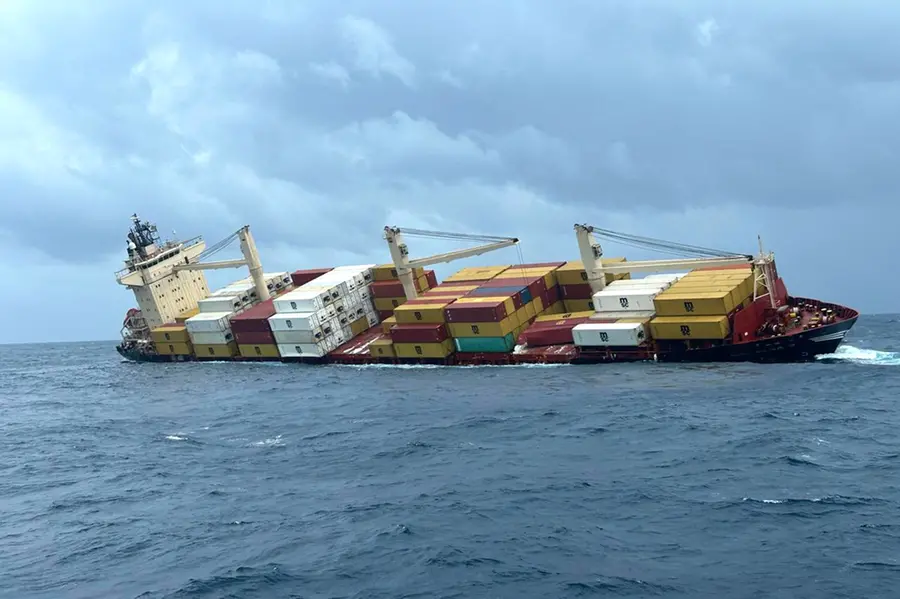
The recent capsizing of a cargo ship, MSC ELSA 3, that sailed from Vizhinjam on May 24 off the Kochi coast in the Arabian Sea and the resulting environmental contamination have served as a harsh reality check for Kerala, caught up in its ambitious dreams of becoming the next Singapore or Dubai with the launch of the Vizhinjam International Seaport, India's first deep water transhipment terminal. But, have we truly grasped the gravity of the environmental emergency triggered by the wreck of the 28-year-old Liberian-flagged container vessel owned and operated by the world's largest container shipping company, the Geneva-based Mediterranean Shipping Company (MSC)?
Many experts now regard it as the worst marine pollution incident in the state's history, which holds the record of having the country’s cleanest coast. Reports Urban Acres, an environmentalist website: “A mounting environmental emergency is unfolding across the southern coast of Kerala as toxic plastic nurdles—small, lentil-sized pellets used in plastic production—have washed ashore in vast numbers following the sinking of the container ship MSC ELSA 3. The incident is triggering widespread alarm among ecologists, marine biologists, and coastal communities, as the state confronts one of its worst-ever marine pollution episodes.”
According to India’s premier environmentalist publication, Down To Earth, the tiny plastic pellets -nurdles- found in large numbers on Kerala's many coastal regions which the containers in the capsized ship had, could be consumed by fish, turtles, and sea birds which may enter food chains and potentially end up in human diets.
The flood of reports about the likely chemical pollution caused by the shipwreck has caused panic and a major fall in fish sales in the state, throwing the local fisherfolk lives into a quandary. However, aquatic experts like Prof VN Sajeevan of Kerala University of Fisheries and Ocean Studies maintain that since MSC ELSA 3 was only a medium-sized cargo vessel and not a major oil tanker, there was no need to fear a big oil spill or massive chemical pollution. According to him, there was no cause for panic over the safety of fish. However, he cautioned that the chemicals like calcium carbide stored in the floating containers could be inflammable and hazardous. The Director General (Shipping), the Mercantile Marine Department and the Indian Coast Guard have initiated steps to study and contain the pollution. The Coast Guard has said that the oil spill has been controlled. The Kerala government declared it a state-level disaster, and Chief Minister Pinarayi Vijayan discussed with global experts about the issue. Detailing the measures undertaken by the government, including the immediate relief for affected fisherfolk, Vijayan asked the public not to panic but to refrain from coming into direct contact with the contents from the ship's containers, though there was no risk in consuming fish.
Around 100 of the 640 containers, some of them containing highly hazardous cargo, from the capsized vessel have washed ashore, reaching as far as south Thiruvananthapuram. There were containers with 84.44 metric tonnes of diesel, 367.1 tonnes of furnace oil, and 13 tonnes of hazardous cargo, including calcium carbide. The authorities have warned people not to get in direct contact with the floating containers, which may contain highly toxic chemicals. All 24 members of the crew were safely evacuated from the vessel by the Indian Coast Guard and Indian Navy, and the ship sank on the morning of 25 May.
The incident has prompted the environmentalists to reiterate their fears about the ecological sustainability of the Vizhinjam seaport. “That this region is ecologically fragile, climate-vulnerable and oceanographically risky was recognised long ago. Nonetheless, a massive transhipment port was imposed on its shores. And now, with this first disaster, the warnings of scientists, fishers and environmentalists have come ashore, both literally and metaphorically,” writes Sridhar Radhakrishnan, a green activist.
Though there are differences regarding the magnitude of the environmental damage caused by the shipwreck, it underscores the critical need for Kerala to be highly alert, even as its hopes soar with the increase in shipping traffic through the Vizhinjam Transhipment Terminal. There are widespread discussions and plans on tapping the economic and commercial prospects generated by the terminal. But not much is heard about the urgent need to simultaneously institute comprehensive, permanent and competent mechanisms for the close and regular monitoring of the likely challenges to the marine and coastal environment and the livelihood of the local community. They are also imperative to help Kerala retain its top position in having the country’s highest Coastal Water Quality Index as per the 2023-24 report released by the Union government.
However, with the Nilambur byelection and its attendant political acrobatics grabbing all the media attention, the damages caused by the shipwreck may recede from public radar. Though there have been no serious efforts until now to monitor and mitigate ocean pollution in the state, the present incident shows the state cannot remain complacent. The Chief Minister has informed that it has held discussions with the MSC on the need to assess and account for the environmental damage, loss of livelihood, impact on tourism, etc. Hopefully, the government acts promptly to force the capsized vessel’s management to pay up the legitimate compensation for the damages it caused to the state and the fisherfolk, as well as the cost incurred for the cleaning operations as per the International Convention on Civil Liability for Oil Pollution Damage.
Nurdles threat
A particular threat caused by the capsized ship that has caught environmentalists’ attention worldwide is the nurdle spill. Though plastic pellets were found on the beaches of Mumbai and Palghar in 2023, the present Kerala incident is the first major landing of nurdles discovered on the Indian coast, according to A. Biju Kumar, Senior Professor, Marine Monitoring Lab, Department of Aquatic Biology and Fisheries, University of Kerala, who brought the nurdle landing in Kochuveli in Thiruvananthapuram to public notice.
The tiny and translucent nurdles look like fish eggs, are made from polymers and used to manufacture plastic products. Nurdle pollution is an area of wide interest for experts on marine ecosystems, and there is a movement -the Great Nurdle Hunt- led by Fidra, a Scotland-based group of activists and environmentalists, to monitor and contain this phenomenon. It has recorded nurdle pollution in over 60 countries. Plastic nurdles, also known as pre-production plastic pellets, are typically less than 5 mm in diameter and are the raw material used in the manufacture of plastic products. Despite their innocuous appearance, they pose a severe threat to marine ecosystems and human health. Once in waterways, nurdles are buoyant and easily carried by currents across oceans. They have been found on remote beaches worldwide, from the Arctic to the South Pacific.
The world’s worst nurdle spill incident also occurred in our neighbourhood when MV X-Pearl, a Singapore-flagged cargo ship, caught fire in the Indian Ocean, 18 km off Colombo in May 2021. Over 1680 tons of nurdles had spilt into the ocean, which the United Nations described as the worst marine plastic spill in history. It caused massive contamination along Sri Lanka’s western coastline and killed fish, turtles and dolphins in large numbers, which had eaten them, mistaking them for food. The fire burned for nearly two weeks before the ship sank on June 17, 2021. Though most countries do not have specific laws for nurdle handling, following the MV X Pearl fire, new guidelines for the safe transport of nurdles were agreed upon. It is to be examined if the MSC ELSA 3 had followed them.
According to the “Clean Seas Campaign”, a global campaign by the United Nations Environment Programme (UNEP), to raise awareness on marine litter and plastic pollution, there are 51 trillion microplastic particles in the world’s seas. India joined the Campaign in 2018.
One hopes that the recent shipwreck will prompt Kerala—India’s earliest hub of global maritime trade with a legacy spanning over 2,000 years, and now dreaming of revival through Vizhinjam, to take every necessary step to safeguard its invaluable coastline against the serious challenges that such disasters may bring.
Published: 31 May 2025, 09:53 am IST
ABOUT THE AUTHOR
Disclaimer: Kindly avoid objectionable, derogatory, unlawful and lewd comments, while responding to reports. Such comments are punishable under cyber laws. Please keep away from personal attacks. The opinions expressed here are the personal opinions of readers and not that of Mathrubhumi.