

Kerala’s 2026 Assembly election has sparked intense speculation, with many reading the high voter turnout as a clear political signal. But history tells a different story
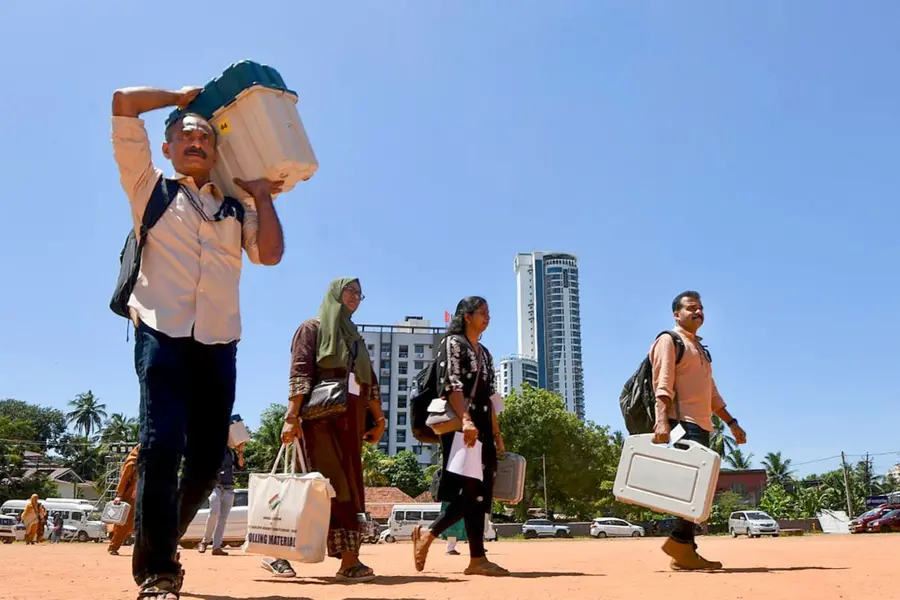
The yawning gap between voting and the declaration of results in the recent Kerala Assembly election has created a period of high tension and gripping suspense for candidates and their political parties. For the media, political analysts, and pollsters, this interregnum is a field day, with everyone offering their own interpretations of the polling percentages.
While the United Democratic Front (UDF) and its media backers have begun celebrating the high turnout as a clear sign of a political tsunami in their favour, the Left Democratic Front (LDF) appears more cautious, claiming only a modest mandate. The National Democratic Alliance (NDA), meanwhile, is pitching for a hung Assembly. Yet, despite the confidence with which these predictions are made, most leaders and “experts” are driven more by subjective political beliefs and hopes than by any sound logic or scientific analysis. After all, polling percentage has never been a reliable indicator of electoral outcomes in Kerala.
A perusal of the state’s electoral history since 1957 clearly demonstrates that both the UDF and the LDF—or their predecessors—have won and lost elections irrespective of voter turnout. High or low participation has never consistently signified either anti-incumbency or continuity; it has worked both ways.
Consider the evidence. The highest-ever polling percentage in Kerala—85.72% in the 1960 Assembly election—was unmistakably an anti-incumbency vote against the dismissed first E.M.S. Namboodiripad government, despite its widely acknowledged record of governance. Although the Communist Party of India (CPI), then undivided, secured more votes than in 1957, the united front of anti-Communist forces commanded a clear majority.
ALSO READ | No anti-incumbency in Kerala, LDF to win 90+ seats; BJP won’t open account: MV Govindan
The pattern shifted dramatically in 1977. The election, which recorded the second-highest turnout until then at 79.2%, was widely expected to reflect public anger against the CPI–Congress alliance that had governed since 1970, including during the notorious Emergency. Contrary to these expectations, the electorate delivered a resounding mandate for continuity, awarding the incumbent alliance led by C. Achutha Menon and K. Karunakaran an unprecedented 111 seats. This outcome stood in sharp contrast to the historic drubbing the Congress suffered in northern India.
Conversely, the lowest polling percentage in the past four decades—71.16% in 1996—resulted in an anti-incumbency verdict against the UDF. The second-lowest (72.38%) and third-lowest (72.47%) turnouts during this period also produced anti-incumbent mandates, alternately against the UDF and the LDF. Clearly, the general assumption that high voter turnout signals an anti-incumbency wave does not hold water in Kerala’s unique political context.
This brings us to the present election. The voter turnout of 78.27% (not yet final) is being hailed by many as the highest since 1987. While this may well be true, such claims often overlook the impact of the recent Special Intensive Revision (SIR) of electoral rolls. The SIR reduced Kerala’s voter count by over three lakh compared to 2021, bringing it down from approximately 2.74 crore to 2.71 crore. Consequently, the “real” polling percentage of the 2026 election is likely to be at least one percentage point lower than the official figure.
ALSO READ | ‘Used for political mileage’: Twenty20’s Sabu Jacob targets church leaders over FCRA row
This effect is evident in several constituencies, particularly those witnessing intense contests in districts such as Thiruvananthapuram, Idukki, Ernakulam, and Kottayam, where the absolute number of votes polled has declined. In contrast, many northern districts have registered an increase in voter participation.
Even after accounting for the SIR-induced reduction of over three lakh voters, the absolute number of votes cast in 2026 has reportedly risen by more than eight lakh compared to 2021. However, this increase remains modest compared with the sharper rises seen in earlier elections.
Given these complexities, any definitive prediction of the May 4 outcome based solely on voter turnout would be somewhat adventurous. The assumption of a complete consolidation of minority votes behind the UDF also appears uncertain, particularly in light of the less-than-enthusiastic polling in several central Kerala constituencies. While enthusiasm among Muslim voters is evident in the high turnout in northern districts, a strong pro-UDF factor, it is not entirely clear whether this mobilisation is aimed exclusively at unseating the LDF. Some observers suggest that apprehensions about possible exclusion from electoral rolls may also have motivated many to turn out in large numbers.
There is another interesting thing also. A major shift in the character of Kerala voters over the past couple of decades has not been widely discussed. The Kerala electorate has been known since 1957 for its strong penchant for anti-incumbency, which is rightly seen as an ingrained democratic corrective mechanism. Many find that this traditional pattern changed only twice in 1977 and 2021 when Kerala elected the incumbent for the second time back-to-back. Both times were extraordinary, and the verdicts were seen as exceptions rather than against the trend. This is generally a correct analysis. But then, hasn't our proclivity for anti-incumbency undergone a dramatic shift in recent times? Take all four assembly elections held from 2006. In all three, Kerala voted for incumbency. The only exception came in 2011, but it was too slender to call an affirmative mandate, and it was also caused by the deep factional war inside the CPI(M) between Pinarayi Vijayan and VS Achuthanandan.
Interestingly, this shift is not an exclusive Kerala phenomenon. A 2025 study by election analysts Sanjay Kumar and Arindam Kabir, following Nitish Kumar's 10th reelection in Bihar, finds that the pro-incumbency trend in Indian states has become more pronounced in recent years. According to them, the poll statistics of all Indian states from 1952 onwards shows a strong pro-incumbency trend since 2018, driven by incumbent state governments’ (mostly BJP-led) emphasis on faster infrastructure development, welfare delivery, and strong leadership. “It is true that many governments were re-elected riding on the popularity of the welfare schemes, but it also has to do with general infrastructural development, which the state and its people have started benefiting from. While the politics of welfare has helped the ruling party mobilise the votes of the poor and the lower middle classes, infrastructural developments have especially helped in mobilising the votes of the upper middle classes”, said the study. (The Hindu, 24 December 2025). Now, it is easy to see that Kerala's 2021’s kit-driven “Covid mandate” was not particularly exceptional, and to understand the LDF’s emphasis on infrastructural development, welfare delivery, and Pinarayi Vijayan’s “strong leadership” in its present campaign. It is also undeniable that the methodology is straight out of the BJP playbook.
ALSO READ | After Pinarayi, who? If LDF loses, will CPM see leadership transition in Kerala?
Nevertheless, after weighing all these factors too, including the recent Local bodies poll results, sheer common sense suggests that a tentative smile may well appear on the UDF’s face by noon on May 4. Almost all AI engines also predict a likely return of the UDF, although the victory margins vary. But then, Indian elections are capable of upsetting the calculations of the brightest humans, perhaps of even super engines.
Published: 13 Apr 2026, 01:53 pm IST
ABOUT THE AUTHOR
Related Topics
Disclaimer: Kindly avoid objectionable, derogatory, unlawful and lewd comments, while responding to reports. Such comments are punishable under cyber laws. Please keep away from personal attacks. The opinions expressed here are the personal opinions of readers and not that of Mathrubhumi.