
Even by the already degraded standards of Trump’s public conduct, the language now being used is filth of a peculiarly dangerous sort
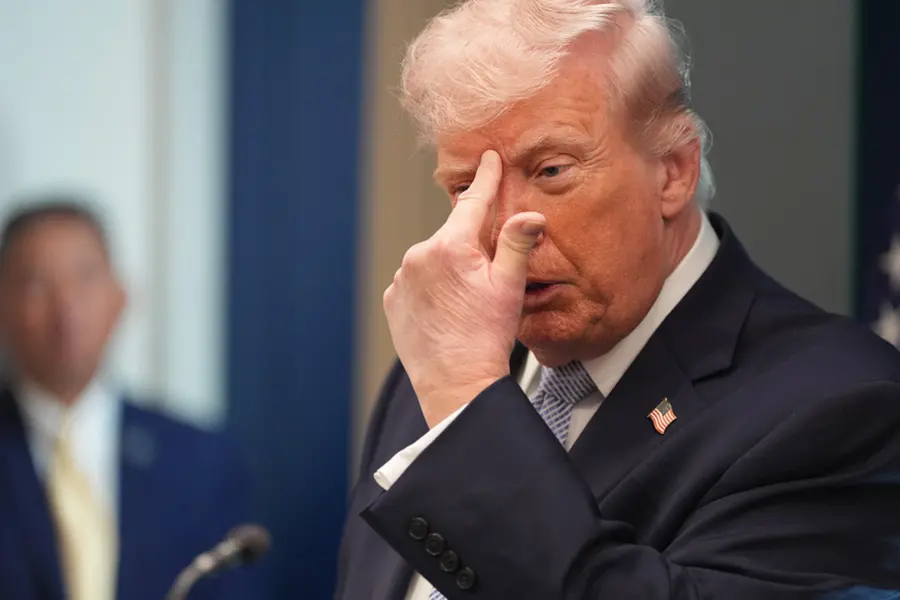
Donald Trump has a gift for taking an already dangerous situation and making it utterly morally vulgar. What should have been handled with discipline, restraint, and the grave seriousness that war demands has instead been dragged into the sewer of his usual instincts. Bluster, obscenity, deadline theatrics, and self-worship masquerading as leadership. In any functioning political culture, the spectacle of a president speaking about war the way a drunken extortionist speaks about a neighbourhood shakedown would be treated as a national disgrace. In Trump’s America, though, it passes off as strength! That is the most nauseating part of the present crisis. Not merely that the United States is once again involved in a volatile military confrontation in West Asia, but that the man speaking for the most heavily armed state on earth sounds like someone too emotionally stunted, intellectually vacuous and morally bankrupt to be trusted with a municipal loudspeaker, let alone a war machine. Every statement from him lands with the crudity of a threat barked across a casino floor. Every deadline sounds like a tantrum, and every boast carries the odour of a man who thinks history is a reality show and mass violence just another backdrop for personal branding!
The rescue operation that is now being celebrated with such indecent triumphalism may well have happened broadly as described. A U.S. aircraft was downed, a rescue mission was mounted, and one airman was recovered. Nobody disputes that a difficult operation took place. What demands suspicion is not the event itself but the slimy, self-serving mythology now being wrapped around it. Because beneath the chest thumping lies something far less flattering. The mission appears to have been messy, hazardous and deeply embarrassing in ways the administration is plainly trying to bury beneath patriotic theatre. Aircraft were lost or rendered unusable, helicopters took fire, and sensitive equipment had to be (or were) destroyed on the ground. Men were left in danger while commanders scrambled to improvise their way out of a deteriorating situation. This was not some gleaming testament to flawless military prowess. It was a high-risk operation that succeeded only after exposing a serious vulnerability and at a high, unmistakable cost. Yet what the public gets is not candour but legend, heroism inflated into folklore, and difficulty repackaged as grandeur. Near disaster lacquered over until it begins to resemble a campaign ad! That is the Trump method in miniature. He would not fabricate an entire story, as that would be too easy to catch. He would do something far more effective. Take a real event, isolate the fragment that flatters him, and then drown the rest in noise. That way, the rescue becomes sacred drama and the dead and the damaged become footnotes. The confusion, the losses and the operational humiliation are pushed behind the curtain while the front of the stage is flooded with testosterone and religious kitsch. This is what governance becomes when the presidency is occupied by a man whose inner life appears to consist entirely of grievance, appetite and performance.
Then there is the language. God, the language! Even by the already degraded standards of Trump’s public conduct, the language now being used is filth of a peculiarly dangerous sort. A head of state speaking about bombing power grids, bridges and civilian infrastructure as though he were musing aloud about smashing furniture in a rage is not merely indecorous, but it is downright depraved. It is not candour, nor is it strength in any way, or even strategic ambiguity. It is the speech of a man so coarsened by impunity that he no longer hears the barbarism in his own words. And that matters. It matters because words from the president of the United States are not private fumes escaping from a diseased mind. They shape military posture, diplomatic assumptions and the threshold of what begins to seem permissible. When a president starts talking about obliterating civilian infrastructure with the breezy vulgarity of a thug, he is not just revealing his character. He is lowering the moral ceiling for everyone beneath him. He is creating an atmosphere in which savagery and obscenity start to sound administratively normal.
His defenders will, of course, do what they always do. They will smirk and say, "This is just Trump being Trump." They will insist it is all negotiation, all theatre, and all leverage! But this excuse is itself an abomination. When the subject is war, theatre is not harmless. Theatre is a delivery system for recklessness, and it distorts signals. Theatre confuses allies and hardens adversaries, creating the kind of strategic fog in which bluff and policy become indistinguishable, and miscalculation becomes not an aberration but an eventual certainty.
This is precisely where things become dangerous. Trump issues deadlines the way an unstable creditor makes collection threats. Then he extends, revises, and repackages them. He escalates the rhetoric while the facts on the ground remain unstable and contested. One day the message is finality, and the next day the clock moves. Then comes another ultimatum, another insult, and another promise of devastation. That is not by any means a strategy, but more like an impulse wearing a suit, or vanity trying to impersonate statecraft. No ally can place confidence in it, and no adversary can cleanly decode it. Everyone is left guessing whether they are dealing with a bluff, a mood swing, or a genuine decision to widen a war. Meanwhile, the region absorbs the consequences. Retaliatory strikes spread anxiety across the Gulf. Energy infrastructure becomes exposed. Desalination facilities, power structures, ports, transit arteries and oil installations enter the realm of threatened or actual violence. For the men in Washington, these may be chips on a board. For millions of ordinary people, they are the basic architecture of life. Water, electricity, transport, livelihood, and, above all, survival. Once civilian infrastructure is casually brought into the language of punishment, the descent is no longer theoretical. It has well and truly begun.
None of this requires romantic nonsense about Iran. Tehran lies. Tehran postures. Tehran manipulates. They, too, will milk every American setback for propaganda value. But to recognise Iranian propaganda is not to become a useful idiot for Washington. One need not choose between clerical authoritarianism in Tehran and profane idiocy in Washington. One can reject both, and, in fact, intellectual seriousness requires exactly that. The inability to criticise the United States without being mistaken for an apologist for Iran is one of the more infantile habits of our time. The larger truth here is brutal and simple. Trump is not some grand strategist using rough language to produce hard outcomes. He is just a crude man presiding over combustible realities he does not have the moral or intellectual discipline to manage. He mistakes menace for clarity, vulgarity for courage, and public obscenity for political authenticity. And because he has spent a lifetime being rewarded for these defects, he now carries them into questions of war and peace with the confidence of a man too stupid to recognise the scale of the damage he can do. What we are seeing is not toughness. It is plain decay; institutional, moral, and linguistic decay. The office that once at least pretended to speak in the language of responsibility is now used as a megaphone for the impulses of a man who sounds less like a president than like the unwashed id of a declining empire.
Yes, a rescue may have taken place, and, yes, the personnel involved may have shown courage under extreme conditions. But none of that cleanses the rot at the political top, and none of it obliges the public to swallow the official tale whole. None of it turns Trump’s foul-mouthed grandstanding into leadership. A republic that allows war to be narrated in this register has already conceded too much to degeneracy. And a world forced to listen to this man threaten devastation on social media is not watching strength. It is simply watching a superpower speak in the accent of moral decomposition.
(The author is a National Award winner for best narration and an independent political analyst. Views expressed are personal.)
Published: 07 Apr 2026, 03:01 pm IST
Disclaimer: Kindly avoid objectionable, derogatory, unlawful and lewd comments, while responding to reports. Such comments are punishable under cyber laws. Please keep away from personal attacks. The opinions expressed here are the personal opinions of readers and not that of Mathrubhumi.
