
Neeraj Dhaywan`s Oscar-bound `Homebound` faces 11 cuts from the CBFC. Explore the film`s journey, censorship controversies, and the CBFC`s historical context
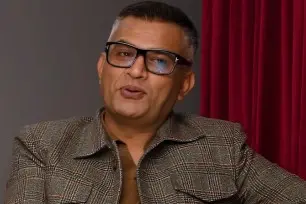
The CBFC or the Censor Board of Film Certification, has asked for not less than eleven cuts in Neeraj Ghaywan’s feature film Homebound which has been selected as the official Indian entry to the 98th Academy Awards in the Best International Feature Category for the Oscars for 2026.
Internationally renowned filmmaker Martin Scorcese is executive producer of the film. Though the film has just got a theatrical release on September 26, 2025, it went through a hobbling journey through the CBFC when selected for the Academy Award. The film has already bagged several awards at the international scene. It was premiered in the Un Certain Regard Section in Cannes 2025. The film also won the Best Film and the Best Director Awards at the Indian Film Festival of Melbourne (2025 and the second runner-up with the People’s Choice Award at the Toronto International Film Festival, 2025.
‘Homebound’ according to a recent report on an online magazine, was referred to the Revising Committee (RC). Reportedly, the reason could be the Examining Committee asking for several cuts. Following this, modifications were dictated by the Revising Committee. Certain words have been muted and replaced at 6 places, including ‘gyan’. The makers have been asked to delete the dialogue ‘Aloo gobhi…khaate hai’. Further, a two-second visual of a man performing puja was censored. The Revising Committee also made changes in a dialogue in an important cricket match scene at 1 hour and 4 minutes, deleting 32 seconds from the sequence. However, further details of the deleted scenes were not disclosed. In a nutshell, the CBFC’s RC censored 1 minute and 17 seconds from the film. Following the changes, the film was given a U/A 16+ certificate on September 12.
The Central Board of Film Certification earlier called The Censor Board, is appointed by the state, at the regional level and at the central level. It is a quasi-judicial body under the Ministry of Information and Broadcasting. Censorship is a legacy the British left behind whose aim then, was to prevent showing anything anti-British in Indian films. A set of guidelines was provided in The Cinematograph Act 1952. The Board is authorized to certify films that do not violate any of these guidelines.
Now, just listen to this amazing back story of the CBFC right now. Does it really exist except in name? CBFC last met six years ago on August 31, 2019 where it should have met once every quarter.
According to a Board member who wished to remain unnamed, there has been no Board meeting since August 31, 2019. No productive work has been done over these years, so, no annual report, no appellate authority except the Chairman who now becomes the sole decision maker in this Board which legally demands official members chosen from people known for their contribution to their selected fields of creativity. In fact, no member has been officially reappointed since 2017. Does the CBFC then, have the legal validity to exercise cuts and deletions on a film when presented to it before release? Or even to decide on these ‘cuts’? There have been no reappointments since 2017 for three years, so what official standing does it have of today?
As per the rules the board has to publish and submit an annual report to the I&B Ministry; however the last annual report on the CBFC website was in 2016-17. Its existence after the mandated period ended in 2020 raises serious questions about the board’s legal status.
But the Board is constituted almost arbitrarily, is/was comprised often, of members who have political backing, or, have some kind of celebrity status within or without cinema, whose interests and knowledge of cinema are not taken into consideration. These ‘bodies’ change after a given term, just as the political and administrative leadership changes after every election and these changes either remain completely indifferent to the statutory guidelines laid down by the Central Board of Film Censorship, or, change them according to their whims and fancies that often impinge on the filmmaker’s fundamental right to his/her freedom of expression, or, deprive the audience of seeing what they ought to see and draw their own conclusions about what has just been shown.
In an ambience of political control veiled as democracy, Someswar Bhowmick’s Cinema and Censorship – The Politics of Control in India is a landmark work on the politics of control. The word ‘control’ links itself to a dictatorial form of order, where the citizen’s right to freedom of expression is not denied, it does not exist. So, why and how does the concept of control operate in a democracy? Bhowmick raises a very relevant and topical question - why censorship that functioned mainly as an instrument of political and informative control during the British rule should sustain for more than seven decades after Independence in the world’s largest democracy producing the largest number of films in the world?
Bhowmick points out in one of his chapters, A Medium Under Siege, how the Indian audience was deprived of excellent world cinema due to “the hawkish presence of the censor board and unreasonable interference from the administration.” Among international films that were axed by this Act are Sergei Eisenstein’s Battleship Potemkin (1925), and Vsevolod Pudovkin’s Storm over Asia (1928) that was put off by a customs ban even before it reached the censors in 1929.
Other films that later became milestones but suffered ruthless mutilation were The Birth of a Nation (1915) and Broken Blossoms (1919) both directed by D.W. Griffith, Ten Commandments (1923) and Boatman of Volga (1926), both directed by Cecil B. DeMille, Metropolis (1927) and Hangmen Also Die (1943) both directed by Fritz Lang, Napoleon (1927) directed by Abel Gance, Lewis Milestone’s All Quiet on the Western Front (1930), College Days directed by Mack Sennet (1926) and Big Parade (1925) directed by King Vidor.i
The Central Board of Film Certification’s guidelines amended up to May 1983, clearly laid down its three-fold objectives of censorship: (a) the medium of cinema remains responsible and sensitive to the values and standards of society, (b) artistic expression and creative freedom are not unduly curbed, and (c) censorship is responsive to social change. These objectives are in exercise of powers conferred by sub-section (2) of Section 5B of the Cinematograph Act 1952, (37 of 1952) and directions given by the Central Government for sanctioning films for public exhibition.
These objectives are ambiguous because they beg the question of defining what I & B Ministry means by ‘standards of society.’ The Board is silent about who sets these standards and on what basis. The Board is comprised of a chairman with a minimum of 20 nominated members from different backgrounds. In other words, it is a multi-personal body representing a microcosm of India’s diverse culture. How can such diverse members be expected to arrive at a unanimous decision or definition of artistic expression and creative freedom? These are subjective and relative to time, individual and place, culture and language, education and class.
Censorship is not just a single act of suppression or deletion or erasure. It lives in many forms, direct and indirect, overt and covert, manipulating our lives in ways so subtle and so smoothly integrated into our mindsets, that we do not even realise that we are being manipulated.
Censorship, broadly speaking, can be a kind or pressure built on us to make information conform to the needs of a variety of vested interests. We actually live within a web of censorship – the reporter whose copy is cut, the news agency influenced by the political power or the corporate funding behind it, the sub-editor playing with headlines that can influence the reader in a way that the original writer did not intend and that might distort the essence of the message it carries, the reader who reads this and the editor who knows how to use, misuse and abuse his blue pencil or computer/cellphone keys. In other words, the state is not the only censor. But the state mainly frames the rules and writes down certain guidelines for official, state-generated censorship based on its own standards of values and moral sensibilities.
Homebound, the second feature film of Neeraj Ghaywan, who incidentally or not so incidentally, is a Dalit in real life but has a very prestigious academic background. Homebound unfolds a very humane story about two friends of a remote North Indian village, both very poor, one a Muslim and the other is of a very low caste. They travel towards the city planning to join the police force. They have aspirations towards a life that would enable them to a life of dignity which their origin of birth denies them.
One clears the police exam and the other fails the exam. The communal and casteist difference does not affect their deep bonding. Then Covid comes and the friendship metamorphoses without losing its touch with the humane feelings embedded in the entire film. Rather, whether it does, how, when and why demands one to watch the film to get the answer which covers issues such as – (a)friendship across social, casteist and communal barriers, (b) desire for a distancing from the origins of communal and caste identities, (c) ambitions to make it big, and (d) the impact of the lockdown on the destinies of the two young men.

In 2016, the 100-decibel noise made around the censorship suggestions for Anurag Kashyap’s Udta Punjab brought back the whole question about whether in a democratic country like India where the constitution grants freedom of expression as a constitutional right to every citizen, does censorship hold any meaning at all?
The other argument is that in case the filmmaker enters into a dispute and refuses to carry out the former’s recommendations, the filmmaker can seek legal justice from the respective courts of the country, thus, rendering the CBFC redundant. In the film in question, the objection was to the word “Punjab” in the title. But the objections ought to have been on other grounds such as the terrible scenes of violence and the open display of the hero urinating on stage in the film in front of a packed audience.
Veteran Polish journalist Ryszard Kapuscinski (1999) wrote, “In a dictatorship, censorship is used; in a democracy, manipulation.” Though this was with reference to Western experience and sensibilities, for the Indian reader, it would apply equally well to the climate that sustains in film censorship in India.
Published: 04 Oct 2025, 10:00 am IST
Related Topics
Disclaimer: Kindly avoid objectionable, derogatory, unlawful and lewd comments, while responding to reports. Such comments are punishable under cyber laws. Please keep away from personal attacks. The opinions expressed here are the personal opinions of readers and not that of Mathrubhumi.