
Award-winning film explores LGBTQ+ themes, family acceptance, and the challenges of coming out in India. Starring Mona Ambegaonkar & Shishir Sharma
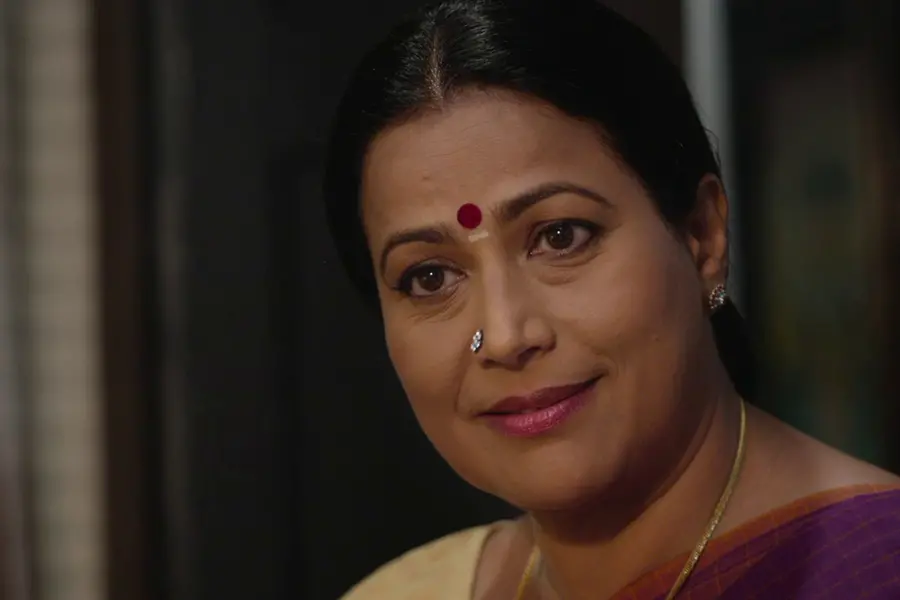
Every human being lives with some dream or other. For some, the dreams vanish even before a hint of their being realized happens. But life goes on for them as human levels of tolerance, acceptance and internalization are infinite. Kuch Sapne Apne jointly directed by Sridhar Rangayan and Saagar Gupta is in itself, a telling comment on how dreams can differ within members of the same family and how one member’s dream not only impacts on the other members in different ways but also sometimes, unwittingly bring out the strengths and weaknesses of these other members. That is why this film is named Kuch Sapne Apne.
National Award-winning filmmaker Sridhar Rangayan and his co-director Saagar Gupta’s latest film Kuch Sapne Apne released in February this year, has been invested with several awards and recognitions, including the "Best Indian Feature Film" award at the Mysuru International Film Festival. It also won the "Best Screenwriting (Feature Film)" award at the New Bedford Film Festival in the USA. The film has been recognized for its exploration of LGBTQ+ themes and its celebration of diversity and inclusivity in cinema.
He goes on to add, “It is a ‘normal’ love story, just like any other love story, the only difference being - it is love between two men. Love and heartbreaks are part of every relationship, and what finally matters is what they truly feel for each other. In the film, the gay characters are treated like every other character – they are just human, and go through every emotion that every human being goes through.”
The film revolves around Kartik a young man desperately wanting to admit to his mother Vasudha (Mona Ambegaonkar) that he is gay and is living with his partner Aman in Mumbai. The family backdrop is comprised of Damodar (Shishir Sharma), a very conservative, dictatorial and patriarchal Tamil Brahmin based in the South and his wife.
It is a tremendous struggle to make a film on alternate sexual identities. Specially in the Indian cultural ambience where heterogeneous relationships across communities, regions, languages, faith and education have been the rule for thousands of years. None of our epics, have hinted at same-sex relationships ever.
While the Ramayana and Mahabharata never explicitly mention homosexuality or alternative sexual preferences using modern terms, they do feature characters and narratives that can be interpreted as having LGBTQIA+ themes. Examples include transgender characters like Shikhandi and third-gender figures like Arjuna's disguise in the Mahabharata, besides descriptions of same-sex encounters among Rakshasa women in the Ramayana.
But the Kama Sutra mentions and describes same-sex sexual practices, including a chapter on oral sex between men and references to the "third nature" (tritiya prakrti) or third gender, which acknowledges people who desire same-sex partners. The text also describes long-term unions and provides guidance for people to engage in same-sex relationships as a part of their pleasure and the "arts" of love, indicating a more non-judgmental approach to such relationships in ancient Indian society compared to later periods. The text identifies a "third nature" of people, or homosexuals, as a distinct category of sexual partners, reflecting an understanding of non-heterosexual orientations.
Though Section 377 of the Indian Penal Code was partially struck down by the Supreme Court in 2018, decriminalizing consensual same-sex relations between adults, the social taboos remain in the creative arts, in employment sectors, within industry and most importantly, within the institution of marriage and family. Support from mainstream and inner society is conspicuous by its absence till this day.
Ismat Chugtai, the noted Urdu writer, wrote the first short story dealing with a lesbian relationship in 1941. Lihaf (Quilt) unfolded the story of a mid-20th century Muslim Nawab who sought his pleasures from young boys. His bored begum found sexual and emotional solace in the companionship of an ugly maid. Incensed mullahs dragged Chugtai to the Lahore High Court. She fought her own case and the court dismissed the case because “no four-letter word” could be found in it. Deepa Mehta says Lihaf inspired Fire.
Firaq Gorakhpuri, an eminent Urdu writer who taught at Allahabad University, was known to be fond of men. Among Hindi poets, references to homosexuality figure in the works of Gajanan Madhav Muktibodh and Suryakant Tripathi “Nirala.” In one of his poems, Nirala specifically mentions, “Maine uski ore stree bhav se dekha” meaning, “I looked at him as a woman would.”
In October 2003, Queering Bangalore became the first public film festival in Bangalore focussing entirely on queer rights. Featured at the festival were award-winning documentaries and features, commended for their portrayal of life stories and issues facing lesbians, gays, bisexuals, transgenders, hijras, kothis and others identifying as queer. The brochure went on to state, “At a time when we are surrounded by shackling definitions of the ideal family, ideal husband, wife, daughter-in-law, it is very challenging to recognize and highlight these alternatives inherent in our society, specially through mass entertainment media like cinema” states the press release of the Queer Film Festival organized jointly by Pedestrian Pictures, Scorus and Swabhava Trust, three NGOs committed to different agendas but united in this space. This happened 22 years ago and today, all metro cities organize Queer Film Festivals almost annually.
Onir’s My Brother Nikhil (2005) explores the collapsing world of a talented swimmer Nikhil, when he is diagnosed as HIV Positive and is thrown out of his swimming group. His once loving parents throw him out and the only solace he finds is in his elder sister and his male partner Nigel, who stand by him through his struggle to survive in an unfriendly and unsympathetic world.
“Kuch Sapne Apne is a film about the community, by the community, but for the mainstream audiences. We are proud to have the participation of the LGBTQ+ community who have come together to participate in several scenes. They bring a touch of diversity and authenticity to the film”, says Rangayan, adding, “Films can create a movement for change, and we have already demonstrated it with our previous film Evening Shadows. We hope Kuch Sapney Apne will spark dialogues around the community and also around marriage equality.”
The film revolves around a young man, Kartik, desperately wanting to admit to his mother Vasudha (Mona Ambegaonkar) that he is gay and is living with his partner Aman in Mumbai. The family backdrop is comprised of Damodar (Shishir Sharma), a very conservative, dictatorial and patriarchal Tamil Brahmin based in the South and his wife Vasudha. It is an inclusive film because there are several scenes in the film that involve the participation of members of the LGBTQ community and their parents acting as their real selves.
When the truth comes out during a wedding in the family, all hell breaks loose and in a moment of fierce anger, Damodar slaps Vasudha for ‘encouraging’ their son. This brings out that their marriage is entirely a patriarchal one where Vasudha practically, is a marginal member. She accepts the relationship but not the slap of her husband after so many years of marriage. So she walks out and goes to Mumbai to join her son and his partner. She gets close to both of them. Damodar finally accepts everything and is repentant about his treatment of his wife.
The film also takes some delightful time leaps into the past where the two young men met, fell in love and glided into a live-in relationship with the usual tiffs and arguments and fights common in heterosexual relationships as well. They have been together for eight years.
The jarring note in the narrative happens when it shows Damodar’s married younger brother leaving home to join a group of eunuchs because he realizes he belongs to them and not to the heterogenous family where he was forced to pretend living a normal married life. The tragedy of his wife is also brought across and Vasudha is sympathetic towards her. But to this critic, this appears to be a needless addition to a tense and comprehensive narrative complete unto itself. Besides, this could raise questions about whether alternate sexuality is genetic which it is not.
Says Shishir Sharma about the film, “Kuch Sapney Apne symbolizes and reinforces the bonds that are so needed in today’s times. It’s a very poignant and an important film in the context and the times we are living in, especially emphasizing the need for not being a hypocritical society.”
The music and songs lend themselves seamlessly into the cinematic narrative enriched by the stellar performances by the entire acting cast with special mention made to Mona Ambegaonkar and Shishir Sharma. The Southern ambience in Damodar’s family alongside the post-modern, hi-fi environment of Kartik and Aman’s apartment spell out their success as well as the modernist lifestyle they choose to live and mark out the generational and city-based, cultural differences between the seniors and the youngsters.
One needs to compliment National Award-winning director-writer-editor Sridhar Rangayan, himself an openly gay person, to focus on making films almost exclusively on different facets of alternate sexuality both with documentaries and feature films tackling impacts of such relationships on the partners themselves alongside the impact on their families, the workplace, the larger social ambience, and so on.
Indian cinema, mainstream and slightly off-mainstream, regional and Bollywood is reflecting the change from total rejection to total acceptance by shedding social inhibitions on expressing sexual desires both in the case of heterosexual and homosexual relationships on screen. The stereotypes, the clichés, the lampooning and the satirizing of gay and lesbian identities are fading away with time, to mirror the acceptance of the ‘other’ as just another – one of us.
Published: 07 Sept 2025, 11:08 am IST
Related Topics
Disclaimer: Kindly avoid objectionable, derogatory, unlawful and lewd comments, while responding to reports. Such comments are punishable under cyber laws. Please keep away from personal attacks. The opinions expressed here are the personal opinions of readers and not that of Mathrubhumi.
