
Has the Censor Board now subscribed to religious segregation in film characters as a guideline while passing films?
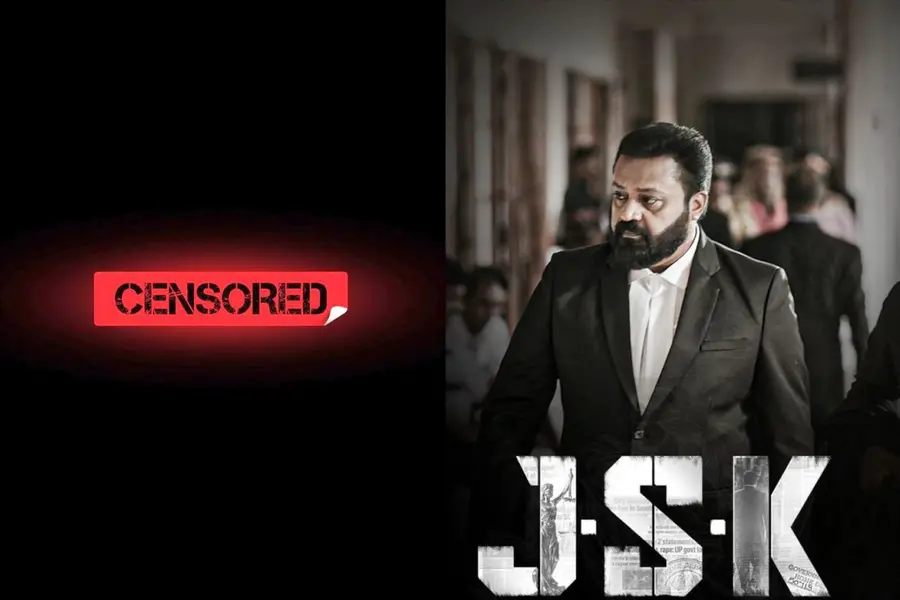
July 8th of 2025 will be a red letter day for Censorship of films India. Reason, it is the day Censor Board added a religious/communal dimension (code) to its guidelines publicly, while firmly opposing the name and contents of a Malayalam film 'JSK' (Janaki vs State of Kerala), which since then released ten days later with a modified name 'Janaki V'. And the film so far has created no public disorder or hurt any religious sentiments of anyone so far, as claimed by the Censor board while justifying its objection to the name of the Character in the film in its sworn affidavit before the High Court of Kerala.
But the Chief Executive Officer of the Censor board, in the affidavit reveals its new code in the guidelines of film censorship. "In the subject of the film, when the lead character who is named after Goddess Sita/Janaki is raped, she is then aided by a man belonging to one particular religious community and is cross examined and asked harrowing questions by a person belonging to another religious community. This religious dichotomy in the treatment of a character bearing Goddess Sita; a sacred name has the potential to inflame communal tensions and create divisive narrative religious groups".
The objection of the censors is not just to the name of the character in the film 'Janaki', but to the religious identity of the lawyers representing her and also cross examining her, making it abundantly clear the new emerging narrative of segregation of people in India on religious lines. The question is, has the Censor Board now subscribed to this religious segregation in film characters as a guideline while passing films?
One can vaguely accept the fact that since the Malayalam film is to be dubbed in all major languages of India for OTT screenings and there can be objections to the name Janaki from regions other than Kerala. But the censors believe that the name Janaki indeed is that of the Goddess 'Sita' and can lead to 'public disorder' among an 'average moral man'.
Notable is the fact that the filmmakers have not used the name 'Sita' or claimed any association of 'Goddess Sita' to 'Janaki', the rape victim in the film. But the learned CEO of the censor board goes on to say, "While both films use the film 'Janaki' in JSK, the name is associated with a victim of a sexual violence and her fight against systemic injustice which makes the film much more intense and emotionally charged. This connection to the real world, the legal battle can make use of a divine or culturally significant name (Janaki associated with Goddess Sita) potentially more sensitive particularly given films focus on sexual violence confrontation with institutions."
The CEO disregards the fact that ‘Janaki’ can be just another name of a girl and insists that it has an association with 'Goddess Sita'. He fears a public disorder if the film is not heavily censored and name changed in the entire film.
"The question or whether a film has the tendency to disrupt public disorder must not be viewed through the lens of a person or someone who is completely indifferent to religious sentiment. Rather, this determination must be made from the perspective of an 'average moral man' or an ordinary man of common sense and prudence.
It is submitted that when such a person views the subject of the film in its current form where in the lead character who is named after Goddess Sita is shown to be raped and asked provocative questions such as drug use for enhancement of sexual pleasure etc, it would inevitable conclude that it process a clear tendency to disrupt "public disorder". After a week of its release in Kerala, the "average moral man", including those over sensitive to Goddess Sita in Kerala, has not responded or created any public disorder as feared by the censor board CEO.
But to buttress their point of change of name they pointed out previous such cases. "For instance, the title Laxmi Bomb was changed to Laxmii, the title Sexy Durga was changed to S Durga and Loveratri was changed to Loveyatri." Needless to say they allowed the film to be released with a similar name change 'Janaki V'.
Urging the courts not to interfere with the censorship process, as it is a 'specialised body' and also stating that freedom of expression is limited by reasons of State, the censors emphasize their authority to order changes to name of characters and object to religious identities of characters.
"It is submitted that there is no straightjacket formula for certifying films for public exhibition, as it is a multi-faceted process involving a range of emotions, values and sensibilities which may inevitably introduce elements of subjectivity. The present petition stands on an incorrect rooting as it fails to appreciate that films are evaluated in their entirety rather than in isolation and moreover, fails to understand that the right to freedom of speech and expression under Article 19 of the Constitution is not absolute but is subjected to reasonable restrictions. The certification process therefore represents a careful balance between creative freedom and regulatory oversight, ensuring that while filmmakers' rights are safeguarded through multi-tiered review mechanisms, the broader public interest is protected through the application of established guidelines and constitutional principles."
The interpretation of the relevant rules guidelines of 1991 and modified in 2024 is claimed as sole prerogative of the censor board, the CEO's affidavit claimed. "In this regard, the Government of India framed the Guidelines for Certification of films for public Exhibition (Guidelines) in 1991, which set forth the principles that should guide the Board when certifying films for public exhibition. Thereafter, in 2024, the Cinematograph (certification) rules were also introduced to provide the total framework and modus operandi for certification of films by the Board.
The CEO is obviously unaware of the fact that Kerala and the nation had celebrated a film by G Aravindan, 'Kanchana Sita', way back in 1978 and one is sure his office will get a shock knowing that Ram was depicted as a tribal leader and Sita as mother nature in the film. 'Kanchana Sita' got Aravindan the honour of national best director of the year too.
Little earlier, in 1973 writer MT Vasudevan Nair, in his first film 'Nirmalyam', cast a Christian actor PJ Antony as a temple oracle who spat his own blood in frustration at the deity which he adores in the film, while committing suicide. The actor too was bestowed as the best actor of the year at the yearly national film honoures.
Going by his affidavit, there will be no chance for these films to get past the censors today.
That brings us to the question of who are members of the specialized body which is the censor board, who applies these 'guidelines' while passing films. It is a fact that ruling parties over the years have packed the main and regional censor boards with their low level party people. Hardly any academics or cultural people are found in censor boards or film award committees dominated by political people these days.
The present regime has packed the boards with the 'cultural organization' close to their political ideology, namely the Rashtriya Swayamsevak Sangh. The question as to what the RSS nominee in the censor board was doing while censoring the film with negative depiction on Gujarat riots (to the ruling party) in another recent Malayalam film exposes such an inclusion of people as political and communal censors.
Officers like the CEO of censor board are generally projected as the official face of such political and vested interests in the process defending the indefensible in courts like what he has done in the case of film 'JSK'. Equally surprising is the fact that the lead character, lawyer in the film is a Bharatiya Janata Party Member of Parliament from Kerala who is also a member of Council of Ministers at the Centre. The otherwise flamboyant respected member has not yet commented on the film and its issue with censors so far.
Making fun of the entire process, a lawyer has filed an application under the right to information act to the censor board requesting to inform him of the names of Gods, which are in the negative list of the learned censors so that he can avoid taking any of it for a proposed film he is planning to produce. With over crores of Gods in India, no idea what will be the censor board's reply to the query, if at all they choose to reply to the lawyer?
Overall the message from the Censor Board is clear. The religions of the film's characters, and their interplay among the characters in the film have been added to the 'guidelines' of the censor board.
When one make a film spending a few crores, one has to be careful with names of not just the characters, but the religious identity of the characters too. If the interplay of religion and characters of the film offends the ruling dispensation and its cultural ambassadors, the film can get into censor trouble, just as in any theocratic States, across the world.
India is not yet constitutionally a theocratic State, but, it appears, using potential threat to "public order", the censor board has decided to enforce a religious, rather communal code to its "guidelines".
The author is a film writer, author and filmmaker based in New Delhi. Views expressed are personal.
Published: 26 Jul 2025, 10:43 am IST
ABOUT THE AUTHOR

Disclaimer: Kindly avoid objectionable, derogatory, unlawful and lewd comments, while responding to reports. Such comments are punishable under cyber laws. Please keep away from personal attacks. The opinions expressed here are the personal opinions of readers and not that of Mathrubhumi.