
In its new form, the Taliban is no doubt religiously fanatic but above that it appears to be staunchly nationalistic, says Kesava Menon
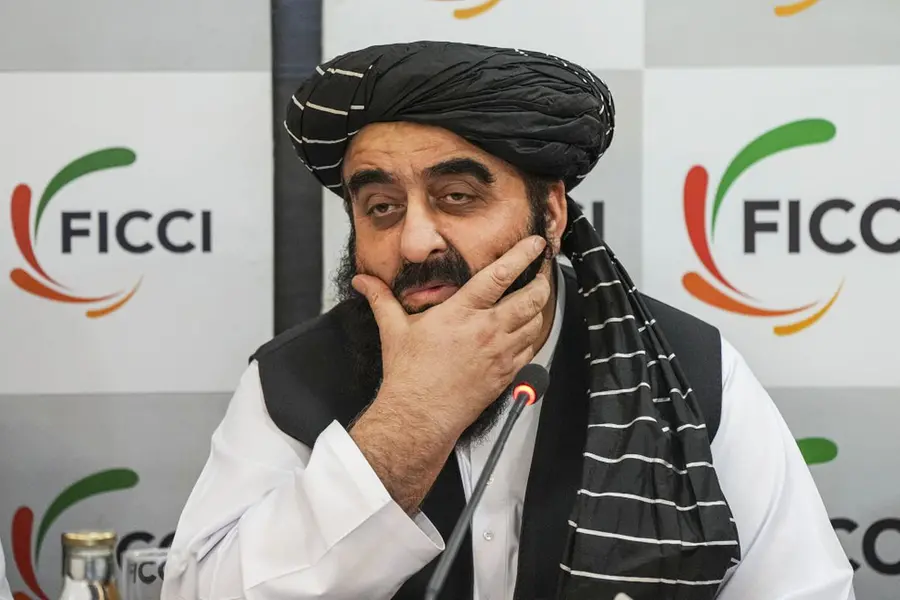
In an ideal world, there might have been several reasons to argue against a rapprochement between India and the Taliban regime of Afghanistan. Unfortunately, we do not live in an ideal world. Therefore, the cautious outreach launched through New Delhi's hosting of its "Foreign Minister" Amir Khan Muttaqi does seem appropriate for the times.
At present the argument for the initiating of efforts at cordiality is summed up in the adage that 'my enemy's enemy is my friend'. Last weekend's violent clashes between Afghan and Pakistani forces seem to have been more serious than Muttaqi let out when he spoke to the media in New Delhi on Friday. There, apparently, was an air strike by the Pakistan Air Forece on a Pashtun insurgent group's safehouse near Kabul. An Afghan official spokesman said 58 Pakistani soldiers were killed in retaliatory shelling by his side's armed forces. Meanwhile, Saudi Arabia and Qatar are reported to have begun reconciliatory efforts. India would do well to simply wait and watch at this stage.
As indicated by the use of quotation marks in conjunction with Muttaqi's title, the Government of India is not yet ready to accept the current Afghan regime as a full-fledged international partner. Any awkwardness that was felt on this account by External Affairs Minister S Jaishankar or other officials who interacted with the high functionary during his visit on October 9 and 10 would have been explained very easily.
The Taliban regime is still under international sanctions and Muttaqi's journey was made possible by a specific exemption granted by the Security Council. Under these circumstances, it was, of course, not possible for the government to extend the courtesies or follow all the protocols that otherwise might have been due.
Apart from the fact that the UN sanctions are still in force there are other reasons that hold India back from developing cordial relations with the Taliban. People in this country have not forgotten the role this organization of militant clerics played during the hijacking of Indian Airlines flight 814 in December 1999. The hijackers and three terrorists, whose release from Indian custody were secured through this act, were welcomed and greeted as heroes in Kandahar.
That singular episode epitomized the intense animosity the Taliban harboured against India when it ruled Afghanistan between 1996 and 2002. At that time it behaved as if it was an extension of Pakistan's Inter Services Intelligence, which it was on several counts. ISI operatives had stitched together the network of mullah-commanders; found recruits for it in the refugee camps; armed, trained and provided artillery advisors as it fought and drove out the Northern Alliance that controlled Kabul from 1992. Scores of this regime's adherents had moved into Kashmir after that and the Indian Army had to kill hundreds of them before the influx dwindled to a trickle.
In non-military aspects as well, the first Taliban government was closely aligned with Pakistan. It fervently adopted Islamabad's desire that India should be kept out of all Afghan affairs as well as blocked from access to Central Asia. Through this period our diplomats had to strive very hard to keep a toehold on the lands across the Hindu Kush through precarious liaisons with the rebel forces. It was hardly a wonder that New Delhi enthusiastically backed the Northern Alliance that formed the core of the resistance that swept back to power with the aid of the US-led alliance in 2002. (As everyone knows, the US invasion was triggered by September 11, 2001 terror strikes).
India was very much back in the Afghan game for the next twenty years. While avoiding the trap of direct military involvement, our country did much to strengthen the armed forces of the Hamid Karzai and Abdul Ghani (successive Presidents of the Afghan republic) by providing training to their personnel. Humanitarian and economic aid was even more substantial.
With the Kabul government having its own reasons for hostility towards Pakistan, there was an almost complete reversal of the situation that prevailed in the late 1990s. With the Chabahar port in Iran and the railway line running from it into Afghanistan promising to become realities, the prospects for access to Central Asia brightened once again.
All those hopes seemed to turn to dust when the US finally lost the will to fight on in Afghanistan and beat a messy retreat. The Taliban stormed back to power in August 2021. Pakistan had contributed much to this successful campaign and the late 1990s scenario appeared to have been revived. The then ISI chief Faiz Hameed was photographed in Kabul, suited, booted and with tea cup in hand posing like the new viceroy.
The initial phase of the Taliban's return was a very difficult period for India. The remnants of the Northern Alliance armed forces were driven in to the Panjshir valley and then out of this last stronghold. At the same time, the political leaders of the Alliance maintained their close association with New Delhi and were clamouring for any form of assistance that could help their cause.
Honour might have dictated that the government of India should have taken the appeal of the Northern Alliance more seriously. However, as time passed, theirs increasingly appeared to be a lost cause. Hopes entertained by some observers that the exposure to the modern world that Taliban leaders had experienced during their years in exile might have mellowed them were also belied.
Neither the exposure nor the development of personal business interests by many of them seemed to have dented their allegiance to an extremely puritanical brand of Islam. Women were expelled from workplaces and educational institutions within days of the Taliban’s return to power. Other repressive measures against political opponents, the media and religious minorities soon followed. There was some speculation initially that the Taliban was getting into regressive mode in order to preempt the Islamic State that had bases in parts of the country, However, it soon became clear that the Taliban leaders were true believers.
In retrospect, the bigger mistake analysts made -- it now appears -- was to assume that the return to the regressive social policies of the first Taliban regime would presage a revival of the ideology-driven foreign policy. That the second Taliban would take its cues from the ISI and allow its territory to be once again used as bases and training ground for terrorist outfits such as the Lashkar-e-Taiba, Al Qaeda etc. Such has not happened.
As Muttaqi said during his press conference in New Delhi, the Taliban has taken active steps to expel such outfits from its own territory out of its own interests primarily. In its new form, the Taliban is no doubt religiously fanatic but above that it appears to be staunchly nationalistic.
The Taliban appears to be as adamant as any Afghan-first regime that has come before in its refusal to recognize the Durand Line as a legitimate border between its territory and that of Pakistan. Pakhtuns, now under the banner of the Tehrik Taliban-e-Pakistan, are conducting a serious insurgency in the Khyber Pakhtunkhwa province with something more than silent support from Kabul.
Air and artillery strikes have been carried out across the Af-Pak border by Pakistani troops and guerrilla attacks have been launched from the other direction. All this does not mean that the rupture between these two components of the currently-dormant SAARC is now complete. China is doing what it can to hold it together by including Afghanistan in the China-Pakistan Economic Corridor Project and will probably expend much financial glue to do so.
However, the situation has developed in such a way as to facilitate India's re-entry into the Afghan game. So far we are doing it smartly by using our soft power. Assistance has been provided in the agriculture, hydroelectric and medical sectors and trade between the two countries despite a number of constraints, has crossed the $1 billion mark.
New Delhi has promised an easing of visas for students, businessmen and those seeking medical treatment. With the cultural affinities provided by cricket, Bollywood and Hindi music, India can find its old place in Afghan hearts.
The author is a journalist who has covered Afghanistan and Pakistan extensively, and former editor of Mathrubhumi. Views expressed are personal
Published: 14 Oct 2025, 12:00 pm IST
Disclaimer: Kindly avoid objectionable, derogatory, unlawful and lewd comments, while responding to reports. Such comments are punishable under cyber laws. Please keep away from personal attacks. The opinions expressed here are the personal opinions of readers and not that of Mathrubhumi.
