

In an era when narratives of the past are too often appropriated for divisive ends, the distinction between history and fiction must be vigilantly preserved
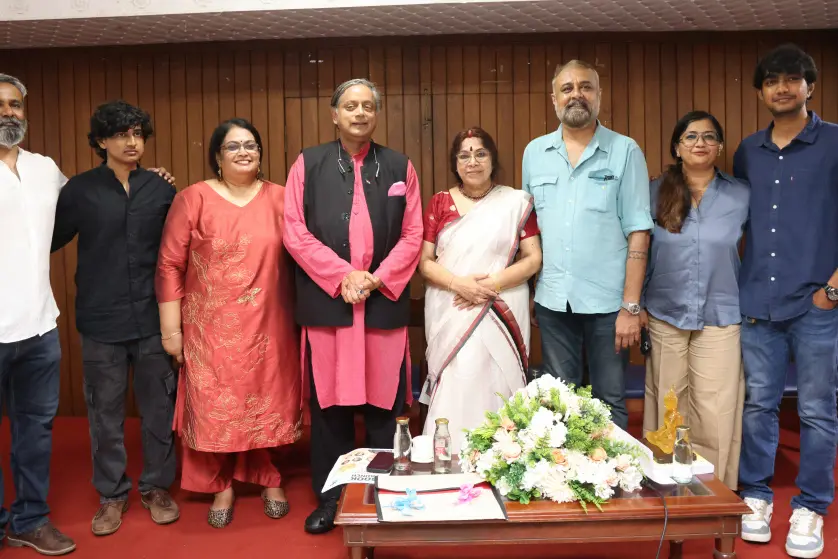
On Kerala’s vibrant literary stage, few genres ignite the imagination as potently as historical fiction. In this hallowed tradition, Sreekumari Ramachandran offers us The Saga of Cheraman—a lyrical reimagining of the region’s storied past, woven from threads of legend, folklore, and collective cultural memory. This is not merely a novel; it is a tribute to a bygone age, a homage to a legacy, and a love letter to the people who shaped the very soul of this ancient land.
“Fiction,” Albert Camus had famously observed, “is the lie through which we tell the truth.” The “truth” at the heart of the enigmatic tale of Cheraman Perumal, the last of the legendary Chera monarchs, is elusive. History offers us only fragments: was his departure from Kerala an exile, a spiritual awakening, a conversion, or an abdication? Legend suggests he went off to meet the Prophet himself; Muslims aver that he did, and converted to Islam. Historians say there is no proof of any of this. Yet there are, south of Salalah in Oman, Kerala coconut trees growing that are not native to the Arabian peninsula; it is entirely plausible that they are evidence of Cheraman Perumal’s successful crossing to those shores. The possibilities are intriguing, and could make for fascinating fiction.
Ramachandran, however, is less concerned with fact than with emotional and cultural veracity. Her narrative does not purport to reveal what definitively occurred; instead, it opens a door to contemplation—inviting readers to ponder, to feel, and to wonder.
To fully appreciate The Saga of Cheraman, one must grasp the layered realms it inhabits. History rests on stone—inscriptions, records, artefacts. Mythology, in contrast, speaks through symbols, serving as a mirror to the values and fears of a people. Legend occupies a liminal space between the two—oral traditions embroidered through generations, tinged with truths, but shaped by memory and imagination.
This novel resides in that fertile in-between—where the certainties of history fade, and the canvas of fiction begins. With vivid characters like Bhadra Devi, Manavikraman, and Abdullah Hakeem, and scenes resonant with love, sacrifice, betrayal, and redemption, Ramachandran conjures a world that is at once distant and deeply intimate. Her prose is rich with cultural nuance, poetic in rhythm, and timeless in emotional scope.
Yet we must remember: this is a work of fiction. Though inspired by the classic Cheraman Perumal in Malayalam by Kappana Krishna Menon, and grounded in literary and folkloric traditions, The Saga of Cheraman does not claim historical finality. It is a creative re-envisioning—a singular voice among many possible tellings. And herein lies its strength.
The novel portrays Perumal's journey to Arabia as one born out of personal transformation and a desire for spiritual growth, especially following his emotional reunion with his daughter and the resolution of internal court conflicts. The presence of Abdullah the Hakim serves as a catalyst for this change, but the narrative remains grounded in emotional and philosophical terms rather than theological doctrine.
There is no reference to the miracle of the splitting of the moon, which some Islamic tellings claim Cheranaman witnessed. The text also does not describe him hearing the message of Prophet Muhammad directly, nor does it claim he met the Prophet, converted to Islam and sent back messages to Kerala. By avoiding these specifics, the author appears to focus more on Perumal’s inner transformation and reconciliation with his family and legacy, rather than aligning with a particular version of a contested legend. Instead, it ends with Perumal departing for Arabia with a sense of peace and hope, leaving the outcome of his journey open to interpretation.
In an era when narratives of the past are too often appropriated for divisive ends, the distinction between history and fiction must be vigilantly preserved. When historical fiction is misrepresented as fact, it risks becoming a tool of propaganda, wielded to uphold myths that sow discord or assert supremacy. Writers and readers alike bear the responsibility to honour the boundary between truth and tale—even as we revel in the beauty of the latter.
Sreekumari Ramachandran is supremely equipped for such a task. A distinguished bilingual author with over 35 titles to her name, she has long been a cherished voice in Malayalam and English literature. Her translations of Aithihyamala and Haimavatabhumiyil, and her original works in English such as The Tales of Malabar and The Evergreen Legends of Kerala, have secured her a revered place in the literary canon. In The Saga of Cheraman, she once again affirms that the past is not a relic, but a living tapestry—ready to be reimagined, questioned, and celebrated.
Comprising 47 evocative chapters, this novel unfolds against the backdrop of Kerala—a land that cradles its profound antiquity within its verdant bosom. Here, meandering rivers, emerald forests, and ancient pathways stand as silent witnesses to eras long past. It is a land of bounty and beauty, where every whisper of the wind carries echoes of legend.
The Saga of Cheraman is, above all, a celebration of storytelling. It reminds us that history may provide the bones, but fiction breathes life into them. In the hands of a writer like Sreekumari Ramachandran, this life becomes an experience—moving, thought-provoking, unforgettable. As we usher this book into the literary world, let us do so with open hearts and discerning minds—ready to be stirred, but also to reflect. For in fiction, as in life, the truth often lies not in the facts, but in the feeling.
Published: 03 Jun 2025, 09:40 am IST
ABOUT THE AUTHOR
Disclaimer: Kindly avoid objectionable, derogatory, unlawful and lewd comments, while responding to reports. Such comments are punishable under cyber laws. Please keep away from personal attacks. The opinions expressed here are the personal opinions of readers and not that of Mathrubhumi.