

Independence is not a date on the calendar—it is a duty. It calls upon each of us to be vigilant stewards of our democracy. To speak up when silence is tempting. To act when apathy is easier. To build when destruction is fashionable.
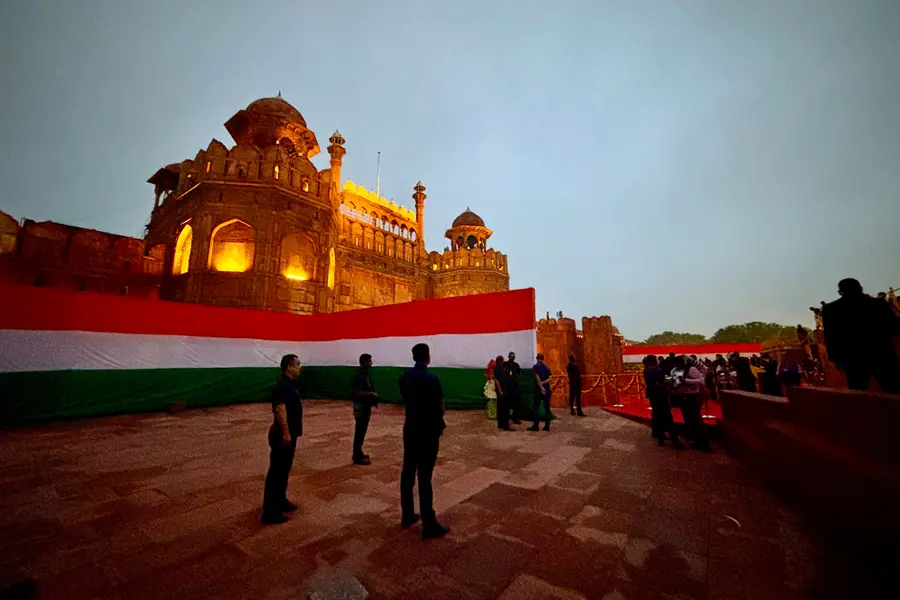
Seventy-eight years ago, at the stroke of midnight, India awoke, in Jawaharlal Nehru’s immortal phrase, to life and freedom. That moment—immortalised by our first Prime Minister’s stirring words—was not merely the birth of a nation, but the reclamation of dignity for a people long denied agency over their own destiny. Independence was not gifted to us; it was earned through sacrifice, struggle, and the indomitable will of millions who believed in the idea of India before it existed as a sovereign state.
As we mark this 78th Independence Day, it is worth asking: what does freedom mean to us today? Is it merely the absence of colonial rule, or is it something deeper—something that must be continually nurtured, defended, and reimagined?
The Many Dimensions of Freedom
Political independence, while foundational, is only the beginning. True freedom must encompass the liberty to think, to speak, to dissent, and to dream. It must include the freedom from hunger, ignorance, and discrimination. It must mean the ability of every Indian—regardless of caste, creed, gender, language or geography—to live with dignity and pursue opportunity.
Yet, as we look around, we must confront uncomfortable truths. The freedom to dissent is increasingly met with suspicion. The freedom of the press, once robust, now navigates a minefield of pressures. The freedom of minorities to live without fear, and of women to walk without threat, remains elusive in some -- too many -- corners of our republic. The right of migrants to speak their own language in the states to which they have gone to work is now being challenged belligerently and sometimes with violence.
Independence is not a static achievement—it is a living ideal. It must be renewed in every generation, and defended in every institution. This is still an incomplete task in the India of 2025.
The Legacy We Inherited
Our founding fathers and mothers envisioned a nation that would rise from the ashes of colonial exploitation to become a beacon of pluralism, democracy, and development. They gave us a Constitution that enshrined liberty, equality, and fraternity—not as lofty aspirations, but as binding commitments.
They imagined an India where the accident of birth would not determine the trajectory of one’s life. Where a Dalit child in Bihar, a tribal girl in Bastar, and a Muslim boy in Malappuram could all aspire to the same future. That vision remains our moral compass, even if the road toward it is uneven.
India has come a long way. We are no longer the impoverished colony that Churchill once dismissed as unfit for self-rule. We are the world’s fourth-largest economy, a leading spacefaring nation, a digital powerhouse, and a vibrant democracy. Our achievements in science, technology, literature, and the arts are a testament to the genius of our people. So is our successful diaspora, thriving across the globe, heading Fortune 500 companies and international institutions from the World Bank to Google, from Microsoft to Chanel.
Yet, development has not been uniform. Inequality persists. Despite progress in lifting millions out of “multi-dimensional poverty”, millions still remain trapped in deprivation and hunger. Our public institutions—education, healthcare, sanitation, justice—require urgent revitalisation. Independence must mean more than national pride; it must translate into the empowerment of every citizen.
Independence also gave us the freedom to chart our own course in the world. We chose non-alignment, not as fence-sitting, but as principled autonomy. We spoke for the decolonised world, for peace, and for justice.
Today, India stands at a crossroads. We are courted by great powers, sought after in global forums, and admired for our demographic dynamism. We have upgraded our approach to one of “multi-alignment”, appropriate for the networked world of the World Wide Web. But with power comes responsibility. We must use our voice not just to advance our interests, but to uphold the values that define us. Whether it is climate justice, digital equity, or global peace, India must be a leader not just in ambition, but in conscience.
The Battle of Ideas
One of the most profound freedoms we inherited is the freedom to think. India’s civilizational ethos has always embraced debate, dialogue, and dissent. From the Upanishadic sages to the Bhakti poets, from the Constituent Assembly to the Parliament floor, India has thrived on the contest of ideas. The “argumentative Indian” is not just a book title; it is the very essence of our culture and therefore of our democracy.
Today, that contest of ideas is under strain. The space for intellectual pluralism is shrinking. Labels are weaponised. Patriotism is conflated with conformity. Creativity is curbed by the over-sensitivity of churlish men insisting they are offended by one depiction or another. But let us remember: the right to question, the right not to conform, the right to think differently, are not anti-national, but quintessentially Indian.
As Rabindranath Tagore wrote, “Where the mind is without fear and the head is held high…into that haven of freedom, my Father, let my country awake”. That is the India to which India opened its eyes that heady dawn of 1947. That is the India we must strive to preserve.
The Meaning of Independence Today
So what does Independence mean in 2025?
It means, or should mean, the freedom to be who we are—without fear or favour. It means the freedom to celebrate our diversity, not suppress it. It means the freedom to hold our leaders accountable, to demand better governance, and to expect justice.
It means the freedom to dream of an India where no child goes hungry, no woman feels unsafe, and no citizen feels unheard.
It means the freedom to remember our history—not as nostalgia, but as instruction. To honour our freedom fighters not just with statues, but with policies that reflect their ideals.
It means the freedom to imagine a future that is inclusive, innovative, and inspiring.
A Call to Renewal
Independence is not a date on the calendar—it is a duty. It calls upon each of us to be vigilant stewards of our democracy. To speak up when silence is tempting. To act when apathy is easier. To build when destruction is fashionable.
As we hoist the tricolour this August 15, let us remember that it is not just a symbol of past glory—it is a summons to present responsibility.
Let us teach our children that freedom is not free—it must be earned, cherished, and protected. Let us remind ourselves that patriotism is not blind allegiance—it is principled engagement.
Let us renew our pledge to the republic: that we will strive, each in our own way, to make India not just stronger, but better.
Seventy-eight years ago, we awoke to freedom. Today, and every day, let us awaken to its meaning.
Jai Hind.
Published: 15 Aug 2025, 07:58 am IST
ABOUT THE AUTHOR
Disclaimer: Kindly avoid objectionable, derogatory, unlawful and lewd comments, while responding to reports. Such comments are punishable under cyber laws. Please keep away from personal attacks. The opinions expressed here are the personal opinions of readers and not that of Mathrubhumi.