

Rising from humble beginnings as the son of a poor muezzin in Kozhikode, he became the first Muslim Chief Minister of Kerala
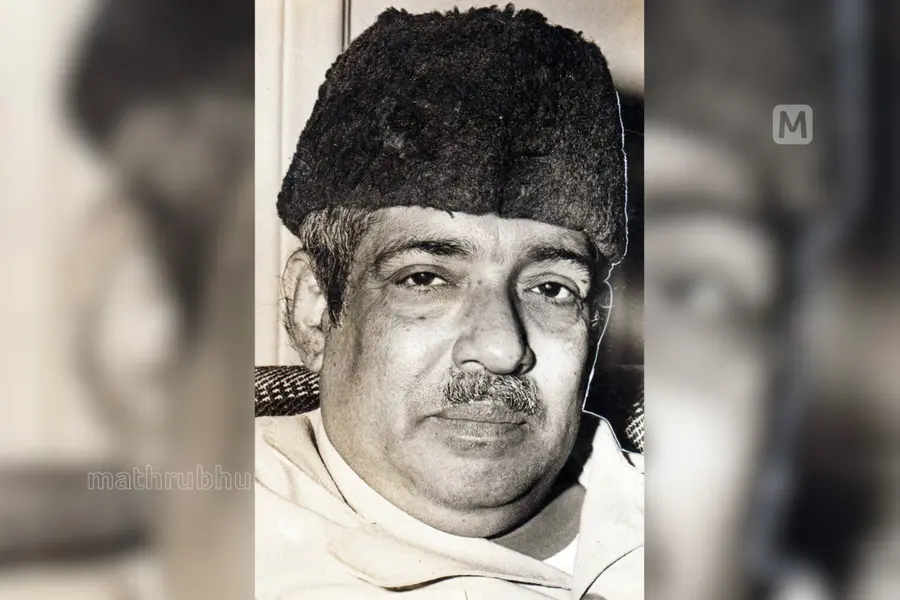
Today (July 15), as we mark the 98th birth anniversary of C.H. Mohammed Koya, my thoughts, and indeed the thoughts of all who cherish Kerala's unique developmental journey, turn to a leader whose impact, though sometimes understated, remains profoundly significant.
Even judged solely as a politician, “CH”, or “Koya Sahib”, as he was affectionately known, had a remarkable career. Rising from humble beginnings as the son of a poor muezzin in Kozhikode, he became the first Muslim Chief Minister of Kerala. His legislative and administrative experience and success was both wide-ranging and varied. Elected several times to the Kerala Assembly he became Kerala’s youngest Speaker at the age of 32, was elected to the Lok Sabha twice, and served as deputy chief minister, home minister, education minister and finance minister in several ministries including that of E.M.S, Achutha Menon and Karunakaran. But C.H. was far more than a politician; he was an architect of modern Kerala, a pragmatic visionary whose reformist zeal touched the lives of countless citizens, particularly in the vital spheres of education, social empowerment, and the delicate equilibrium of inter-communal relations..
What truly distinguished him, however, was his remarkable ability to blend sharp political acumen with a deep-seated reformist impulse. Innumerable social justice movements have failed in India because they were not backed by socio-economic development. Koya understood that true progress lay not just in rhetoric, but in tangible policy changes that uplifted the marginalized and empowered the common person.
It is difficult today perhaps to appreciate how precarious the position of the Muslim community in the Malabar after Independence was. The peasantry of lower Malabar, the Mapillahs, had become alienated from the Muslims of the coast and central and south Kerala after the Khilafat movement in the 1920s had turned communally violent. The Mapillas were also educationally and economically backward. The IUML, formed in 1948, had the unenviable task of differentiating its politics from the erstwhile northern-dominated All India Muslim League, whose two-nation theory had led to the horrors of Partition. The lUML was constantly accused of communalism by the nationalist and left parties of Kerala, making its full participation in the political process difficult. Koya was at the helm of refuting the accusation of communalism and forging valuable political alliances. He proved both pragmatic and flexible in this respect, being keenly aware of the larger aspirations of the state as well as of particular communities. At the social level, Koya perhaps was the man most responsible for the post-independence consolidation and empowerment of the Muslim community in Kerala.
This approach conferred a legitimacy upon the League that, unfortunately, has sometimes been overshadowed in contemporary discourse, where it is often perceived by other communities, particularly Christians and Hindus, primarily through the lens of identity politics. Koya’s legacy, in this regard, offers a powerful counter-narrative, highlighting a period where the League, under his guidance, contributed significantly to the broader social and political fabric of Kerala.
Perhaps his most indelible contribution lies in the field of education. As Education Minister, under Achutha Menon, Karunakaran, Antony and P.K.Vasudevan Nair, he gave shape to the educational vision he had been advocating since his days as editor of Chandrika and which he relentlessly championed from the opposition benches. Koya’s initiatives, such as opening a large number of elementary schools and high schools in Malabar, dramatically expanded access to learning, particularly for the economically backward and minority communities. He also extended compulsory education till the tenth standard. As education minister, he introduced reservations in private colleges for SC/ST students and implemented the measure strenuously.
His efforts also led to the establishment of numerous colleges, opening doors to knowledge that had previously been shut for many. Notable amongst these were Calicut University – the first university in and for Malabar – and the Cochin University of Science and Technology. In a remarkable display of non-partisan spirit, Koya appointed Joseph Mundassery, an opposition MLA, as the first Vice-Chancellor of CUSAT, prioritizing merit and academic vision over political affiliation.
This was not only about building educational institutions; it was about building futures, fostering a more equitable and literate society. His policy decisions in education laid much of the groundwork for Kerala's globally renowned achievements in human development indices. He insisted on extending the benefits of education to women, particularly from his own community, who were often cloistered at home and not sent to school. He gave scholarships for Muslim and Nadar girls in upper primary schools and high schools. If female literacy in Kerala — including those of Muslim women — is today identical to male, uniquely among Indian states, it is owed in great measure to the vision and courage of C.H. Mohammed Koya.
Beyond education, Koya's commitment to social justice found expression in his approach to land reform, which many non-communist parties opposed. Reaching across the ideological divide, Koya supported the communists’ land reform movement, a complex and often contentious process, aimed at dismantling feudal structures and ensuring land for the tiller. Koya, despite leading coalition governments that represented diverse interests, navigated these intricate challenges and contributed significantly to the successful implementation of various land reform measures -- which, while not without their problems, fundamentally altered the socio-economic landscape of the state, empowering agrarian communities and reducing stark inequalities.
Yet, it is perhaps in the realm of inter-communal relations that C.H. Mohammed Koya's statesmanship shone brightest. Koya, as a prominent Muslim leader, was a tireless advocate for communal amity and understanding. His brief tenure as Chief Minister, though short-lived, was characterized by an exemplary consensus-building style, deftly balancing the diverse interests of coalition partners and always seeking common ground for the state’s progress. One of Koya’s most notable demonstrations of bipartisanship was his declaration of Sri Krishna Jayanti as a public holiday, a move that resonated deeply with the state’s Hindu population.
C.H. Mohammed Koya’s political style was one of consensus-building and bridge-building, fostering an environment where dialogue and mutual respect prevailed over division. He understood that Kerala's strength lay in its diversity, and he worked assiduously to ensure that every community felt a sense of belonging and agency within the larger Keralite identity -- so much so that the Jana Sangh leader K.G. Marar referred to him as “CHM Koya – C for Christian, H for Hindu and M for Muslim!”
In our era, often marked by divisive rhetoric and identity politics, Koya Sahib's legacy offers a compelling counter-narrative. His reformism was rooted in a profound humanism, a belief in the potential of every individual, and the imperative of collective progress. He showed that it is possible to be a strong voice for one's community while simultaneously being an ardent champion for the entirety of society, while always seeking common ground for the state's progress.
Today, when Kerala is facing acute problems across multiple fronts, in the economy, in higher education, in the social sphere, Koya’s approach to governance offers a compelling model for developmental progress, one that aligns with the idea that true development can only occur through genuine inter-party cooperation rather than entrenched ideological opposition. His willingness to reach across the political spectrum, as evidenced by his appointments and policies, demonstrates a clear understanding that societal advancement necessitates a collective effort. In an era often characterized by partisan gridlock, Koya’s legacy serves as a potent reminder that transcending fixed ideological barriers and fostering an environment of collaborative governance is not merely an ideal, but a pragmatic necessity for achieving sustainable and inclusive development.
Koya’s career underscores the profound truth that when political adversaries choose to work in a bipartisan manner and cooperate on matters of public good, the beneficiaries are always the citizens -- and the ultimate outcome is a stronger, more cohesive society.
To solve the problems Kerala faces today requires structural change -- and that cannot occur unless our political system allows policies to be informed by genuine deliberation and collective action, and bipartisanship on issues of merit is not stigmatised as ideological disloyalty. As we reflect on his contributions, particularly in the light of contemporary challenges, Koya's life serves as a powerful reminder that political leadership at its best is not about power for its own sake, but about leveraging that power to enact meaningful reforms that leave a lasting, positive imprint on the lives of ordinary people.
The ”Koya Model” is what makes C.H. Mohammed Koya's vision and actions worth recalling and celebrating on his birthday. May he continue to illuminate the path towards a more just, educated, and harmonious Kerala – a legacy worthy of our deepest respect and continued emulation.
Published: 15 Jul 2025, 09:45 am IST
ABOUT THE AUTHOR
Related Topics
Disclaimer: Kindly avoid objectionable, derogatory, unlawful and lewd comments, while responding to reports. Such comments are punishable under cyber laws. Please keep away from personal attacks. The opinions expressed here are the personal opinions of readers and not that of Mathrubhumi.