
Biju Kumar Damodaran claims that this is the first collaborative feature film which happens to be the first Papua New Guinea-India Co-Production feature film project which, fortunately, has representing the country at major international film festivals.
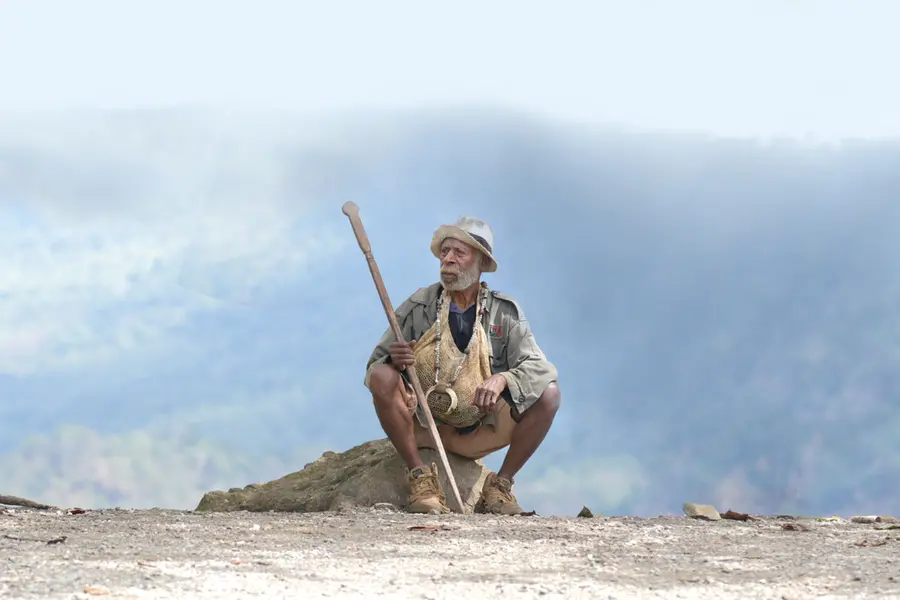
Papa Buka is a feature film directed by the noted Malayalam filmmaker Biju Kumar Damodaran who claims that this is the first collaborative feature film produced by the government of Papua New Guinea. Every film buff in Kerala is familiar with the name and work of Dr. Biju Kumar, one of the most low profile, grounded and award-winning filmmaker in South Indian cinema in general and Kerala in particular.
Papua New Guinea (PNG) is an independent Melanesian nation in the southwestern Pacific, occupying the eastern half of New Guinea island and surrounding islands. With over 839 indigenous languages, it is the world’s most linguistically diverse country. Port Moresby is the capital, and the country is known for its rugged mountains, coral reefs, and vast biodiversity.
Also Read

In 2014, Indian research scholars and historians Romila Chatterjee (Ritabhari Chakraborty) and Anand Kunjiraman (Prakash Bare) journey to Papua New Guinea through deep forests, foliage and snakes to uncover the forgotten stories of these Indian soldiers. Guided by local driver Sike Yuantus and war veteran Papa Buka, they traverse remote forests and villages, uncovering hidden historical connections and personal ties to the war that forever changed this land.
Biju Kumar Damodaran claims that this is the first collaborative feature film which happens to be the first Papua New Guinea-India Co-Production feature film project which, fortunately, has representing the country at major international film festivals. It is also the first official submission from PNG to Academy awards for Best International Feature Film 2026. The film unveils a pioneering cinematic collaboration between Papua New Guinea and India, aimed at showcasing the rich cultural heritage and exquisite landscapes of Papua New Guinea to a global audience.
Papa Buka is a fictional film treated like a blend between a documentary and a fiction film. It can be described as a journey film, a road movie and an exploration by two Indian researchers into the history and realities of a small country. One of the researchers has a personal agenda. She has come with the motive of investigating the past of her Indian grandfather who is believed to have fought in World War 2 and like thousands of Indian war veterans, were sent to Papua New Guinea following the war and settled down in this country. They take the help of their driver-cum guide, John Sike (Sike Yuvantu) a local young man who can speak in English, to drive them through difficult terrains and a very old man who everyone calls Papa Buka (Sine Boboro ) who is an expert on local folk legends, rituals and history.
Says the director Damodaran, “Through Papa Buka, I wished to capture the enduring impact of war on indigenous cultures and individuals who are seldom part of mainstream historical accounts. Indian soldiers, who fought as part of the Allied forces in Papua New Guinea, and the indigenous people who played a major role in the conflict, remain largely unrecognized in the annals of history. Through this film, I sought to document those forgotten stories and, in doing so, shed light on the personal and cultural losses of war.”
Papa Buka unfolds against the backdrop of World War II, when native Papua New Guineans courageously assisted Australia and Allied soldiers against the Japanese, while many Indian soldiers, part of the British army, fought valiantly yet remained largely unrecognized.
Their quest evolves into a profound exploration of memory, loss and the enduring impact of conflict. As they navigate Papua New Guinea’s lush and treacherous landscapes, Romila and Anand honour the sacrifices of indigenous communities and their own ancestors, bridging the past and present.
The film is a poignant tale of historical reconciliation and the search for identity set against the rich and complex backdrop of Papua New Guinea. The film emphasizes compassion, remembrance and the shared humanity that transcends the devastation of war. Once, it so happens that Romila is so exhausted that one feels that she might not live till the end of the journey. The forests they scamper through is filled with dense lines of unknown trees, wild fruit and flowers, birds and animals. Romila learns through Papa Buka from a village they visit during the journey, that her grandfather had died there and was given a funeral by the villagers. Then, just before they were about to turn back to return to base, their car breaks down and must be towed to the nearest police camp which is miles away.
The making of the film has been a big physical, historical and geographical challenge for the entire team as well as for the actor Sine Boboro who had never watched a film in his entire life, much less acted in one. Therefore, his performance is so raw, so real, that this writer at least, felt that this was really Papa Buka who is enacting himself. Through the very rough and tough journey, the four travellers often have to continue without proper drinking water, or even food which they once get when one of the villages they journey through, the tribes who live there treat them to a local feast with food they have never tasted before. He dies almost at the end of the film and it was enacted and performed so well that I asked Dr. Biju Kumar whether Papa Buka had really died. He had not.
Papa Buka is a fictional character but inspired from real incidents. Sine Boboro an 85 year old Papua New Guinea tribal leader who acted in the film as Papa Buka. Sine Boboro had never ever seen a film before. Yet, he lived the character of Papa Buka as if he was the fictitious person and we too felt that Papa Buka was a real person and not a character written into the script. Sine Boboro is the first actor from Papua New Guinea to compete with the Academy and Golden Globe awards in the best actor category. After Papa Buka, Sine Boboro has become widely identified with his character in Papua New Guinea. Even the Prime Minister addresses him as Papa Buka. And as the actors portraying the researchers are not very known faces in Indian cinema, it helps the audience to identify the actors as the characters they have portrayed.
The sound mixing by Jithin Joseph, the brilliant cinematography by Yedhu Radhakrishnan, Ricky Kej’s music track and sound design by P Saanu have invested the film with a surrealistic magic which came across mainly in the scenes where Papa Buka’s stories surrounding the superstitions and folklore come alive on screen as fantasy creating seamless dream-world within the harshness of the real world.
Says Dr. Bijukumar, “What excites me most about this film is its blending of two worlds—modern-day historians from India, seeking truth and closure, and a wise old war veteran, Papa Buka, whose memories guide them on their journey. The film is not just a historical recount; it’s a quest for identity, a meditation on memory, and a deep exploration of human connection across time and cultures.”
In Papa Buka, the film, the entire team traverses not only through the lush and untamed landscapes of Papua New Guinea but through the emotional terrain of grief, loss, and the unresolved consequences of war. The film is a reminder that history, when left unspoken, can become a wound that lingers through generations.
Dr. Bijukumar who has the last word, sums up by stating: “I believe that stories like these are important, not just as historical records, but as reminders of the shared humanity that binds us all. Papa Buka is my attempt to bring these narratives to the forefront, with the hope that the audience will reflect on the personal cost of war, and the ways in which history continues to shape our present. I am deeply grateful for the collaboration with the people of Papua New Guinea, and the opportunity to work with such a diverse team of talented artists and the many interns from various institutes. Together, we strive to honour the voices of the past and present, ensuring that the forgotten stories of this extraordinary land are remembered.”
Published: 13 May 2026, 11:57 am IST
Related Topics
Disclaimer: Kindly avoid objectionable, derogatory, unlawful and lewd comments, while responding to reports. Such comments are punishable under cyber laws. Please keep away from personal attacks. The opinions expressed here are the personal opinions of readers and not that of Mathrubhumi.