
Discussing his journey from advertising to writing and the extensive research behind his book
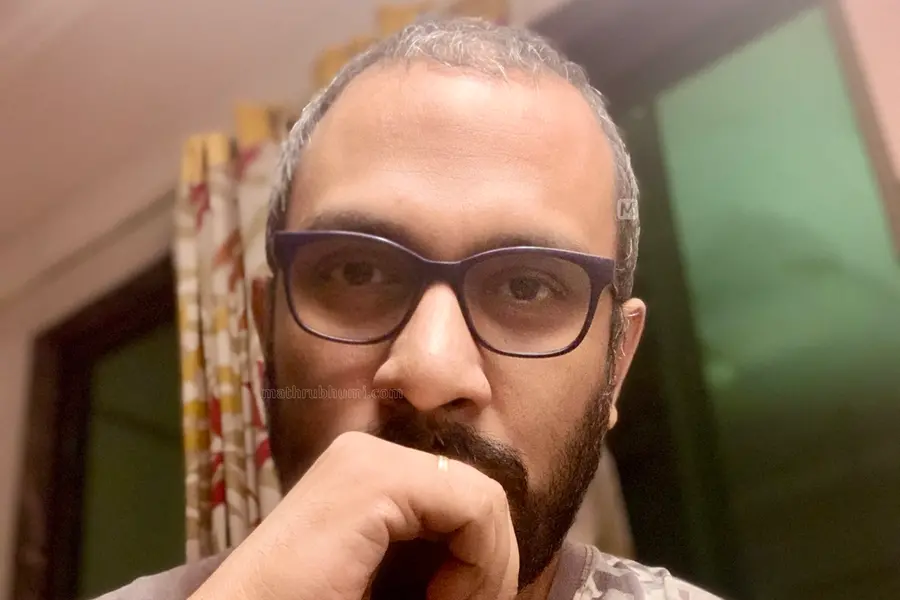
Meet Amborish Roy Choudhury. Over the past few months, he has been a significant point of discussion and interviews and online seminars revolving around his new book Raj Khosla – The Authorised Biography published by Hachette India earlier this year. It is a very comprehensive, analytical and research-centric book on a very successful filmmaker in Bollywood who is remembered more by the names of his films, the songs in them and less remembered for his rich contribution to cinema. Impressed with the book mainly for its intensive and extensive field and documentary research, this critic felt that a Q and A with the author himself would be far more enlightening than just review of the book.
A bit of the story of how you shifted from advertising which was highly paying to the uncertain world of writing on cinema personalities.
I spent more than a decade in advertising. In this period, I had been with some leading Mumbai agencies: Rediffusion, FCB Ulka, Interactive Avenues and others. My expertise was social media marketing. Although I enjoyed my stint with those agencies and still occasionally freelance in the field of social media, something really shifted in me when I discovered that the relationship I had with cinema could take the form of books. My first book In a Cult of their Own: Bollywood Beyond Box Office took me on a journey that I realised I enjoyed far more than working on pitch decks and attending client meetings. But it all came to a head when the book was recognised at the 66th National Film Awards. That is when I decided to take up writing seriously as a full-time career. I have written two books and been part of an anthology since then and enjoyed every bit of it. In the age of AI, writing books on cinema doesn't pay a fraction of what a career in advertising potentially can, but I have come to believe that it is my calling, and I’d like to continue doing this till I can’t any longer.
Tell us a bit about your first book which fetched you a Certificate of Merit at the National Awards.
My first book won a special mention at the 66th National Film Awards, back in 2019. It was a collection of essays on Hindi cult films. I defined “cult” in my own way: films that didn’t do as well as expected when they released, but eventually developed a cult following online or elsewhere. It contained all kinds of films — good bad and ugly. It featured films like Kaagaz ke Phool, Mera Naam Joker, Shahenshah, Gunda, Chashme Buddoor, Suraksha, Jaane Bhi Do Yaaro, Andaz Apna Apna, Clerk, Katha and several others. I tried to reach out to those associated with the film, either the makers or the cast/ crew.
In some cases, I was successful. The book ended up having interviews with Naseeruddin Shah, Aamir Khan, Tinnu Anand, Rajkumar Santoshi, Pankaj Kapur, Deepti Naval and others. They shared crucial perspective, and the rest was provided by my own viewing of the film in its socio cultural context. It was received well but I was taken aback when I was informed of the award. My book was about Bollywood cult films, and besides all the bonafide classics it also contained films like Gunda and Clerk and even while I sent it for the awards, I was nearly convinced that it would never even be considered. But it did get the recognition and I was overwhelmed.
Your most recent book, RAJ KHOSLA - THE AUTHORIZED BIOGRAPHY has recently been launched in Mumbai, But the byline includes the names of Raj Khosla's two daughters. How do you explain this?
The daughters, Uma Khosla Kapur and Anita Khosla, were immensely helpful in opening doors for me. They not only contributed by making it possible for me to speak to some of the stars but also ensured no interference in my process. They empowered me to write freely, without any concerns of censorship on their part. Every word in that book is as I had written it. They helped in ensuring that. This book won’t be possible without them. So it’s only fair that they share the credit of creating it.
Your work, now that I have read it and also the one on Sridevi, encompasses an incredible amount of in-depth and extensive field work including one-to-one interviews with people close to him. Please explain your field research in detail - the time taken, the people interviewed, the films discussed, everything related to the Raj Khosla book.
That’s an interesting question. I actually prefer conducting primary research on every project that I do. There is too much unverified hearsay on the Internet, Lately, this has spread to books as well. It’s therefore critical to go as close to the source as possible. For all three of my books, I have paid multiple visits to the National Film Archives. In the case of Raj Khosla, the Archives helped me obtain rare interviews of the filmmaker himself, from the 1960s right up to the 1980s. In this respect, the NCPA (National Centre for Performing Arts) Library at Nariman Point has also proven a great resource.
How did the Khosla family help this project?
The Khosla family helped me get in touch with the cast and crew. In case of the stars, one had to seek appointment, wait inordinate lengths of time, often weeks, even months. But it was all worth it because as you see in the book, they have all shared precious perspective that has only enriched the book. The book contains quotes from Manoj Kumar and Lata Mangeshkar before we lost them. One of the treasured interactions I had was a two-hour sit-in with Asha Bhosle, where I played all her songs from Raj Khosla’s films and she kept sharing stories about them. Or a marathon chat with Pyarelal Sharma at his house where we not only discussed music but life itself. One of the people who contributed massively to the book is Mahesh Bhatt. Whatever you ask of him, his response was a standard “Anything for my boss!” He had joined Raj Khosla as an assistant but their relationship went longer and deeper, so he shared some glimpses of the man that would have remained inaccessible to me, had it not been for him.
How long did it take from typing the first sentence right upto the last sentence you keyed in.
See, the actual process of typing the book didn’t take too long. Maybe around a year or so. What really took long, almost half a decade, was to WRITE it. The act of putting it together involved research, interviewing the cast and crew, seeing the films over and over again, meeting the journalists who interviewed him back in the day, and as I said, multiple visits to the archives. So yeah, it took me around five years to finish the book.
Did you take the help of any important crew members for your research from Khosla's team who are still alive? If yes, who are they?
Many of his collaborators have been quoted in the book. I spoke to most of his assistants, his manager, secretary, accountant, anyone who is around now. Most of his writers, cinematographers and editors have passed away. I did speak to Abid Surti who wrote Naqab, Raj Khosla’s swansong. I also spoke to Salim Khan, one-half of the iconic Salim-Javed team who had written Dostana. Raj Khosla had the longest musical partnership with Laxmikant-Pyarelal. I interviewed Pyarelal Sharma for the book in addition to Lata Mangeshkar and Asha Bhosle, both of whom sang some unforgettable numbers for Raj Khosla films.
The book is constantly haunted by the ghost of Guru Dutt and of Raj Khosla's father. Do you agree? Please explain.
Both men had significant impact and influence on Raj Khosla. He was extremely fond of his father, and Guru was his mentor who shaped his life in more ways than one. Raj Khosla was a sensitive man, and these influences ran deep.
Your book interestingly includes lots of QR codes to get back to the song sequences that Khosla's films were famous for. How did this happen?
Music is so central to Raj Khosla’s story, and I spend so long dissecting the songs of his films, that it was important to give the readers a way to experience the songs as they read about them. CDs and USB drives were considered but dismissed as too old school. It was then that the idea of QR codes struck me. They were ubiquitous because of UPI payments, and everyone knew how to scan them. I created a series of playlists with these songs on YouTube, and QR codes were generated that led readers to these playlists.
The textual content of the book runs into 300+ pages followed by references, etc. What kind of discipline did you need to follow in the writing routine, in terms of time, space, etc?
I am a little ashamed to admit that I am not disciplined at all. After a point, my books tend to take a life of their own. This one did too. I didn’t have a routine or pattern of typing x number of words each day. My task was to capture the life of a man who had spent 66 years on this planet. I knew that I must give it the time. I let my instincts decide how and when I was to write. Sometimes inspiration strikes you at odd hours and in the weirdest of places. I have written this book in cafes, back seats of cars, my bed, on the couch, at my desk surrounded by books.
What kind of cooperation did you get from his two daughters?
In authorised biographies, the greatest fear is that the narrative might be controlled. As explained earlier, the two daughters of Raj Khosla who had been associated with the book ensured that I had a free hand in writing it. They facilitated the journey, opened doors for me. Even the other three daughters (Khosla has five daughters) happily cooperated.
Were you commissioned to do the book or did you do it voluntarily? Please explain.
The book was commissioned by the two daughters, Anita Khosla and Uma Khosla Kapur. It was offered to me. I had only seen around two films of Raj Khosla till then, but I was aware of his aura. The idea intrigued me and I jumped at it.
Do you feel that the financial rewards for this work is justified by the time and amount you were paid or would you choose differently?
That is not an easy question to answer. I spent five years of my life doing it. No amount of financial reward or compensation would have been sufficient to see me through those five years. Writing, particularly writing of the kind I do, barely pays the bills. Would I have chosen differently? Certainly not. The kind of high I experienced while writing this book made up for all that and more.
What are your taking-backs from this work and what have you learnt about your subject of the book Raj Khosla?
It was as if he was perched on my shoulder this whole time, whispering his story into my ears. The more I discovered about his journey, the more fascinated I was. What made him tick? Despite being so spectacularly successful, why did he find excuses to run away from work? His films and songs are well-remembered, but the man himself has remained in the shadows. Why? I have tried to address all these questions in my own way. Though I don’t claim to have answers to all these questions. It would take 10 books to be able to know and understand Raj Khosla the way he deserved to be understood.
In what way would you say it has been a learning and an enriching experience? Please explain.
I take up books about subjects I know nothing (or precious little) about. That makes the journey immensely rewarding both for me and (hopefully) the reader. As I keep discovering more, my engagement deepens and that’s when I start having fun. How can I hope to have the reader glued to the page unless I am engaged? So it has been a learning experience for me throughout.
Name at least three different books on Indian cinema you have found educative and enriching?
I haven’t read a lot of Indian cinema books lately. I do read a lot of memoirs and of the ones I’ve read in the past few years, I really enjoyed Naseeruddin Shah’s And then One Day, Girish Karnad’s This Life at Play, Dev Anand’s Romancing with Life and Nabendu Ghosh’s memoirs in Bangla, Eka Noukar Jatri.
Published: 18 Sept 2025, 11:07 am IST
Related Topics
Disclaimer: Kindly avoid objectionable, derogatory, unlawful and lewd comments, while responding to reports. Such comments are punishable under cyber laws. Please keep away from personal attacks. The opinions expressed here are the personal opinions of readers and not that of Mathrubhumi.
