
The film explores themes of rebellion, love, and survival in West Bengal`s forests.
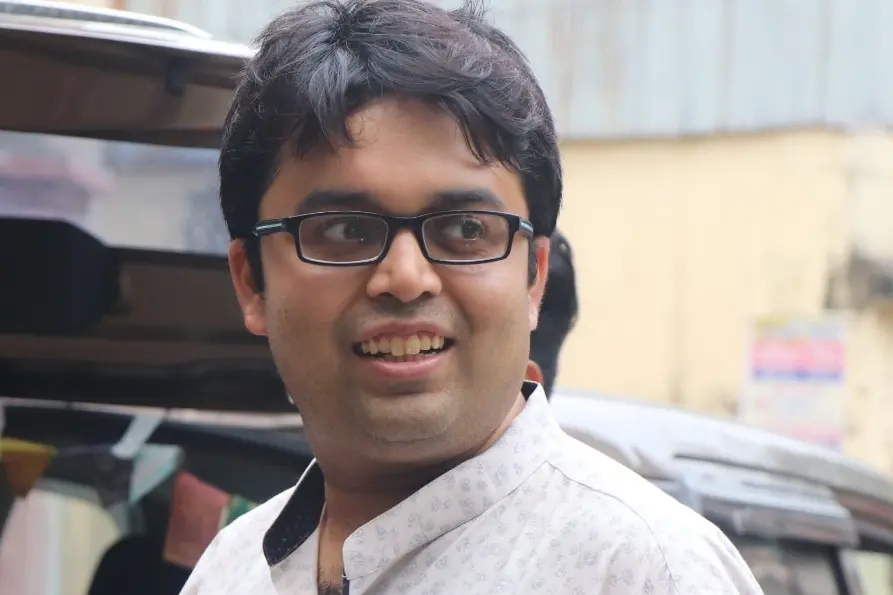
Meet Tathagata Ghosh. He is a package full of miracles shaped and moulded as a surprise package of a short film maker with a unique approach that covers the short footage of his films fascinatingly. Tathagata is a film making graduate (Mass Communication and Videography) from St.Xavier's college, Kolkata. He holds a Diploma in Writing on Film and Television from Vancouver Film School, Canada.
He has been involved with the visual medium for the past decade and has been associated with numerous projects in various ways. He has written and directed 7 short films so far. His films have been nominated by various festivals such as the Kolkata International film festival, Indian Film Federation Society Film Festival, Kerala International Short Film and Documentary Film Festival among many others.
He has directed numerous commercials, music videos and written screenplays for several projects. His recent short films "If", "Miss Man", "Footprints", "The Scapegoat", "The Meat" and "The Demon" have travelled to numerous prestigious international film festivals and have won awards.
Ghosh has now made a powerful film that throws up different readings depending on the perspective of the viewer/s concerned. The name of the film is Amar Comrade (My Comrade) in Bengali. It has participated at the 33rd Arizona International Film Festival / (Jury Award), 10th Toulouse Indian Film Festival, 41st Los Angeles Asian Pacific Film Festival, 11th Mammoth Lakes Film Festival, 16th KASHISH Pride Film Festival, and the 8th South Asian Short Film Festival.
Amar Comrade is a 25-minute short film shot entirely in the Jungle Mahal against its picturesque backdrop forming a disquieting veil for the rebellion simmering behind the rich visuals. The film, based on Ghosh’s script and story, is fascinating. Its cinematography, by Tuhin, captures the ambience with magnetic charm, with its rich greenery dotted by the ramshackle hut, the shelter of the young, tribal couple who are tragic victims of the Indian Forests Act while the young rebel, Bikash Mahato, a member of the rebels against the Indian Forests Act 2006 is running away from the armed forces and the local police who are chasing him to capture and/or kill him. He finds shelter with a very young local couple reduced to penury because they are victims, they believe, of both of the Indian Forests Act and the rebels fighting against it. The husband understands the mindset of the rebel but his young wife does not. The sound design, the music, the editing, carry subtle underpinnings of creativity and cinematic aesthetics which do not overshadow the narrative but enrich it.
Within its brief span, Tathagata Ghosh has filled the narrative with a scary nightmare of the young man (Sounak Kundu) in Jungle Mahal in whose shanty Bikash Mahato takes shelter after he is saved. There is also a scene where Bikash Mahato (Aratrick Bhadra) remembers his boyhood school in the village he was brought up in, filled with playful children, suddenly emptied out as Bikash stares at the empty compound sadly. The young man’s wife (Adrija Majumder) does not like this intruder and does not hide it from her husband or from Bikash. But as he nurses Bikash back to health, in some strange manner, the young man begins to internalize the revolutionary ideology of Bikash and sets out to walk beside him armed with a bow, an arrow and his quill of arrows. How the film closes, is the biggest twist which the audience if left to conclude from or the film spells it out subtly.
This critic nailed down the very young, articulate, unassuming and talented Tathagata Ghosh to talk about this film in detail.
Why the title Amar Comrade?
I chose the name “Amar Comrade” because it captures both the political and personal layers of the story. “Comrade” evokes the language of rebellion and solidarity, but adding “Amar,” which means “My,” makes it intimate and deeply personal. It reflects the complex relationships between the characters, the bonds formed in conflict, but also the tenderness, love, and struggles that exist beneath the surface. The title speaks to loyalty not just to a cause, but to people, identity, and truth.
What inspired you to make this slightly off-track film unlike your films Miss Man, Ora and so on that trace the conflict among men and women with alternate sexual orientations?
I was inspired by stories that often go unheard- the lives living in the margins of history and conflict. Over the past two years, I visited the forests of West Bengal where the armed rebellion took place. I spoke with tribals who lived through those turbulent times. Hearing about their oppression, I realized how much of their personal desires and identities were pushed aside in the fight to survive. The story formed in me slowly, from those real conversations and the sense that love, identity, and survival all overlap in unexpected ways. It’s a film about resilience and connection told through a lens that challenges what people expect from stories set in conflict.
What is your directorial statement?
Tribal lands and resources are not only the physical, cultural, and spiritual foundations of Indigenous people, but also the core of their identities and futures. For centuries, these lands have been taken through displacement, broken treaties, and resource exploitation, leading to the oppression of Indigenous communities and the erosion of their deep connection to the land. In such times of struggle, love becomes crucial in uniting communities, offering strength, resilience, and hope as they fight to protect their culture and future. Love, in all its forms—beyond gender and sexuality—creates solidarity, healing, and a sense of belonging. "My Comrade" explores this love amid brutal socio-political turmoil. As a filmmaker, I seek to amplify these voices and stories, revealing the power of love and community in the face of adversity.
You spelt out the reason for the rebellion briefly with graphics before the film begins. Can you kindly repeat it?
The 2006 Forest Rights Act granted land and resource rights to India’s forest communities, long denied by colonial laws. However, forests were still cleared for mining that led many tribals to rebel. The government called them ‘terrorists’ and “India’s biggest internal security threat.” The Act aimed to rectify historical injustices caused by previous forest laws that often excluded or marginalized these communities. It granted them rights to forest land for habitation and livelihood, including rights over minor forest produce, and also recognized community rights over common forest resources. But in actuality, this did not happen so a section of the locals living in these areas began to rebel strongly. But there is always a ‘humane’ story hiding behind this political one. This is what I wished to place on my film.
Please spell out the original 2006 Act which has not only not been acted upon but has also led to an underground rebellion which defines voices raised against as Maoists and political rebels?
It is a law made to protect the rights of tribal people and other forest dwellers who have lived in and depended on forests for generations. For a long time, many forest communities lived in forests, used the resources, and cared for the land. But their rights were often ignored or taken away by government rules. This law was made to fix that and give them legal rights over the forest land and resources they depend on.
How did you choose your cast?
I chose Aratrick Bhadra as the rebel Bikash Mahato because I’ve known him for a long time, and we often discuss politics and ideas. He is an incredible thespian. When I was developing the character, I saw in him the steadfastness and intensity that the role demanded. It was his conviction and presence that made him the perfect fit, not any specific appearance.
Did you not fear any outrage/objection from the Censor Board as you film openly points questions on a governmental programme left unfinished?
I was aware that the film touches on sensitive topics and questions. But I believe cinema’s role is to reflect society honestly, even when it is uncomfortable. My intention was never to provoke outrage, but to open a space for dialogue and understanding. The stories I tell come from real experiences, and it is important to give those voices visibility. It is beyond any fixed political ideology.
Who is the "comrade" here and who is/are "Amra"? Please elucidate.
The “comrade” in the title refers to the wounded rebel Bikash Mahato, whose life becomes intertwined with the tribal villager. It’s a term loaded with political meaning, symbolizing solidarity, struggle, and shared cause, but in this story it’s also deeply personal. As for “Amra” or “we,” it points to the collective, those caught in the conflict, the marginalized communities and anyone navigating identity and belonging in turbulent times. The film is about relationships and connections that go beyond labels, highlighting how people become comrades not just in politics, but in love, survival and truth.
If deciding to make this film again, what would you have changed, if anything?
If I were to make this film again, I wouldn’t change anything about the story or characters. They are exactly how I wanted to portray them. The only thing I might do differently is make the film a bit longer to explore the rebel’s side more deeply, giving more space to his perspective and inner world.
The rebel in his own way, without speaking, somehow transforms the beliefs of the young. How?
The rebel does have a transformative impact, but mainly on the tribal villager. His presence stirs something in him, emotionally, politically, even in terms of identity. The woman, on the other hand, goes through a different journey. She is not transformed. If anything, she is pushed into a deep moral conflict. She is forced to question what loyalty, love, and truth mean in a situation where everything feels uncertain. Her struggle is not about change, but about holding on to dignity in the face of emotional upheaval. But a moment comes when greed tends to take over. This defines the twist in the story.
How long did it take from concept to censor certificate?
The film has not been censored yet, as most film festivals do not require a censor certificate. But from scripting to the final export, the entire process took about 10 months. If I include the time I spent researching, visiting Jungle Mahal, speaking to people, and letting the story take shape, its been almost two years in the making.
What is your personal political leaning?
I do not align myself with any particular political leaning. For me, what matters most is humanity, something that goes beyond politics. Sadly, society today often lacks empathy, and politics feels more about power than people as evident across the world. I believe in compassion and understanding above all.
Anything you might wish to add?
I hope this film sparks meaningful discourse and the marginalized communities it portrays are not overlooked. Making a film about them is only the beginning, not the end. I want to help them regain their space, have their stories highlighted, and have their courage recognized. Ultimately, their lives must improve, and their voices must be heard.
Published: 30 Aug 2025, 10:32 am IST
Related Topics
Disclaimer: Kindly avoid objectionable, derogatory, unlawful and lewd comments, while responding to reports. Such comments are punishable under cyber laws. Please keep away from personal attacks. The opinions expressed here are the personal opinions of readers and not that of Mathrubhumi.
