
Even after securing a major electoral win in Kerala, the Congress-led UDF finds itself trapped in familiar confusion, with delays in announcing a Chief Minister exposing deep internal divisions and leadership uncertainty.
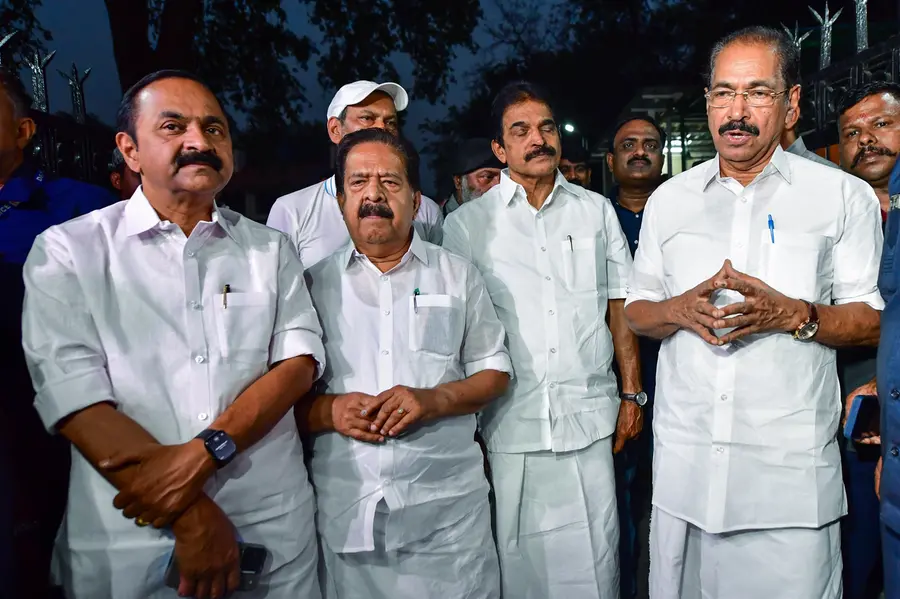
There was a time when the Congress party ruled India with the kind of arrogance only a party convinced of its own immortality can possess. Today, it cannot even announce a Chief Minister without looking like a family WhatsApp group fighting over ancestral property. Kerala has just given the Congress-led UDF a massive victory. A historic one. The sort of victory parties usually celebrate with chest-thumping speeches, victory marches, and giant cutouts of leaders smiling like toothpaste models. Instead, what did the Congress do?
It has converted victory into a tragicomedy performed in slow motion. The election results came on the 4th of May, and today is the 10th. By the time the Congress high command decides who should become Chief Minister, the next election manifesto may also be ready. Every passing hour has become free content for the CPM social media machinery. Somewhere in AKG Centre, overworked meme creators are probably demanding overtime pay.
And why not? The Congress has once again demonstrated its greatest talent. Taking a politically advantageous situation and turning it into a public spectacle of confusion.
The BJP does this nationally. The CPM does this in Kerala. They dominate the narrative before breakfast. The Congress, meanwhile, is still trying to locate the charger for its political phone. The problem with Congress is not ideology or secularism, nor is it organisation. The problem is that the party has become a museum where every exhibit says, “Do Not Touch.” Nothing changes, nobody leaves, and nobody retires. And nobody is accountable. Defeat is merely treated as an unfortunate weather condition. Lose one election, introspection. Lose another, reinvention. Lose a third, nationwide yatra a la Forrest Gump. And lose a fourth, “The people have not understood our message!” At this point, if Congress loses its oxygen supply, it will probably say the people have failed to understand breathing.
And towering above this permanent festival of political self-deception is Rahul Gandhi. Now, immediately, the Congress ecosystem will react with horror. Criticising Rahul Gandhi is considered blasphemy in certain circles. Somewhere, ten loyalists have already begun typing the phrase “But what about Modi?” with trembling patriotic urgency. But politics is not therapy. It is not a sympathy competition. After 2014, Indian politics fundamentally changed. The BJP transformed elections into a presidential contest. Every election became Modi versus who. And the Congress looked around the room and answered confidently - Rahul Gandhi. This is roughly equivalent to seeing Magnus Carlsen across the chessboard and responding by bringing your cousin, who once won a game of carrom at a family function.
The brutal truth is that Rahul Gandhi has never demonstrated sustained political instinct. He launches campaigns like a man throwing crackers into the air and then walking away before they explode. Remember “Chowkidar Chor Hai”? The Congress screamed it from the rooftops, at press conferences, in slogans, in speeches, in television debates, and in Twitter wars. Then, one court notice arrived, and the entire thing vanished like a tuition master after collecting advance payment. The pattern repeats every single time. Massive allegation. Huge noise. Moral outrage. Dramatic speech. Then… silence. It is like watching a Netflix series cancelled midway through season one. And yet the Congress leadership circle behaves as though the only thing standing between India and fascism is Rahul Gandhi’s next podcast appearance!
Meanwhile, strong regional leaders are either alienated, humiliated, sidelined, or conveniently sacrificed at the altar of dynastic insecurity.
Sachin Pilot in Rajasthan.
Jyotiraditya Scindia in Madhya Pradesh.
Punjab reduced to a circus.
And now, Kerala entering the same theatre festival.
The Congress high command operates like a royal court, permanently suspicious of competent subordinates. Any leader with charisma becomes an immediate threat. Any leader with mass appeal must be carefully managed. Any leader who actually wins something must never become bigger than the family portrait. And then the same people wonder why the organisation collapses. Organisations reflect leadership culture. If the leadership rewards sycophancy, sycophants flourish. If merit threatens the hierarchy, mediocrity becomes policy. If defeat carries no consequences, defeat becomes tradition. The Congress today resembles an old aristocratic household where the roof is collapsing, the walls are cracking, but the family is still arguing about seating arrangements in the drawing room.
And Kerala, politically hyperaware Kerala, is watching all this with amusement. This is not a state where people consume politics passively. In Kerala, geopolitics is discussed in tea shops with the seriousness of nuclear negotiations. Barber shops here conduct better political analysis than many prime-time debates. People notice indecision. People notice factionalism. People notice panic. Most importantly, people notice when a party looks embarrassed by its own victory.
The CPM understands narrative warfare. The BJP mastered it nationally years ago. The Congress still behaves like a retired zamindar, shocked that telegrams have been replaced by smartphones. And at the centre of all this sits the grand old party of India, endlessly speaking of democracy while functioning like a hereditary housing society. The tragedy for the Congress is not merely that it keeps losing. Parties lose; that happens. The tragedy is that it has stopped learning. Every defeat changes the BJP. Every defeat sharpens the CPM. Every defeat educates successful political organisations. But every defeat in the Congress merely produces another round of emotional blackmail where leaders “take responsibility” in exactly the same way children “run away from home” after announcing it to the family first. Then comes the inevitable chorus. “No Rahul, please don’t resign.” And thus Indian politics continues its longest-running reality show. Keeping Up with the Gandhis. Only, unlike most reality shows, this one has terrible ratings.
(The author is a National Award winner for Best Narration and an independent political analyst. Views expressed are personal.)
Published: 10 May 2026, 11:51 am IST
Related Topics
Disclaimer: Kindly avoid objectionable, derogatory, unlawful and lewd comments, while responding to reports. Such comments are punishable under cyber laws. Please keep away from personal attacks. The opinions expressed here are the personal opinions of readers and not that of Mathrubhumi.
