ISRO issues warning as powerful solar flares threaten radio blackouts
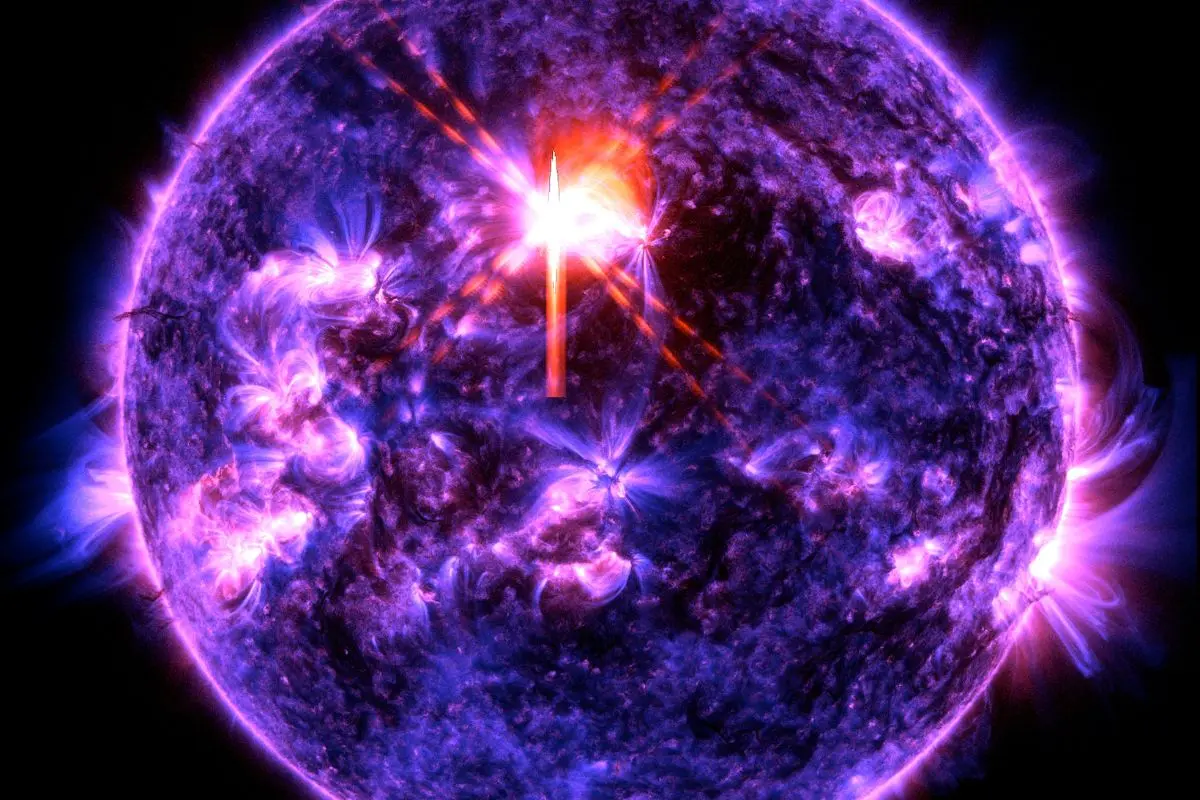
The Sun has unleashed a series of intense solar flares, prompting global alerts from space agencies and warnings of potential radio blackouts. India’s space agency ISRO confirmed on Wednesday that it is closely monitoring the situation as more than 50 operational satellites face heightened risk from the solar activity, according to an NDTV report.
The current solar unrest stems from Active Region 14366, a magnetically complex sunspot cluster that has erupted repeatedly in recent days. NASA reported four major flares between February 1 and 2, including an X8.1-class flare—the most powerful of 2026 so far. The event was the brightest flare since October 2024 and ranks among the top 20 strongest recorded since modern satellite monitoring began in 1996.
Solar flares of this magnitude release vast bursts of electromagnetic radiation that reach Earth almost instantly. While harmless to humans on the ground, they can severely disturb the ionosphere, disrupting high-frequency radio communications, navigation signals, and satellite operations. They also pose risks to high-altitude aviation near the poles and often trigger spectacular aurora displays.
So far, Earth has avoided the worst-case scenario of a strong, Earth-directed coronal mass ejection (CME), though experts caution that the possibility of a larger impact cannot be ruled out.
India’s Aditya-L1 solar observatory, stationed at the Earth-Sun L1 point 1.5 million kilometres away, is reportedly playing a crucial role in tracking the unfolding storm. Its real-time data on solar radiation, magnetic fields and energetic particles is helping ISRO issue early warnings and safeguard critical space infrastructure.