Crew-12 astronauts return to Earth after eight-month ISS mission
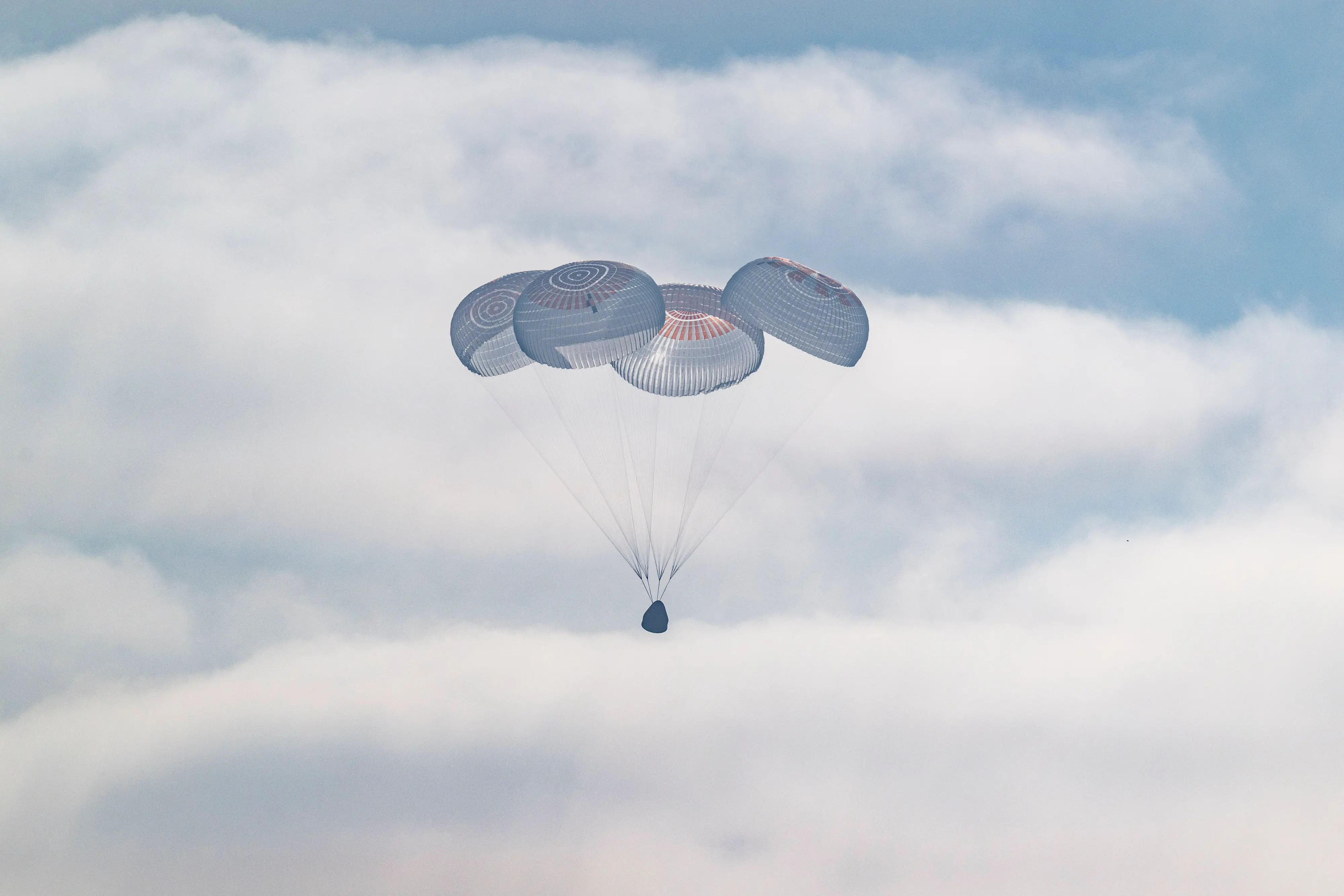
Four astronauts have returned to Earth after spending eight months aboard the International Space Station (ISS), completing their mission with a planned splashdown off the California coast on Thursday.
The crew’s Dragon spacecraft reached the Pacific Ocean after a return journey lasting more than 27 hours. NASA’s live broadcast showed the capsule making a safe landing, marking the end of the crew’s extended stay in orbit.
The returning astronauts were mission commander Jessica Meir and fellow American Jack Hathaway, along with French astronaut Sophie Adenot and Russian cosmonaut Andrei Fedyaev.
“We are so excited to be back on planet Earth after an incredible mission on the International Space Station,” Meir said after the landing.
Crew undergoes medical checks after splashdown
Following the splashdown, the Dragon capsule was lifted onto a recovery ship. The four crew members were then assisted out of the spacecraft individually.
They will undergo initial medical examinations aboard the ship before being taken by helicopter to land. From there, the astronauts are scheduled to travel to Houston, Texas, where the NASA centre responsible for astronaut operations is based.
The return marks the completion of an eight-month stay in orbit for the Crew-12 team.
Sophie Adenot made history with three spacewalks
The mission also saw a milestone for France’s space programme.
Adenot became the first French woman to carry out a spacewalk outside the International Space Station. She completed three spacewalks during the mission, on August 18, August 25 and September 1.
The achievement added a historic chapter to the astronaut’s ISS mission, which otherwise centred on the crew’s long-duration stay aboard the orbiting laboratory.
New ISS crew begins six-month mission
The return of Crew-12 comes shortly after four new astronauts arrived at the International Space Station last week. The latest crew is expected to remain aboard the station for about six months.
The ISS has remained continuously inhabited for roughly 25 years and has served as a long-running platform for international space cooperation.
Its operational life, however, is approaching its final phase. The station is expected to be deliberately brought out of orbit around 2030, with the ageing structure ultimately falling into one of Earth’s oceans.
Despite a broader breakdown in international cooperation following Russia’s invasion of Ukraine in 2022, the United States, Russia and the other ISS partners have continued working together on the space station.
With AFP inputs