India’s first bullet train: Minister reveals when services could begin
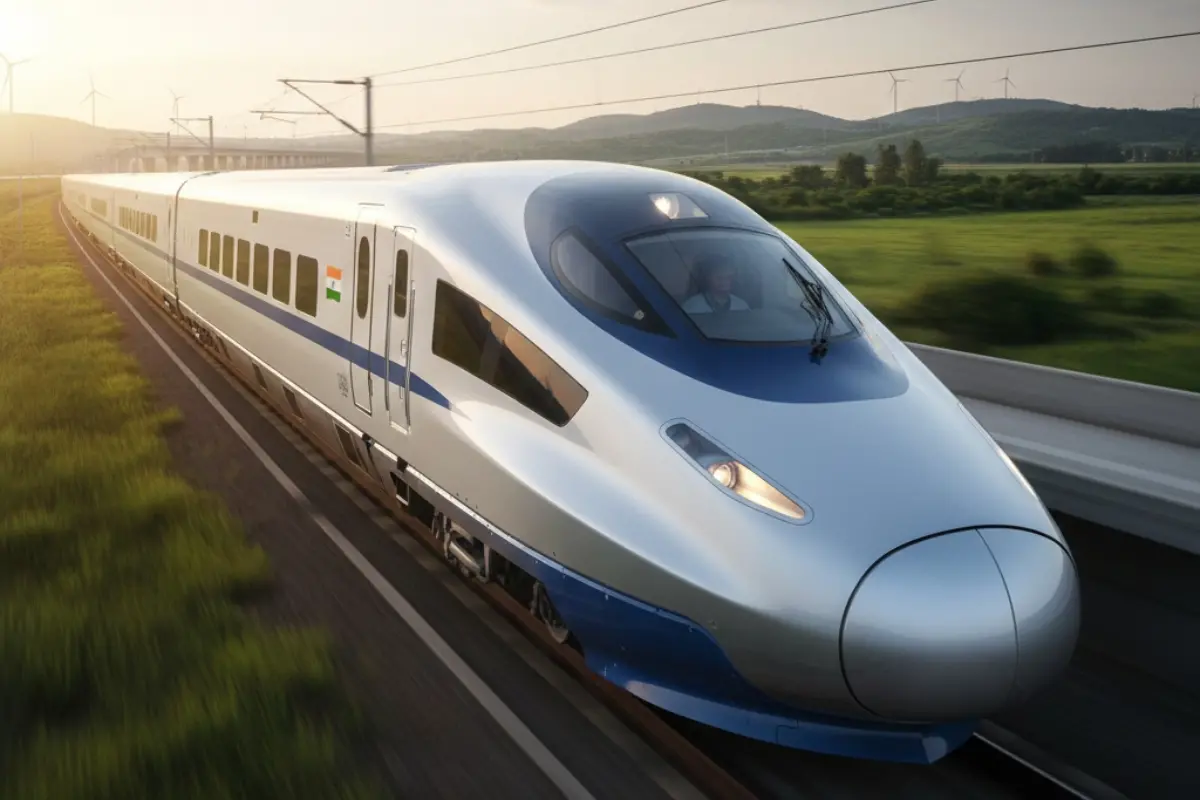
India’s first bullet train project has moved closer to its first passenger service, with Railway Minister Ashwini Vaishnaw saying the initial section of the Mumbai-Ahmedabad High-Speed Rail corridor is targeted to begin operations by mid-2027.
Railway Minister Ashwini Vaishnaw has provided an update on the Mumbai-Ahmedabad High-Speed Rail project, saying the first section is targeted to commence services by the middle of 2027.
According to the minister, construction of the first section is expected to be completed by December 2026. The infrastructure will then undergo extensive testing before passenger operations begin.
The project is being developed by the National High Speed Rail Corporation Limited (NHSRCL).
Construction reaches key stage
Work is progressing across the Maharashtra portion of the corridor, particularly through Thane and Palghar districts.
The 135.45-km elevated stretch from Shilphata in Thane to Zaroli on the Maharashtra-Gujarat border includes 124.027 km of viaducts and bridges. Construction is also progressing at stations planned at Thane, Virar and Boisar.
NHSRCL has said that nearly 74 km of piers on this stretch have already been completed, with work continuing on the remaining sections.
The construction effort includes nine casting yards, seven full-span launching gantries and eight SBS launching gantries in Maharashtra.
What will happen before the launch?
Completing the civil and infrastructure work by December will not mean immediate passenger operations.
The completed section will need extensive testing and safety checks before commercial services can begin. Vaishnaw said several major components of the train are also progressing, including the car body, bogie, propulsion system, vehicle electronics, wheels and pantograph.
The train is currently undergoing a squeeze test to assess the strength of its car body.
320 kmph technology
The Mumbai-Ahmedabad corridor has been designed for commercial operations at speeds of up to 320 kmph.
One of the technologies being introduced is a movable, or swing-nose, crossing at high-speed turnouts. Unlike conventional fixed crossings, the movable crossing shifts to create a continuous rail surface, reducing the gap encountered by wheels.
The system is intended to reduce impact, vibration and wear when trains pass through turnouts at high speeds.
Each high-speed turnout will use two independent point machines. The signalling and interlocking system will verify that the switch rails and movable crossing are correctly positioned and securely locked before a train is allowed to pass.
Mumbai-Ahmedabad corridor
The Mumbai-Ahmedabad High-Speed Rail corridor is India's first dedicated high-speed rail project.
The project connects Mumbai with Ahmedabad through Maharashtra and Gujarat, with multiple stations planned along the route.
The first section is expected to become operational before the entire corridor is completed. This means passengers could see the first commercial bullet train services before the full Mumbai-Ahmedabad route is ready.
Why the December milestone matters
The December construction target marks an important stage because the project will then move from major construction activity towards testing and commissioning.
However, the mid-2027 service target remains dependent on successful testing, safety clearances and completion of the necessary systems.
For passengers, the key takeaway is that construction completion and commercial launch are separate stages. The December target concerns the infrastructure, while passenger services are currently planned for around mid-2027.
The immediate focus will be completing the targeted section and preparing it for testing. This will involve checking the tracks, signalling, rolling stock, electrical systems, stations and other high-speed infrastructure.
The use of technology such as movable crossings is also significant because the corridor is designed for speeds substantially higher than conventional Indian railway operations.
If the stated construction and testing schedule is maintained, the first section could provide India with its first commercial high-speed rail service in 2027. The exact start date will depend on the completion of testing and required approvals.